







The Catalogue of Card Fees
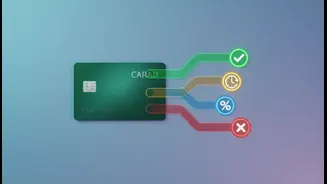
The most direct costs of owning a credit card are the fees. Many cards, especially premium ones, come with a joining fee and a recurring annual or renewal fee, which can range from a few hundred to several thousand rupees. While some banks waive this
fee if you spend a certain amount, it's a cost to consider. Then there are situational charges. Use your card overseas or on an international website, and you'll likely incur a foreign currency markup fee, typically around 3.5% of the transaction value. If you miss a payment deadline, even by a day, a late payment fee is applied, the amount of which often depends on your outstanding balance. Other potential charges include fees for cash withdrawals, exceeding your credit limit, and processing EMIs.
The Peril of Revolving Interest
The most significant financial risk with credit cards is the interest, often referred to as the Annual Percentage Rate (APR). In India, this can be as high as 42% annually. This interest is charged when you don't pay your total outstanding balance by the due date. The common trap is paying only the 'minimum amount due'. While this keeps your card active and avoids late fees, the bank charges interest on the remaining unpaid balance. This interest compounds, meaning you start paying interest on your interest, causing the debt to grow rapidly. What many don't realise is that once you have an outstanding balance, you typically lose the interest-free period on new purchases until the entire previous balance is cleared. A small unpaid amount can quickly spiral into a substantial debt.
The Psychology of Spending
Perhaps the most subtle cost is the psychological pressure to spend more. Studies have consistently shown that people are willing to spend significantly more when using a card compared to cash. This is due to a phenomenon called 'payment decoupling', where the act of buying is separated from the immediate pain of paying. Swiping a plastic card or tapping a phone doesn't feel like real money leaving your wallet. This disconnect reduces spending restraint. Brain imaging studies have even shown that using credit cards can activate the brain's reward centers, creating a pleasurable feedback loop that encourages more spending, similar to how addictions work. This can lead to impulse buys and a tendency to purchase more expensive or unhealthy items than you would with cash.
The Effect on Your Financial Future
How you manage your credit card has a direct and significant impact on your CIBIL score. This three-digit number, ranging from 300 to 900, is a summary of your credit history and is crucial for your future financial life. Two major factors influencing your score are your payment history and your credit utilisation ratio. Missing payments or consistently paying late will lower your score. Your credit utilisation ratio, which is the amount of credit you've used compared to your total credit limit, ideally should be kept below 30%. Regularly maxing out your card, even if you pay it off, can be seen as a sign of financial stress by lenders and can negatively affect your score. A low score can make it difficult to get approved for future loans or result in higher interest rates.