



The festive rush for Diwali brings joy but also crowded trains. A smooth journey requires more than just a ticket; it demands knowing the rules. Here is what to verify before you leave for the station to ensure a safe and seamless trip.
Confirm Your Ticket and Booking Rules
The foundation
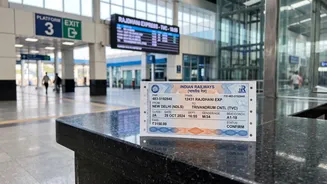
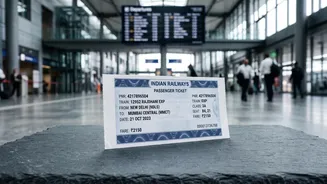
of any train journey is a confirmed ticket. For Diwali 2026, which falls on November 8, the advance reservation period (ARP) opens 60 days prior, meaning bookings for the main festival dates start in early September. Given the immense rush, tickets on popular routes get sold out within minutes. Indian Railways often announces special trains to manage the demand, but these also fill up fast. It is crucial to monitor official announcements. Also, remember that Aadhaar verification is mandatory for booking Tatkal tickets and for priority access on the opening day of general reservations. Always carry a valid original ID that matches the name on your e-ticket.
Understand Luggage Allowances and Limits
Overpacking can lead to fines and inconvenience. Indian Railways has specific luggage weight limits based on travel class. For instance, passengers in Sleeper Class are allowed 40 kg for free, while those in AC 3-Tier also have a 40 kg limit. AC First Class has the highest allowance at 70 kg. Exceeding these free limits requires booking the extra weight at the parcel office, and if caught with un-booked excess luggage on the train, the penalty is six times the normal rate. There are also size restrictions; bags larger than 100 cm x 60 cm x 25 cm are not permitted inside compartments and must be transported in the brake van.
Strictly Avoid Prohibited Items
For passenger safety, a number of items are strictly banned on trains. This is especially critical during Diwali. Carrying inflammable materials like firecrackers, gunpowder, kerosene, petrol, and gas cylinders is a punishable offence that can lead to fines up to ₹10,000, imprisonment of up to three years, or both. Even seemingly harmless items like dry coconuts are banned due to their flammable nature. Other prohibited articles include acids, toxic chemicals, and illegal weapons. Railway Protection Force (RPF) intensifies checks at stations during the festive season to enforce these rules.
Know the Rules for On-Board Conduct
A comfortable journey for everyone depends on respecting shared spaces. Loud music or conversations, especially between 10 PM and 6 AM, are discouraged. Sleeping etiquette is also important; passengers with middle berths are expected to sit down during the day to allow others to use the lower berth. Smoking and consuming alcohol on trains are strictly prohibited and can attract fines and even imprisonment. Creating any form of nuisance can lead to penalties and being removed from the train.
Check for Special Station Regulations
To manage the immense festive crowds, railways often implement temporary rules at major stations. For example, during the Diwali and Chhath Puja rush, the sale of platform tickets may be suspended at key Delhi stations like New Delhi, Anand Vihar Terminal, and Hazrat Nizamuddin to reduce congestion. Parcel booking and loading services might also be temporarily halted. Always listen to official announcements at the station regarding platform changes or train delays rather than relying on hearsay from other passengers.
Penalties for Common Offences
Being aware of potential fines can help you avoid them. Travelling without a valid ticket now attracts a minimum penalty of ₹500 plus the fare for the journey. This is a significant increase from the previous fine of ₹250. Similarly, male passengers travelling in a coach reserved for women may face a fine of up to ₹2,500. Unauthorised vending or hawking on trains or at stations can lead to a fine of ₹2,000. Pulling the emergency chain without a valid reason, such as a medical emergency or fire, can result in a fine of up to ₹1,000 or even imprisonment.