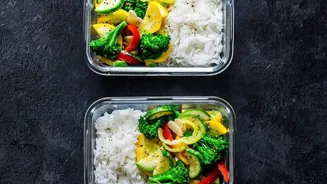






The dream of batch cooking is simple: cook once or twice and enjoy stress-free meals all week. The reality? Sad, soggy leftovers. The secret isn't just in the cooking, but in choosing dishes that actually improve with a little time in the fridge.
The Science of a Good Reheat
Ever
wonder why yesterday's dal tastes even better, but leftover fried snacks are a disaster? It comes down to chemistry. The best dishes for reheating are typically those with a good amount of moisture and fat, like curries, stews, and soups. During storage, flavour molecules in spices have more time to mingle and dissolve into the fats, deepening the overall taste. This is why a good rajma or chicken curry can feel more flavourful on day two. Conversely, the texture of starchy foods like rice and potatoes can change. As they cool, their starch molecules realign in a process called retrogradation, which pushes out water and can lead to a firm or dry texture. This is why reheating rice with a splash of water is so crucial.
Champions of the Reheat: What to Cook
For a successful batch cooking session, focus on dishes that are saucy, moist, and robust. Soups, stews, and chilis are global champions, as their flavours meld and they reheat beautifully on the stovetop or in the microwave. In an Indian kitchen, this translates perfectly to a world of curries and dals. Tomato, onion, and coconut milk-based curries are fantastic candidates, as the thick sauce protects ingredients like chicken or vegetables from drying out. Legume-based dishes like dal makhani, chana masala, and rajma are meal prep superstars; they keep for 3-4 days in the fridge, and their taste often improves. Cooked grains like quinoa and brown rice also hold up well. You can even batch cook components, like a basic onion-tomato masala or boiled beans, to assemble fresh meals quickly.
Dishes That Don't Make the Cut
Not all foods are destined for a happy second life. Anything with a crispy or crunchy texture is your primary foe. Fried foods, like pakoras or samosas, will inevitably turn soggy and lose their appeal. Delicate, leafy greens such as spinach will wilt and become unpleasantly soft when reheated, though they can be stirred into a hot soup at the last minute. Cream- and yogurt-based sauces can be tricky, as they have a tendency to separate or curdle when reheated too quickly. If making a dish like palak paneer, it's best eaten within a couple of days and reheated gently. Seafood, particularly fish, is another one to be cautious with; it can dry out easily and develop a strong odour upon reheating.
Your Twice-Weekly Strategy
A twice-weekly cooking plan keeps your meals fresh and varied. A good approach is the '3-3-2' method: prepare three proteins, three vegetables or grains, and two sauces. For example, on Sunday, you could make a large batch of chicken curry, cook a pot of chickpeas, and wash and chop vegetables for the next few days. This covers you until about Wednesday. On Wednesday evening, you might grill some paneer or chicken tikka, roast another batch of vegetables, and make a fresh dal. This component_based approach allows you to mix and match, preventing flavour fatigue. A Sunday_cooked dal with fresh rice on Monday can become the base for a quick soup on Tuesday. The Wednesday_cooked paneer can be eaten with roti and then find its way into a wrap for lunch on Thursday.
Smart Storage and Reheating
Proper storage is non_negotiable for food safety and quality. Let food cool for about 30–60 minutes before sealing it in airtight containers; trapping steam will make things soggy. For meals you'll eat within 3–4 days, the fridge is fine. Anything beyond that should be frozen immediately. When it's time to eat, only reheat the portion you plan to consume. For saucy dishes, the stovetop over gentle heat is often best, as it gives you control and a chance to add a splash of water to loosen the gravy. The oven, covered with foil, works well for casseroles like lasagna. If using a microwave, cover the food with a damp paper towel and heat it in intervals, stirring in between to ensure it gets steaming hot all the way through—at least 74°C.