




The Ultimate Insurance Policy
Every crewed space mission needs a robust 'plan B' for launch emergencies. For Gaganyaan, this is the Crew Escape System (CES). It is a sophisticated, rocket-powered mechanism designed to do one thing: pull the crew module and its astronauts away from
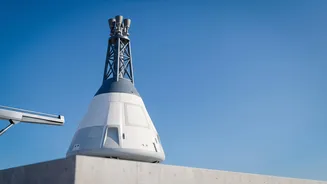
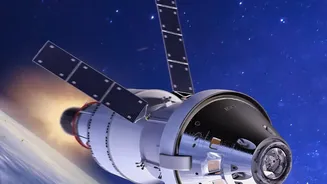
a failing launch vehicle in milliseconds. This system acts like a highly advanced ejection seat, but instead of ejecting a pilot, it yanks the entire capsule to a safe distance, where it can deploy parachutes for a gentle landing. ISRO has adopted a 'tractor-type' or puller system, where the escape motors are in a tower mounted above the crew module, similar to the proven designs of the Apollo and Soyuz missions.
A Symphony of Safety Thrusters
The heart of the Crew Escape System is a cluster of powerful, quick-acting solid-propellant motors, each with a specific job. The main thrusters, known as the High Altitude and Low Altitude Escape Motors (HEM and LEM), provide the immense raw power needed to rapidly accelerate the capsule away from the launch vehicle. These high-burn-rate motors can generate an acceleration of up to 10 times that of gravity, ensuring the crew is clear of any potential explosion. Simultaneously, other thrusters like the Pitch Motors help steer the capsule, controlling its trajectory and orienting it correctly as it flies away from the danger zone. This entire sequence is an automated, lightning-fast response triggered by the rocket's health monitoring system.
When Can It Be Used?
An abort could be necessary at any point from the launch pad to high altitudes. The Gaganyaan CES is designed to function across this entire 'abort envelope'. This includes a 'pad abort', where an issue is detected before or during ignition on the ground. It also covers in-flight emergencies, such as during the transonic phase when the rocket breaks the sound barrier and experiences maximum aerodynamic pressure—a particularly stressful moment in any launch. The system is designed to work autonomously, with an Integrated Vehicle Health Management system constantly checking for anomalies like a loss of thrust or a dangerous deviation from the flight path.
The Abort Sequence in Action
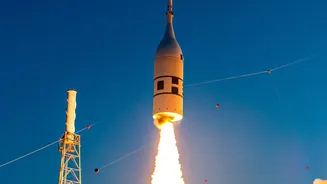
If a critical failure is detected, the process is instantaneous. First, pyrotechnic devices sever the connections holding the crew module to the rocket. The powerful escape motors fire, pulling the capsule up and away. After burning out in just a few seconds, the escape tower itself is jettisoned from the crew module. The crew module then deploys a series of parachutes—starting with smaller drogue chutes to stabilise and slow it from high speed, followed by the three main parachutes to ensure a soft splashdown in the ocean. Finally, systems like the Crew Module Uprighting System (CMUS), which uses stored gas, ensure the capsule floats in the correct orientation for recovery.
Proven Through Rigorous Testing
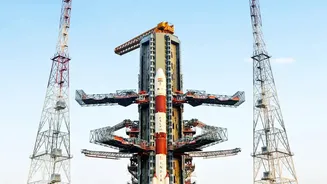
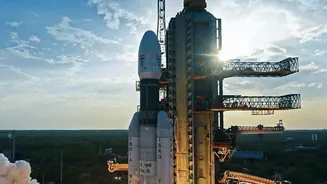
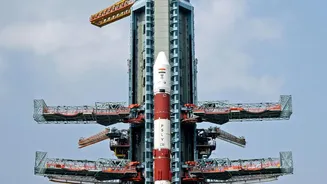
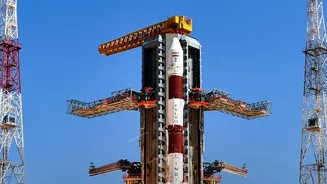
Confidence in this life-saving technology comes from relentless testing. ISRO has conducted several critical demonstrations to validate the system. A Pad Abort Test in 2018 successfully showed the system's ability to handle an emergency on the launch pad. More recently, the Test Vehicle Abort Mission-1 (TV-D1) in October 2023 was a landmark success. In this test, a dedicated vehicle was launched to an altitude of about 12 kilometres, travelling at Mach 1.2, where an in-flight abort was deliberately triggered. The CES performed perfectly, pulling the module away and allowing it to be safely recovered from the Bay of Bengal by the Indian Navy, proving the system works under realistic flight conditions.