




The Little Spacecraft That Could
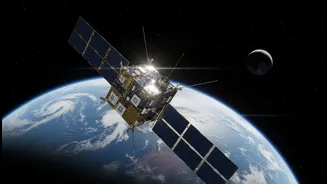
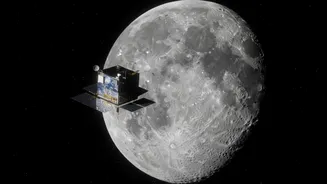
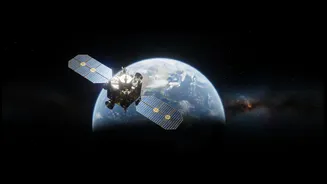
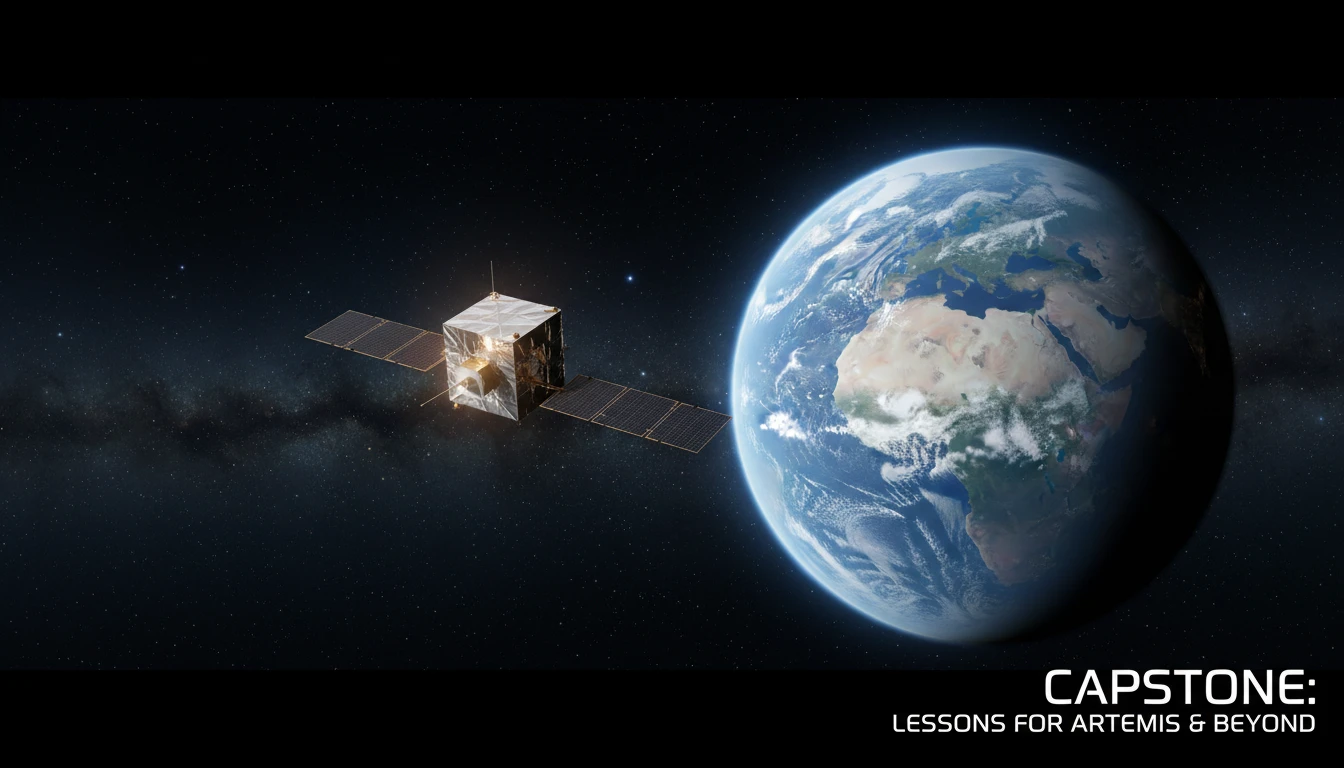
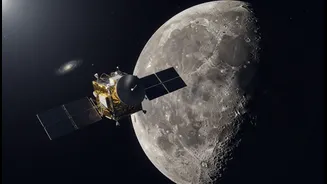
CAPSTONE, short for the Cislunar Autonomous Positioning System Technology Operations and Navigation Experiment, was a small but mighty CubeSat weighing just 55 pounds (25 kg). Launched in June 2022, its primary mission was to act as a trailblazer for NASA’s
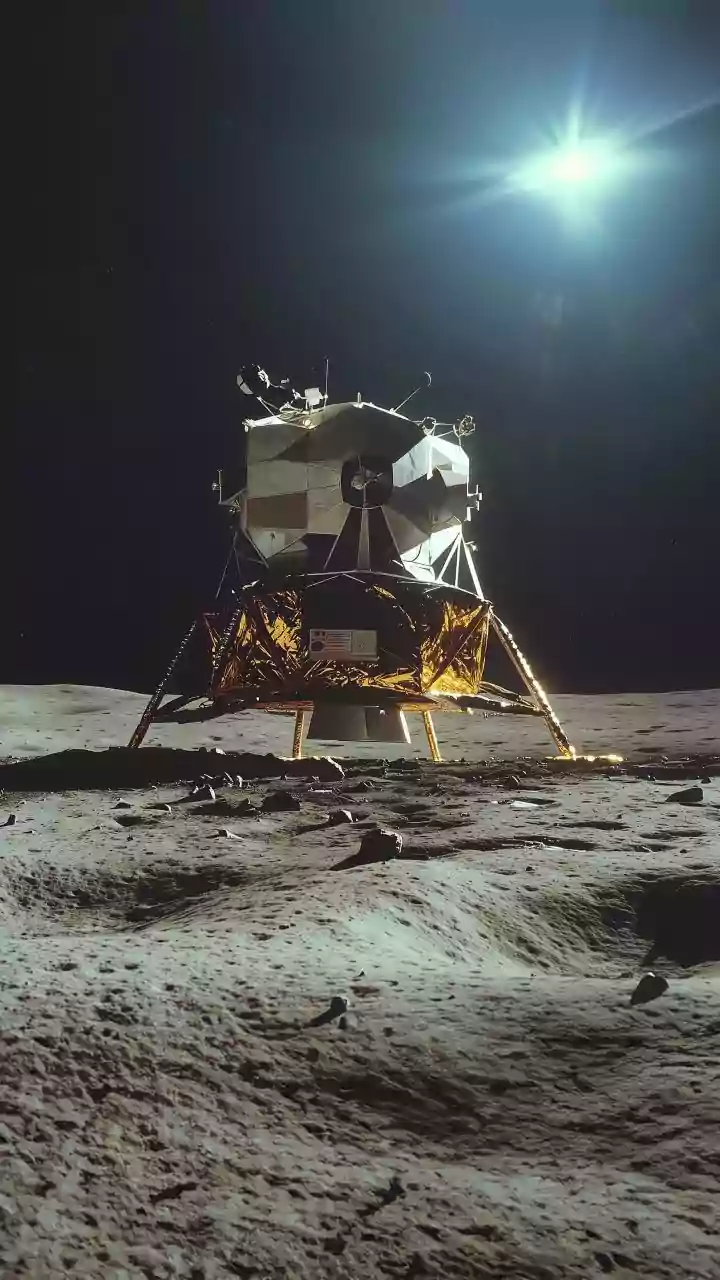
Artemis program, which aims to establish a sustained human presence on and around the Moon. Owned and operated by commercial partner Advanced Space, and built by Terran Orbital, CAPSTONE represented a new, cost-effective model for deep space exploration, demonstrating that small-scale missions can yield massive results. The spacecraft's journey was not without drama; it overcame communication and propulsion system issues early in its four-month trek to the Moon, showcasing the resilience of both the hardware and its mission control team.
Charting an Unprecedented Path
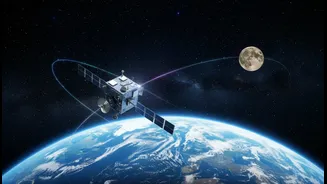
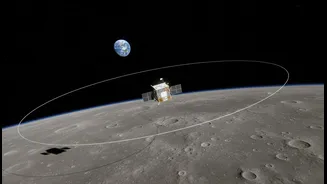
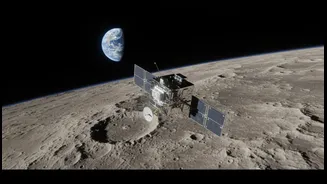
A key objective for CAPSTONE was to be the very first spacecraft to enter and operate in a unique and challenging lunar orbit called a Near Rectilinear Halo Orbit (NRHO). This highly elliptical path brings a spacecraft within 1,600 kilometers of one lunar pole and swings it out to 70,000 kilometers over the other. The NRHO is special because it exists at a gravitational balance point between the Earth and the Moon, making it remarkably stable and requiring minimal fuel for a long-term mission to maintain its position. By successfully flying in this orbit for its primary six-month mission and beyond, CAPSTONE proved the viability of the trajectory planned for the Lunar Gateway—a future space station that will serve as a staging point for Artemis missions.
A 'GPS' for the Moon
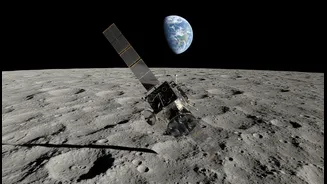
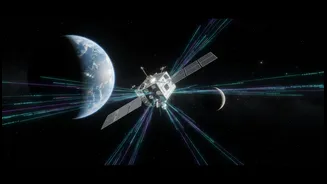
Perhaps CAPSTONE’s most significant legacy is its successful test of a new, autonomous navigation system. Currently, spacecraft rely heavily on constant communication with the Deep Space Network on Earth to know where they are. CAPSTONE demonstrated a technology called the Cislunar Autonomous Positioning System (CAPS), designed to let spacecraft determine their position without ground control. It achieved this by communicating directly with NASA’s Lunar Reconnaissance Orbiter (LRO), using the crosslink signal to calculate its own position in space. This peer-to-peer navigation is a crucial first step toward creating a reliable 'GPS-like' service for the growing number of missions headed to the Moon, reducing reliance on overburdened Earth-based assets.
An Enduring Technological Testbed
After completing its primary goals in May 2023, CAPSTONE’s mission was extended, transforming it from a pathfinder into a versatile in-orbit laboratory. During this extended phase, it tested advanced technologies like delay/disruption tolerant networking (DTN), a system that stores data when a signal is lost and automatically sends it later—essential for the patchy communication environment of deep space. It also proved that software could be uploaded after launch to give a spacecraft new abilities, demonstrating a flexible and cost-effective way to conduct experiments without building entirely new satellites. NASA officially concluded its activities with the mission in June 2026, having achieved all of its primary and extended objectives, though its commercial operator will continue to use the resilient spacecraft.