




The Daily Burden of Diesel and Debt
For generations, farming in many parts of Maharashtra has been a battle against uncertainty. Beyond the reliance on seasonal monsoons, irrigating crops during dry spells has meant depending on diesel-powered water pumps. With diesel prices in mid-2026
hovering above ₹90 per litre, running a pump for hours each day represents a staggering operational cost. A farmer with a 5 HP pump could spend ₹75,000 to over ₹1,00,000 annually on fuel alone. This constant cash outflow, coupled with the maintenance costs of temperamental engines, traps many small farmers in a cycle of debt and low margins. Compounding the issue is the unreliability of the electrical grid in many rural areas, making grid-powered pumps an inconsistent alternative and leaving farmers at the mercy of fuel cans and volatile energy markets.
A Simple Solution Powered by the Sun
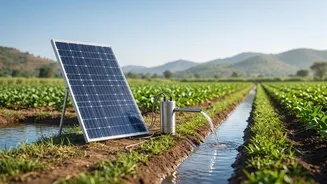
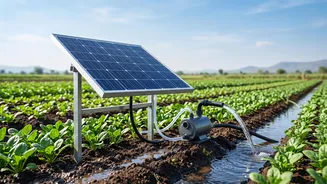
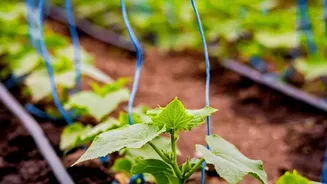
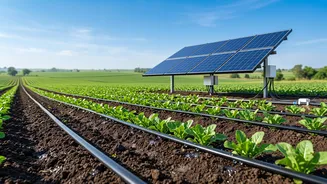
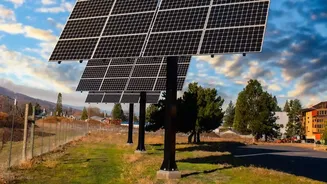
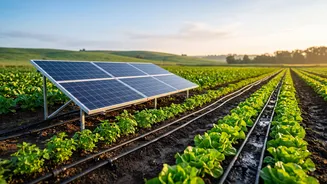
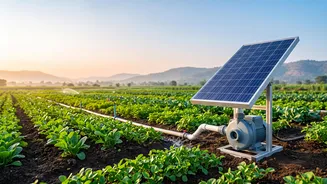
Solar drip irrigation offers a powerful, two-pronged solution to these challenges. The technology itself is straightforward: a set of solar photovoltaic (PV) panels captures sunlight and converts it into electricity. This power runs a water pump, which draws water from a well, borewell, or pond. Instead of flooding the field, which leads to massive water loss through evaporation, the system feeds water through a network of pipes and delivers it directly to the root zone of each plant, drop by drop. This combination of a free energy source—sunlight—with a highly efficient water delivery method is what makes the technology a game-changer. It works independently of the power grid and eliminates the need for any fossil fuels.
From High Costs to Higher Incomes
The economic impact for farmers is immediate and profound. By eliminating fuel expenses, a solar pump effectively turns a major cost centre into a one-time, heavily subsidised investment. The operational cost drops to near-zero, with only minimal maintenance required. This frees up capital and transforms farm economics. Recent reports from September 2026 highlight how this technology is reshaping lives. In villages like Tulyachapada in Palghar district, farmers who previously grew only a single rain-fed crop are now cultivating second and even third crops, including valuable vegetables and fruits. This newfound ability to farm year-round has dramatically increased incomes. One farmer in Gadchiroli saw his annual income jump to over ₹3.5 lakh after installing a solar pump. Crucially, this reliable income source reduces the need for seasonal migration to cities for daily wage work, strengthening family and community stability.
More Crop Per Drop: A Win for the Environment
The benefits extend well beyond the individual farmer's balance sheet. In a water-stressed state like Maharashtra, conservation is critical. Drip irrigation systems can reduce water consumption by up to 60% compared to traditional flood irrigation methods. This ensures that every precious drop is used effectively, promoting healthier plant growth and making agriculture more resilient in the face of erratic rainfall and depleting groundwater levels. On the energy front, the shift away from diesel carries significant environmental advantages. Replacing a single 5 HP diesel pump with a solar alternative can prevent the emission of 1.4 to 2 tonnes of carbon dioxide annually. By scaling this technology, Maharashtra is not only securing its agricultural future but also contributing to India's broader clean energy goals.
Overcoming the Hurdle of Upfront Cost
While the long-term savings are immense, the primary obstacle for smallholders is the initial investment in a solar pump system, which can be several times more expensive than a diesel equivalent. Recognizing this, both central and state governments have stepped in with robust subsidy schemes like the PM-KUSUM Yojana and Maharashtra's own 'Magel Tyala Saur Krushi Pump Yojana'. These programs can cover up to 90-95% of the pump's cost for eligible farmers, requiring them to pay only a small fraction upfront. In many cases, a farmer's contribution is less than the cost of a new diesel pump, and the investment is often paid back in fuel savings within a single year, making it an incredibly attractive financial proposition.