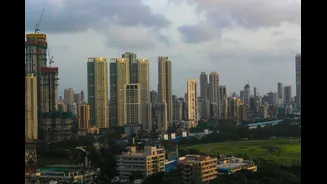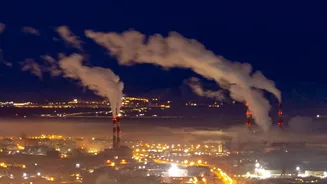





Ever notice how city smog seems to hang in the air on cold, still days? This phenomenon, a temperature inversion, does more than just cloud the view—it can significantly worsen the air quality inside your flat, even if you keep the windows shut.
What is a Temperature Inversion?
Normally,
the air closer to the ground is warmer and rises, allowing pollutants to disperse into the upper atmosphere. Think of it as the planet's natural ventilation system. A temperature inversion flips this process on its head. It occurs when a layer of warm air settles over a layer of cooler air near the ground, acting like a lid on a pot. This atmospheric cap is common during calm winter nights when the ground cools rapidly, chilling the air just above it. The warmer air layer above then traps the cold, dense air below, preventing it from rising. This creates a stagnant, stable air mass where circulation comes to a halt.
Creating a City-Wide Pollution Bowl
In a bustling city, this atmospheric lid becomes a serious problem. Daily emissions from traffic, industry, and construction are continuously released into the air. During an inversion, these pollutants have nowhere to go. They are trapped in the shallow layer of cold air near the ground, accumulating over hours or even days. This is why major urban centres can experience dramatic spikes in air pollution, with a visible brownish haze, or smog, settling over the city. The longer the inversion lasts—often until a strong weather system arrives to break up the layers—the more concentrated and hazardous the outdoor air becomes.
The Myth of the Perfectly Sealed Flat
Many city dwellers believe that modern, tightly sealed windows offer a complete shield against outside pollution. While they are great for energy efficiency and reducing drafts, no home is perfectly airtight. Building scientists refer to this as air infiltration. Air is constantly finding its way in and out through tiny, unseen gaps in window frames, door seals, ventilation shafts, and even porous building materials themselves. Older buildings are naturally 'leaky', but even new constructions are designed to 'breathe' to some extent to prevent issues like moisture and CO2 buildup. This means that when the air outside is thick with pollutants, it will inevitably find its way inside.
When Bad Air Comes Inside and Stays
During a temperature inversion, the problem is twofold. First, the highly polluted outdoor air slowly seeps into your flat through infiltration. Second, the same stagnant conditions that trap pollutants outside also prevent air from effectively circulating and leaving your home. This means pollutants from both outdoor and indoor sources—like cooking fumes, cleaning agents, and carbon dioxide from our own breath—become concentrated. Your flat essentially becomes a smaller version of the pollution bowl outside. Without active wind and pressure changes to flush the building, the air exchange rate drops, leading to stale, unhealthy indoor conditions that can be surprisingly poor.
How to Protect Your Indoor Air
Since you can't control the weather, managing your indoor environment becomes key. The most effective tool is a high quality air purifier with a HEPA filter, which is designed to capture the fine particulate matter (like PM2.5) that characterizes inversion related smog. It is also wise to run your HVAC system's fan to circulate air through its filter, but ensure the filter is clean and has a high MERV rating for better particle capture. Avoid burning anything indoors, like candles or incense, which adds to the pollutant load. Ventilate strategically : if outdoor air quality improves during the day (often when the sun warms the ground), open windows for a brief period to flush out stale indoor air before closing them again as temperatures drop in the evening.