
The Universe as a Time Machine
The fundamental principle that allows us to see the past is the finite speed of light. When we look at the Moon, we see it as it was 1.3 seconds ago. For the Sun, it's about eight minutes. When we turn our gaze to the most distant galaxies, we are looking
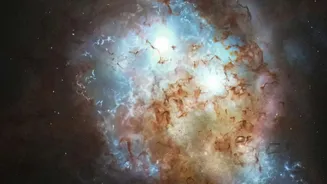
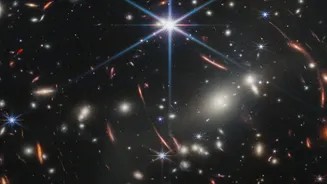
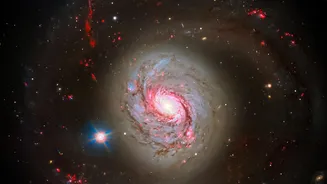
at light that has traveled for billions of years to reach us. This means we see these galaxies not as they are today, but as they were shortly after the Big Bang. Powerful telescopes act as time machines, capturing this ancient light and giving us a direct view into the universe's infancy. These observations, known as deep fields, involve staring at a small, seemingly empty patch of sky for an extended period, allowing the faint light from the farthest reaches of the cosmos to be collected.
Why Infrared Is the Key
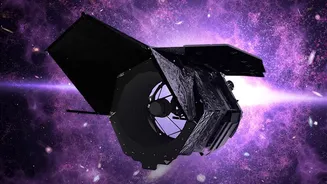
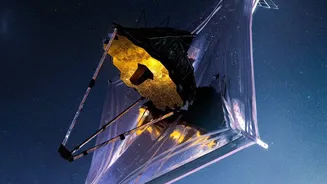
The primary reason infrared is crucial for observing the early universe is a phenomenon called cosmological redshift. As the universe has been expanding since the Big Bang, the very fabric of space is stretching. Light traveling through this expanding space gets stretched along with it, shifting its wavelength towards the longer, redder end of the spectrum. Light that was originally emitted by the first stars and galaxies as visible or even ultraviolet light has traveled for over 13 billion years. Over that immense journey, it has been stretched so much that by the time it reaches us, it arrives as infrared light, which is invisible to the human eye. Telescopes like the James Webb Space Telescope (JWST) are specifically designed with sensitive infrared detectors to capture this faint, ancient signal.
Piercing the Cosmic Dust
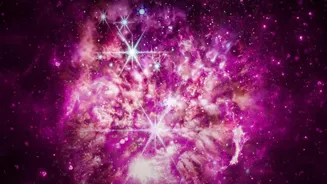
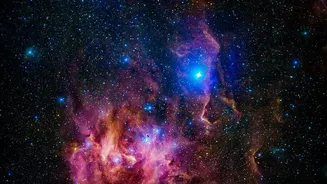
Another major advantage of infrared astronomy is its ability to see through the vast clouds of cosmic dust that permeate space. These clouds, which are often the birthplaces of new stars and planets, are opaque to visible light, obscuring our view of what lies within and behind them. Think of it like trying to see through thick smoke. Infrared radiation, with its longer wavelength, can pass through this dust much more easily than shorter-wavelength visible light. This allows infrared telescopes to peer into the hearts of star-forming nebulae and the centers of galaxies, revealing processes and objects that would otherwise remain hidden. What was once an annoyance to astronomers is now seen as a vital component of astrophysical processes, thanks to the vision provided by infrared instruments.
Breakthroughs with JWST
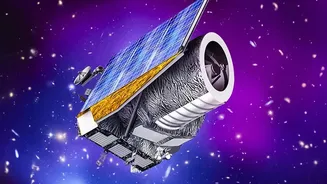
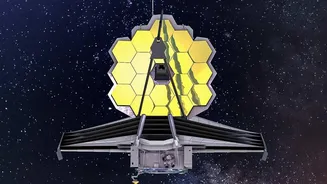
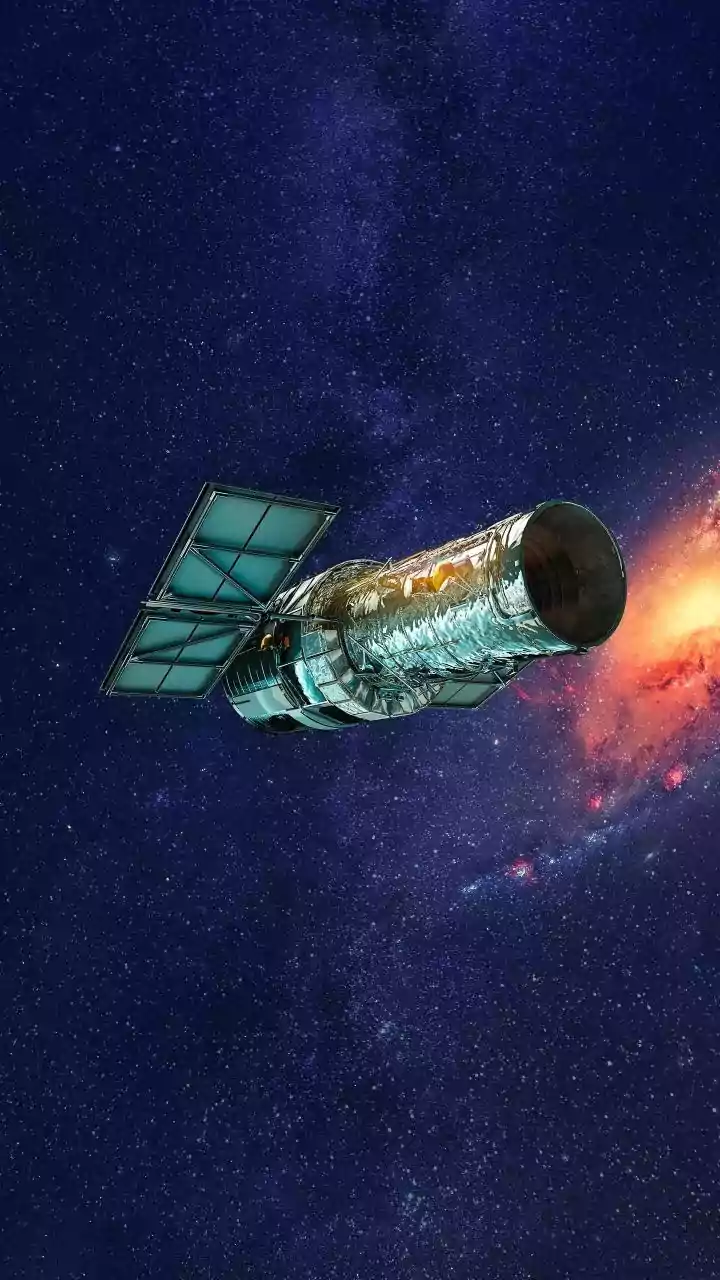
The James Webb Space Telescope represents the pinnacle of this technology. Its massive mirror and advanced infrared instruments provide unprecedented sensitivity, allowing it to detect the faintest and most distant objects ever seen. Since becoming operational, JWST has already revolutionized our understanding of the early universe. Astronomers have used it to identify some of the earliest galaxies ever observed, some existing just a few hundred million years after the Big Bang. Recent discoveries in mid-2026 have even pointed to entirely new kinds of cosmic objects. Scientists have been studying mysterious, extremely bright "little red dots" from the early universe. One such object, identified as a potential "black hole star," appears to be a massive star-like cocoon of gas powered by a supermassive black hole at its core, an object releasing 100 billion times more energy than any known star.