


The Challenge of Close-In Worlds
Imagine a planet similar in size to Earth, orbiting a star. On paper, it sounds promising. But many of these rocky exoplanets orbit their stars at a blistering proximity, far closer than Mercury is to our Sun. This closeness subjects them to a relentless
barrage of stellar radiation and powerful solar winds. This constant assault can physically blow a planet’s atmosphere away, a process known as atmospheric loss. Scientists have long theorized that this process would make it difficult for close-in rocky worlds to remain habitable, but until recently, they lacked the tools to confirm it. Without a protective atmosphere, a planet's surface is exposed to harsh radiation and cannot maintain liquid water, a key ingredient for life as we know it.
JWST: A New Eye on Distant Skies
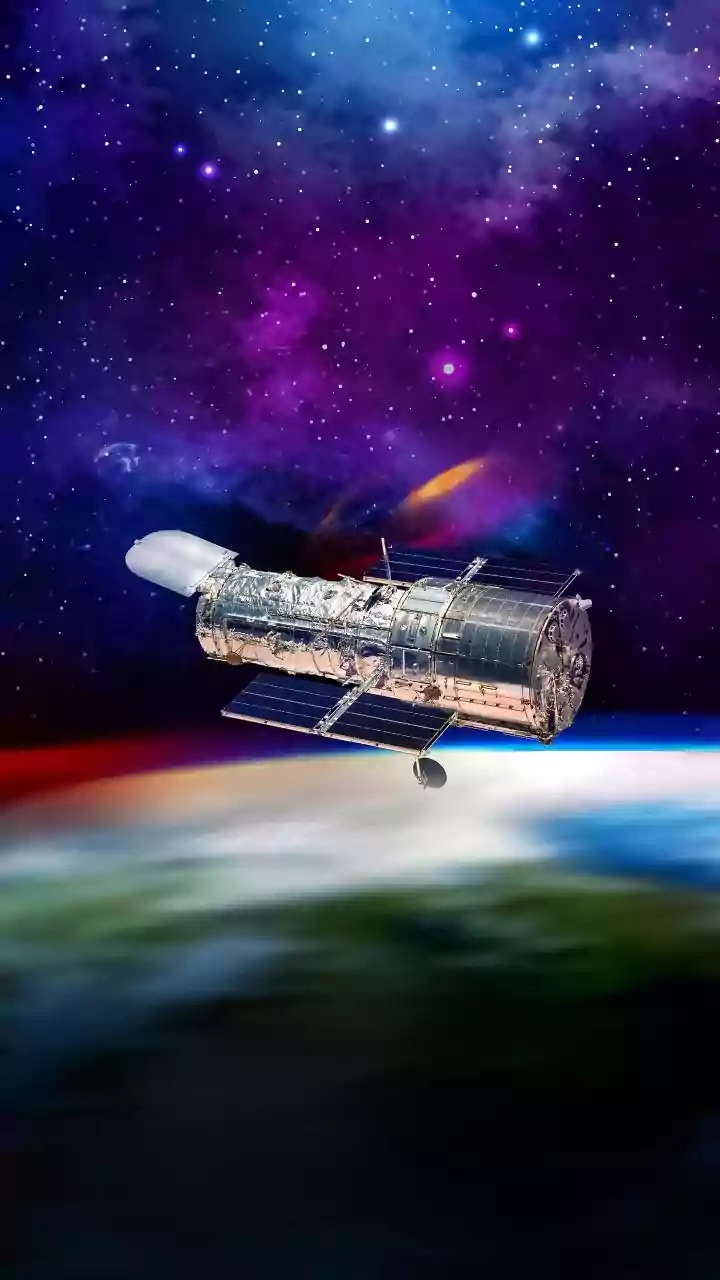
Enter the James Webb Space Telescope (JWST). With its unparalleled infrared sensitivity, JWST can do what was previously impossible: peer into the skies of these small, distant planets. Scientists use a technique called transmission spectroscopy. When an exoplanet passes in front of its host star from our point of view, a tiny fraction of the starlight filters through its atmosphere. By analyzing the spectrum of this light, astronomers can identify the chemical fingerprints of gases present. However, JWST can also measure a planet’s thermal emission, or the heat it radiates. These temperature readings provide crucial clues. A planet without an atmosphere would have a scorching hot dayside, while a planet with an atmosphere can distribute that heat to its nightside, resulting in cooler overall temperatures.
A Universe of Barren Rocks?
The initial findings from JWST have been both revolutionary and sobering. For many of the most-watched rocky planets, particularly those in the famous TRAPPIST-1 system, the telescope has found… nothing. Observations of planets like TRAPPIST-1b and TRAPPIST-1c have largely ruled out thick, Earth-like atmospheres. These worlds appear to be bare rocks, their primordial atmospheres likely stripped away long ago by the fierce activity of their red dwarf star. While initially disappointing for those hoping to find a quick sign of life, this confirmation of atmospheric loss is a monumental piece of the puzzle. It validates scientific models and demonstrates that the process is a powerful, shaping force across the galaxy.
Surprising Survivors and Magma Oceans
However, the story is not entirely one of loss. JWST has found intriguing evidence of an atmosphere around 55 Cancri e, a super-Earth so hot its surface is likely a molten magma ocean. Instead of being stripped bare, this planet may have a “secondary” atmosphere that is constantly being replenished by gases bubbling out of its molten interior. Observations suggest this atmosphere could be rich in carbon monoxide or carbon dioxide. Similarly, the ultra-hot planet TOI-561 b also shows signs of a thick atmosphere that cools its surface, possibly maintained by a similar balance between a magma ocean and the gases it releases. These discoveries suggest that some extreme worlds have found a way to sustain an atmosphere against all odds, even if it is a toxic, scorching-hot one.
Redefining the 'Habitable Zone'
These findings are forcing a major rethink of what makes a planet habitable. The traditional “habitable zone,” or “Goldilocks zone,” is defined by the distance from a star where a planet could host liquid water. But JWST’s data shows this is not enough. A planet must also be able to hold onto its atmosphere over billions of years. This means the star's age, stability, and radiation output are just as critical as the planet's orbit. The search for life is no longer just about finding a world at the right temperature; it is about finding a world with the resilience to maintain its protective gaseous blanket. These early results are helping astronomers refine their targets, focusing on cooler planets orbiting more stable stars, where an atmosphere has a better chance of survival.