







What Is 'Infrastructure Mode'?
For decades, space missions were like building a ship in a bottle on Earth, launching it, and hoping nothing went wrong. Once a satellite ran out of fuel or a part failed, it became a piece of high-tech junk. The industry is now moving beyond this 'single-use'
paradigm. 'Infrastructure mode' means creating the systems that allow for a sustainable, long-term economic presence in space. Think less about planting flags and more about building the equivalent of ports, refueling stations, and maintenance crews in orbit. This shift is as fundamental as the transition from building individual websites to building the cloud infrastructure that allows millions of businesses to operate online.
The Picks and Shovels of Orbit
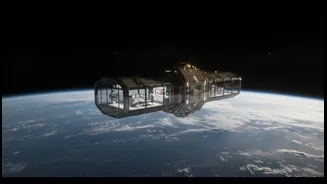
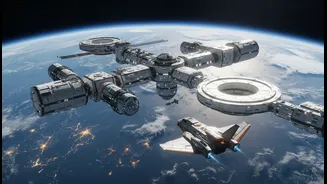
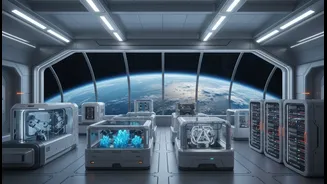
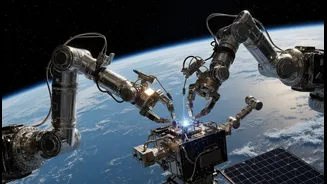
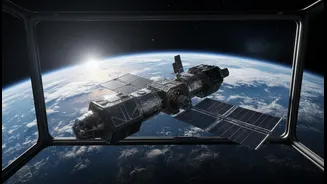
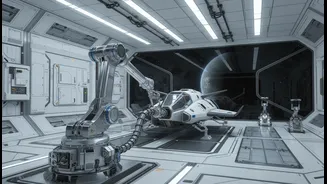
This new phase is driven by a category of technologies known as In-space Servicing, Assembly, and Manufacturing (ISAM). Instead of building everything on Earth, companies are developing the tools to do it in orbit. This includes services like refueling satellites to extend their lives, which has already been demonstrated commercially. It also involves robotic repair drones that can fix or upgrade orbiting assets, and even missions to remove space debris. Looking ahead, the vision expands to assembling large structures in space—like giant telescopes or the next generation of commercial space stations from companies like Axiom Space—that are too big to fit on any single rocket. Startups like Orbit Fab are developing in-space propellant depots, acting as orbital 'petrol pumps' for satellites.
Paving the Road to the Moon
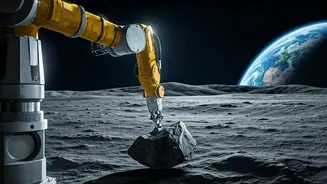
This infrastructure isn't just for Low Earth Orbit. It's the essential scaffolding for building a permanent economic link between Earth and the Moon, often called the 'cislunar economy'. The dramatic reduction in launch costs, pioneered by companies like SpaceX, has made this commercially viable for the first time. NASA is a key customer, actively funding this new ecosystem. Through its Commercial Lunar Payload Services (CLPS) program, NASA is paying a fleet of private companies—including Intuitive Machines and Firefly Aerospace—to deliver science and technology to the lunar surface. These missions are creating the initial logistics chain, proving out landing technologies, and scouting for resources. This effectively outsources the 'delivery truck' part of moon exploration, allowing a commercial market to develop for lunar transportation.
An Economy Built on Data and Logistics
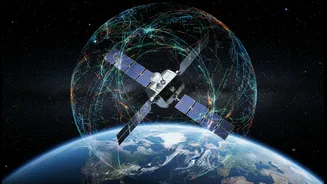
The long-term business case is built on logistics and resources. The energy cost to launch a kilogram of anything from Earth's gravity well is immense. If resources like water—which can be split into hydrogen and oxygen for rocket fuel—can be mined from the Moon, it becomes the petrol station for the solar system. This in-situ resource utilization (ISRU) could slash the cost of missions to Mars and beyond. But even before lunar mining becomes a reality, the orbital infrastructure itself is a massive business opportunity. The market for ground stations, satellite manufacturing, and launch services is already valued in the hundreds of billions of dollars and is projected to grow significantly. The number of satellites in orbit is exploding, creating demand for data management, communication relays, and space traffic coordination.
Challenges in the Final Frontier
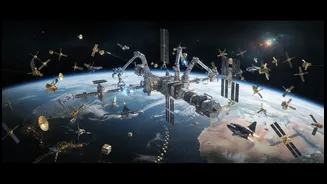
This infrastructure boom is not without significant hurdles. The biggest is the 'chicken-and-egg' problem: it's hard to justify building expensive infrastructure without customers, but customers won't come until the infrastructure exists. Government support through programs like CLPS is crucial in bridging this gap. The orbital environment is also becoming increasingly crowded and dangerous. With tens of thousands of tracked objects and millions of smaller debris pieces, the risk of collisions is a major concern, prompting new rules and the development of debris removal services. Finally, the lack of clear international regulations or 'rules of the road' for commercial activity in space creates uncertainty for investors and operators, an issue governments are now working to address.