





The Science of a Stubborn Dough
When you mix flour and water and begin to knead, you are creating gluten. Think of gluten as a network of tiny, elastic proteins. Kneading develops and tightens this network, which gives bread its structure. However, immediately after kneading, this network is tense
and contracted. If you try to roll the dough at this stage, it's like trying to stretch a wound-up rubber band; it will constantly fight you and snap back into a smaller shape. This isn't just a challenge for bread; it affects everything from pie crusts and pizza bases to chapatis and parathas. This tension is what makes the dough difficult to handle and shape.
The Magic of Gluten Relaxation
A short rest, often called a "bench rest" by professional bakers, is a passive but crucial step. During this period, which can be as short as 15 to 30 minutes, the tightly wound gluten network begins to relax. The gluten strands release their tension and realign, making the dough more extensible—meaning it can stretch—rather than just elastic, which is the tendency to spring back. This short pause allows the flour to fully absorb the water in the mixture, a process known as hydration. A more hydrated and relaxed dough is softer, more pliable, and significantly easier to work with.
Easier Rolling, Perfect Shapes
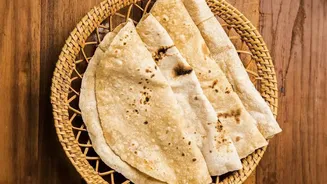
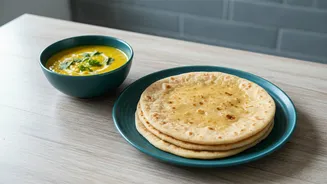
The most immediate and noticeable benefit of resting your dough is how it behaves under a rolling pin. A relaxed dough doesn't resist. You can roll it out smoothly and evenly without it shrinking back the moment you lift the pin. This is particularly important for Indian flatbreads. For a chapati to puff up perfectly, it needs to be rolled to an even thinness. With a tense dough, this is nearly impossible, resulting in thick and thin spots that cook unevenly. A rested dough allows you to roll a perfectly round and uniformly thin disc, which is the foundation of a soft, fully puffed chapati. Similarly, for layered parathas or delicate pastries, a relaxed dough prevents tearing during the intricate folding and rolling process.
The Payoff in the Pan
The advantages don't stop at the rolling board. The way a rested dough cooks is also dramatically different. Because you can roll it out more evenly, it cooks more uniformly. There are no thicker, doughy sections that remain undercooked while thinner parts risk burning. This evenness is key for the dramatic puff of a chapati or puri, where steam gets trapped between the layers and inflates the bread. A tense, unevenly rolled dough might not trap steam effectively, leading to a flat, dense result. The improved hydration also contributes to a better final texture, making breads softer and more tender. Even for items like pie crusts, resting the dough prevents it from shrinking in the pan during baking.