





An Unexpected Scientific Opportunity
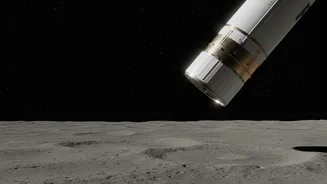
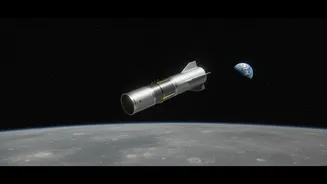
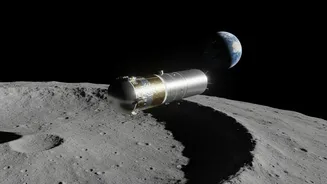
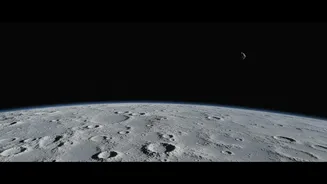
On August 5, 2026, the upper stage of a SpaceX Falcon 9 rocket is scheduled for a high-speed collision with the Moon. Originally launched in January 2025 to deploy lunar landers, this massive piece of hardware has been tumbling through space ever since.
Instead of re-entering Earth's atmosphere or drifting into a stable solar orbit, gravitational forces and solar radiation have nudged it onto a collision course. Astronomers have been tracking its trajectory, predicting its impact near the Moon's limb. While accidental, this event provides a unique, real-world test for scientists who spend their careers modelling what happens when objects strike the lunar surface. It’s a serendipitous chance to turn an out-of-control object into a controlled scientific observation.
Why This Crash Is a Perfect Test
The Moon is constantly bombarded by meteoroids, but those events are unpredictable and the impacting objects are of unknown size, mass, and velocity. The SpaceX rocket stage is different. Scientists know its dimensions, its mass of roughly four tonnes, and its approximate impact speed of 5,400 miles per hour. This turns the crash into a controlled experiment. Researchers can run their computer models using these known variables to predict the outcome: the size of the crater, the shape of the debris plume, and how far the ejected material travels. By comparing these predictions to what their orbiting instruments actually see, they can refine and calibrate the very models that are essential for planning future lunar missions. It’s a rare opportunity to check their work against a real-life event.
Reading the Debris Cloud
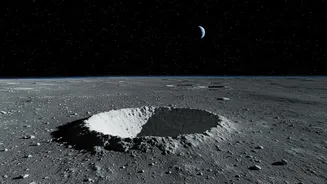
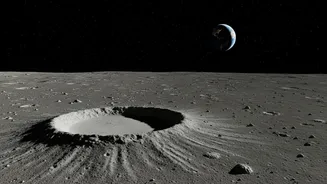
The main scientific prize is the plume of ejecta—the cloud of dust and rock kicked up from beneath the lunar surface. This material, which may not have seen sunlight for billions of years, offers a glimpse into the Moon's geology without needing to land and drill. Spacecraft like NASA's Lunar Reconnaissance Orbiter (LRO) and South Korea's Danuri orbiter will be watching, hoping to analyze this plume and take before-and-after images of the impact site. Scientists expect the impact to gouge out a new crater roughly 60 to 100 feet in diameter. Observing how this crater forms and how the plume behaves in the Moon's vacuum and low gravity will provide invaluable data, helping to understand the physical properties of the lunar regolith, or soil.
India’s Pioneering Impact Science
This method of studying the Moon is not entirely new, and India was a key pioneer. In 2008, the Indian Space Research Organisation (ISRO) deliberately crashed its Moon Impact Probe (MIP) onto the lunar surface as part of the celebrated Chandrayaan-1 mission. The 34-kg probe was designed to do exactly what scientists hope to achieve with the SpaceX impact: study the surface and the ejected material. The data gathered by MIP's instruments during its 25-minute descent and upon impact was groundbreaking, famously detecting the presence of water molecules on the Moon for the first time. This historic mission demonstrated the immense scientific value of impact probes, setting a precedent for using controlled crashes as a powerful tool for lunar exploration.
Paving the Way for Future Exploration
Ultimately, the data from this accidental crash will help make future lunar missions safer and more effective. As nations like India and the U.S. plan to send astronauts back to the Moon through programs like Gaganyaan and Artemis, a deeper understanding of the lunar surface is critical. Knowing how the regolith behaves during an impact is essential for designing landers, habitats, and equipment that can withstand the harsh environment. Better impact models can also help protect future lunar bases from the constant threat of natural micrometeoroid strikes. In a strange twist, this piece of discarded rocket hardware will end its journey by providing key insights that will protect the next generation of explorers and hardware destined for our celestial neighbour.