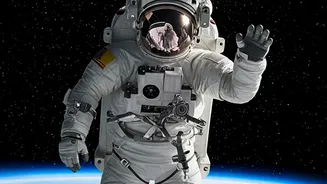



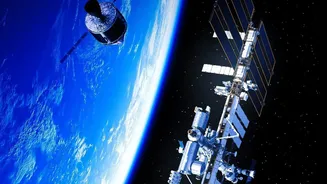

When you see astronauts floating inside the International Space Station, it's easy to assume they've escaped Earth’s gravity. But the truth is far more dynamic and interesting, revealing a constant dance between speed and gravity.
Myth: Earth’s Atmosphere Just Stops
We tend to think of the
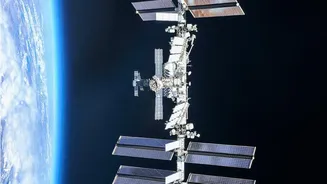
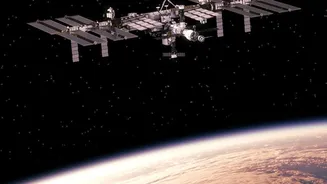
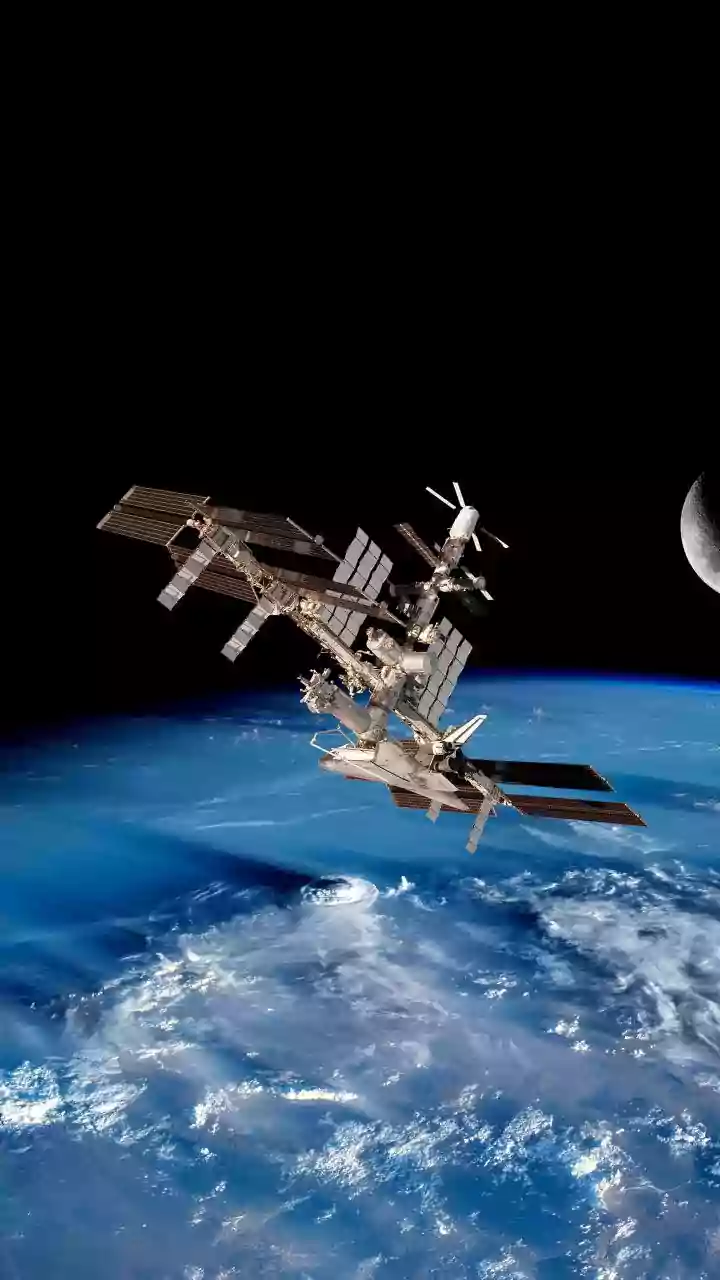
atmosphere as a bubble with a hard edge, beyond which lies the vacuum of space. In reality, there is no definitive 'end'. The air just gets thinner and thinner the higher you go. Scientists and international bodies use a conventional boundary called the Kármán line, typically set at 100 kilometers (about 62 miles) up, to distinguish between aeronautics and astronautics. However, this is more of a legal and regulatory concept than a physical wall. The atmosphere extends far beyond it, with its outermost layer, the exosphere, gradually merging with the solar wind hundreds of thousands of miles away. The International Space Station (ISS) orbits within the thermosphere, a layer that extends from about 50 to 440 miles (80 to 700 km) above Earth. While the air here is incredibly thin, it’s still present.
Myth: Astronauts Float Because There's No Gravity
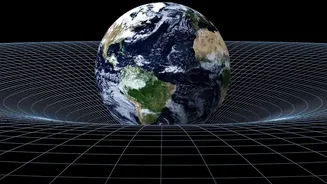
This is perhaps the biggest misconception about space travel. At the ISS's orbital altitude of around 250 miles (400 km), the pull of Earth's gravity is still about 90% as strong as it is on the surface. If you could build a tower that high and stand on top of it, you would feel only slightly lighter. So, if gravity is still firmly in charge, why do astronauts float? The answer isn't a lack of gravity, but a surplus of speed. The sensation of 'weightlessness' is a clever illusion created by an endless state of freefall. It's more accurately described as microgravity, acknowledging that gravity is very much still in play.
Reality: The Constant State of Freefall
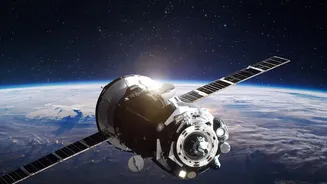
Imagine being in an elevator when the cable snaps. For the few terrifying seconds before it hits the ground, you and everything else in the elevator would float, seemingly weightless. You are all falling together at the same rate. This is precisely what's happening on the ISS. The station, its crew, and all its equipment are constantly falling toward Earth under the pull of gravity. So why don't they crash? The secret is sideways motion. The ISS is traveling at a staggering speed of about 17,500 mph (7.8 km/s). This incredible velocity means that as it falls, the curved surface of the Earth drops away beneath it at the exact same rate. It is perpetually falling, but it constantly misses the ground. This continuous act of falling and missing is what we call an orbit.
Reality: Atmospheric Drag is a Real Problem
Because the ISS is still moving through the upper reaches of the atmosphere, it constantly collides with gas molecules. This creates a small but persistent force called atmospheric drag. This friction acts like a brake, slowing the station down ever so slightly. As it loses speed, its altitude begins to decay, sometimes by as much as 100 meters per day. If left uncorrected, this drag would eventually cause the station to fall back into the denser parts of the atmosphere and burn up. To counteract this, the ISS must periodically fire its thrusters to get a 're_boost', pushing it back up to its proper altitude and speed. This constant battle against atmospheric drag is a powerful reminder that even 250 miles up, you're never truly free of the Earth's airy embrace.