






The New Workplace Reality
The feeling of uncertainty in India's technology sector is palpable. Companies are trimming their workforce not with loud announcements, but through quiet, performance-related exits and restructuring, a trend now widely known as 'silent layoffs'. Estimates
suggest thousands of roles could be eliminated in 2026 this way. This isn't just about correcting pandemic-era over-hiring; it's a structural shift. The driver is a dual pressure: a challenging global market and the relentless push for AI-driven productivity. Companies are automating tasks and redesigning roles for an AI-first world, leading to a reduction in billable hours for traditional services like coding and testing. This has left many professionals feeling that their jobs are precarious and their established skills are under threat.
Why Portfolios Are Under Scrutiny
In this environment, it's easy to see why the value of a traditional portfolio is being questioned. If AI tools can generate impressive code, design mockups, and even entire applications in minutes, what does a collection of projects truly prove about your ability? The barrier to creating a polished-looking portfolio has dropped significantly, making it harder for hiring managers to distinguish genuine expertise from well-prompted AI output. Some executives even expect candidates to use AI, viewing it as a modern workflow tool. The fear is that the portfolio, once a clear differentiator, is becoming a commoditised and less reliable signal of a developer's true problem-solving capabilities.
What AI and Layoffs Don't Invalidate
However, this pressure doesn't invalidate the concept of proving your work; it simply changes the definition of 'good work'. AI is a powerful tool, but it doesn't possess judgment, strategic thinking, or the ability to navigate complex business constraints. A hiring manager isn't just asking, "Can you build this?" They are asking, "Can you understand why you're building this? Can you justify your technical decisions? Can you handle a project when requirements change unexpectedly?" A portfolio that only showcases a finished product is vulnerable. But one that documents the process—the problem, the trade-offs, the collaborative effort, and the business impact—demonstrates a higher-order value that AI cannot replicate. It proves you can think like a partner, not just a programmer.
The Portfolio That Matters Now
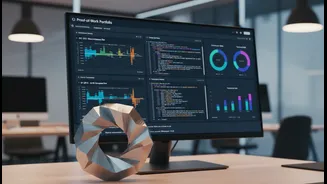
The standout portfolio in 2026 is less of a gallery and more of a collection of case studies. It moves beyond just showing the final code. A strong portfolio today should clearly articulate the problem each project was meant to solve. It must be transparent about how AI was used as a tool, not as a replacement for thinking. Hiring managers want to see how you managed constraints, collaborated with others, and made specific architectural decisions. Instead of ten small, generic projects, focus on three to five high-quality ones that demonstrate depth. Each project should tell a story: what was the challenge, what was your specific contribution, what was the outcome, and what did you learn? This narrative approach showcases your judgment and adaptability—the very traits companies are desperate for in an uncertain market.
Your Strategy: From Output to Impact
To stay relevant, developers and other tech professionals must shift their mindset from fear to curiosity. Frame your portfolio not as a list of things you’ve made, but as proof of the impact you can deliver. If you used AI to accelerate a project, document it. Explain how it allowed you to focus on more complex challenges. Show evidence of your problem-solving process through clear documentation, like a detailed README file or a blog post about the project. Your portfolio is your personal career narrative. In an era of automation and workforce restructuring, being able to articulate your unique value, your thought process, and your ability to drive results is the most powerful proof-of-work there is. It's a signal that you're not just keeping up with technology, but are ready to lead with it.