




The Shadow of the Rings
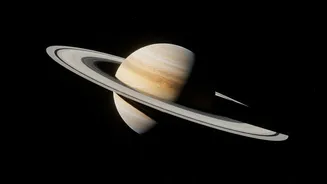
Saturn’s seasons are long, each lasting more than seven Earth years. Because the planet is tilted on its axis, much like Earth, this tilt changes how sunlight hits the planet and its iconic rings. As the seasons progress, the angle of the rings changes relative
to the Sun, causing them to cast vast, moving shadows across the planet's hemispheres. For decades, scientists have theorized that these shadows must have a cooling effect, but only with advanced telescopic capabilities have they been able to measure the true atmospheric impact. These shadows are not just passive shades; they are active drivers of climatic change on a planetary scale.
Seeing the Unseen with Infrared
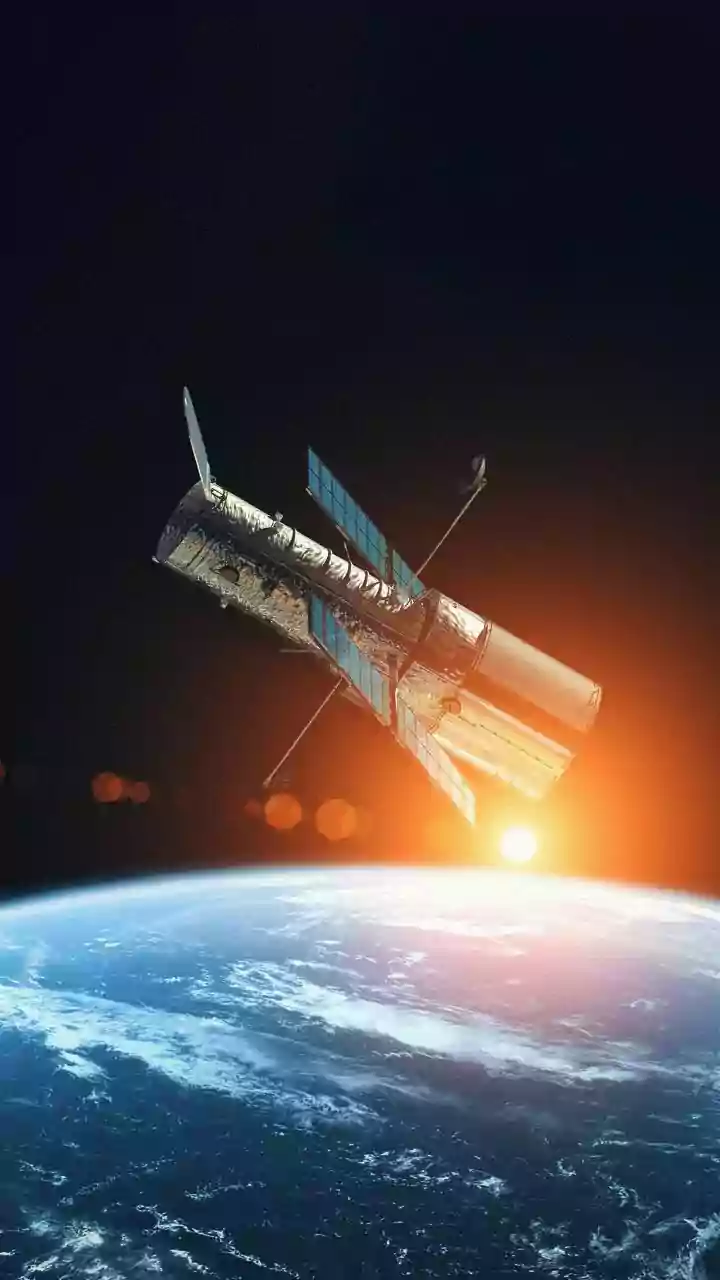
While our eyes see the reflected sunlight that makes Saturn appear a yellowish-brown, the Hubble Space Telescope can see in wavelengths beyond the visible spectrum. By using its infrared instruments, Hubble can detect heat. This allows astronomers to create a thermal map of the planet, revealing temperature differences in the atmosphere. Regions deprived of direct sunlight by the ring shadows show a measurable drop in temperature. This is where the story gets interesting. Instead of just a simple cooling, the shadows trigger complex secondary effects, altering atmospheric circulation and chemistry in ways visible-light observations alone could not detect. Programs like the Outer Planet Atmospheres Legacy (OPAL) use Hubble to conduct yearly monitoring, building a long-term record of these atmospheric changes.
A Cooler Atmosphere and 'Ring Rain'
One of the most significant discoveries is how the ring shadows affect Saturn’s ionosphere, the electrically charged upper layer of its atmosphere. Sunlight normally energizes this layer, but where the A and B rings cast their dense shadows, this process is blocked. Data from NASA's Cassini mission, which flew through these shadows, measured a dramatic drop in charged particles, effectively weakening the ionosphere. But the rings don't just block energy; they also contribute matter. Scientists have observed what is called "ring rain," where icy particles from the rings are pulled into Saturn's atmosphere by its magnetic field. This phenomenon, first theorized based on Voyager data, further cools and changes the composition of the upper atmosphere in the shadowed regions.
Seasonal Shifts and Atmospheric Dynamics
The combination of shadowing and ring rain drives noticeable seasonal changes. As one hemisphere is plunged into a shadowed winter, its upper atmosphere not only cools but also sees a reduction in the haze that is normally produced by sunlight interacting with methane. This can change the planet's color, making the winter hemisphere appear more blue. Recent observations in 2024 from Hubble, complemented by the James Webb Space Telescope, have provided the most comprehensive view to date, capturing the planet as it transitions toward its 2025 equinox. These observations show long-lived jet streams and remnants of massive storms, all influenced by the underlying temperature and pressure gradients that the ring shadows help create.
Why These Shadow Patterns Matter
Studying the effect of Saturn's ring shadows is more than just a weather report for a distant world. It provides a unique, large-scale laboratory for understanding how planetary atmospheres respond to changes in solar energy. The principles governing Saturn's atmospheric dynamics—how temperature changes drive winds and alter chemistry—apply to gas giants throughout our solar system and beyond. By observing these clear cause-and-effect relationships on Saturn, scientists can refine their models for the atmospheres of exoplanets, worlds that are too far away to observe in such detail. The long-term monitoring by Hubble ensures we have an evolving record of these changes, turning snapshots into a multi-decade story of planetary evolution.