


The Hunt for Super-Earths
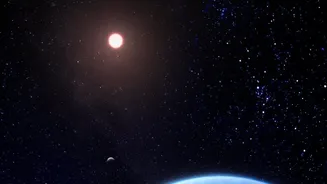
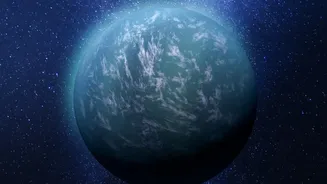
Before we can look for water, astronomers first need a target. Enter the “Super-Earth,” one of the most common types of planets found in our galaxy, yet curiously absent from our own solar system. These worlds are larger and more massive than Earth but
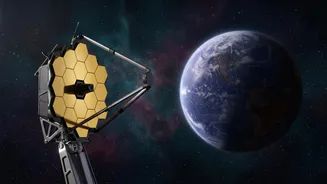
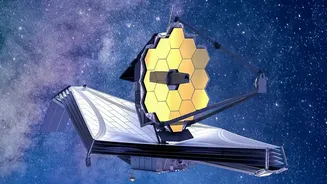
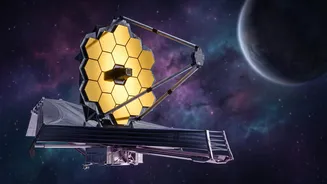
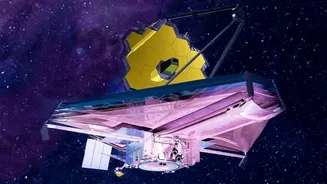
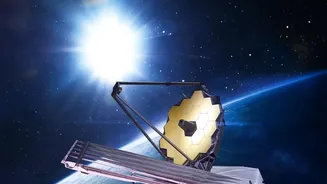
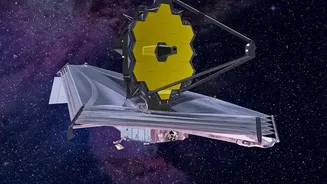
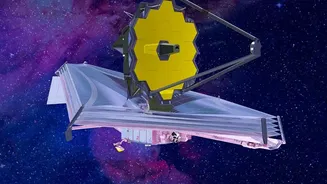
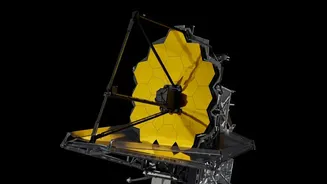
smaller than ice giants like Neptune. Their size gives them enough gravity to potentially hold onto an atmosphere, making them prime candidates in the search for habitable worlds. The James Webb Space Telescope is specifically designed to study these intriguing planets, many of which orbit their stars in days or even hours. While many are too hot for life as we know it, they serve as perfect laboratories for testing Webb's ability to analyze alien skies.
Cosmic Shadow Play: The Transit Method
Detecting a planet hundreds of light-years away is one challenge; figuring out what its atmosphere is made of is another entirely. The primary technique used is called transit spectroscopy. It relies on a cosmic alignment: astronomers wait for the exoplanet to pass directly in front of its host star, from our point of view. As the planet makes this journey, or “transit,” it causes a tiny, almost imperceptible dip in the star’s brightness. While this dip confirms the planet’s presence and size, the real magic happens at the very edges of its silhouette. For a brief moment, a fraction of the star's light filters through the planet’s atmosphere before continuing its journey toward Webb's mirrors.
Reading the Rainbow of Starlight
That filtered starlight holds the secret to the planet's atmosphere. Just as a prism splits white light into a rainbow, Webb’s advanced spectrographs do something similar, but with far greater precision. These instruments, particularly the Near-Infrared Spectrograph (NIRSpec) and the Near-Infrared Imager and Slitless Spectrograph (NIRISS), spread the incoming light into a detailed spectrum. Every chemical element and molecule absorbs light at specific, unique wavelengths. When starlight passes through an atmosphere containing water, those water molecules absorb very particular colours of light. This leaves a distinct pattern of dark lines in the spectrum—a sort of chemical “barcode” that Webb is powerful enough to read from across the galaxy.
The Unmistakable Signature of Water
By analyzing this barcode, scientists can identify the molecules present. Water (H2O) has a well-understood and unambiguous signature in the infrared part of the spectrum, which is exactly where the JWST excels. The telescope's incredible sensitivity allows it to detect even subtle traces of water vapor. In recent landmark observations, Webb has successfully identified these water signatures in the atmospheres of several exoplanets, including super-Earths. While some of these worlds, like GJ 486 b or TOI-561 b, are scorching hot lava planets where liquid water couldn't exist, the detection of its vapor is a monumental proof of concept. It proves that our technology can find the ingredients for life on distant rocky worlds.
Building a Picture of Distant Worlds
Water is a headline-grabbing discovery, but it’s just one piece of the puzzle. The same transit spectroscopy method allows scientists to detect a whole menu of other atmospheric gases. Using its suite of instruments, Webb has successfully identified carbon dioxide, methane, and sulfur dioxide on various exoplanets. This chemical inventory helps astronomers understand how a planet formed and what its climate might be like. For example, the presence of certain molecules can hint at active chemistry or clouds. By combining all these clues, scientists are moving beyond simply finding planets to truly characterizing them, slowly building a more complete picture of what these alien worlds are really like.