









Pune: The Cultural Epicentre
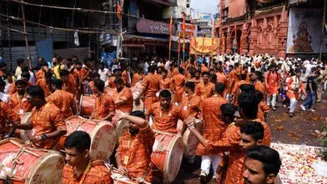
Pune is where the tradition of Sarvajanik Ganeshotsav, or public celebrations, was popularised by freedom fighter Lokmanya Tilak in 1893 to unite people. This history makes Pune’s festival deeply traditional and culturally rich. The city is famous for
its five 'Manache Ganpati'—the most revered idols that have the honour of leading the immersion procession. These include Kasba Ganpati, Tambdi Jogeshwari, Guruji Talim, Tulshibaug Ganpati, and Kesari Wada Ganpati, each with a unique history. Walking through the decorated lanes of the old city, known as 'Peths', offers a journey back in time, with a focus on heritage and community rather than just scale.
Hyderabad: The Land of the Giants
Hyderabad's celebration is defined by sheer scale, epitomized by the colossal Khairatabad Ganesh. Started in 1954 with a one-foot idol, this Ganesha has grown to be one of India's tallest, often soaring over 60 feet. Thousands of devotees flock to witness this magnificent idol during the ten-day festival. The grand immersion procession on the final day, when the giant idol makes its way to Hussain Sagar Lake, is a spectacle of immense devotion and energy, drawing massive crowds from across the region. The festival here is a powerful blend of devotion, artistry, and grandeur.
Ganpatipule: A Serene Coastal Celebration
For a more tranquil and spiritual experience, the coastal town of Ganpatipule in Maharashtra is an ideal destination. The heart of the celebration is the 400-year-old Swayambhu Ganapati Temple, where the idol is believed to be self-manifested. Unlike the bustling city pandals, the festivities here are set against the serene backdrop of the Arabian Sea. Devotees participate in peaceful processions and aartis on the beach, creating a unique blend of natural beauty and divine celebration. It’s a perfect escape for those seeking blessings away from the massive crowds.
Goa: A Festival of Family and Nature
In Goa, Ganesh Chaturthi, known locally as 'Chavath', is a deeply personal, family-oriented affair. The celebrations here are less about public pandals and more about traditions at home. A unique feature is the 'Matoli', a wooden canopy decorated with local, seasonal fruits, flowers, and herbs, which is hung above the Ganesha idol. This practice connects the festival to nature and the local harvest. The festivities are marked by traditional Konkani music, folk performances, and family reunions, offering a quieter, more intimate glimpse into the state's rich culture.
Bengaluru: An Eco-Conscious and Cultural Affair
Bengaluru celebrates Ganesh Chaturthi with a modern, eco-conscious twist and a strong emphasis on culture. In recent years, there has been a significant push for eco-friendly idols, with many pandals and households opting for clay Ganeshas. The city hosts several large-scale events, with the Bengaluru Ganesh Utsava in Basavanagudi being one of the most prominent, running for over 60 years. This event is known for its grand cultural programmes, featuring renowned artists and musicians, transforming the festival into a major cultural showcase. Pandal hopping is popular, with lakes like Ulsoor serving as major immersion points.
Chennai: A Disciplined Southern Spectacle
In Tamil Nadu, the festival is known as Vinayaka Chaturthi and is celebrated with a distinct southern charm and devotion. While home pujas are common, Chennai is known for its large-scale and orderly immersion ceremony, or 'Visarjan'. Thousands of idols from across the city are brought in procession to designated spots along the coast, such as Marina Beach and Pattinapakkam, for immersion. The offerings here include the sweet dumpling 'kozhukattai', a South Indian cousin to the modak. The celebration is marked by a blend of vibrant street energy and disciplined ritual.
Delhi: A Capital Celebration in a Cultural Melting Pot
As a melting pot of cultures, Delhi hosts diverse Ganesh Chaturthi celebrations. While not on the scale of Mumbai or Pune, several communities, especially Maharashtrian societies, organise elaborate pandals and cultural events. Places like the Sri Vinayaka Mandir in Mayur Vihar and pandals in areas like Netaji Subhash Place, known as 'Delhi's Lal Bagh Ka Raja', become hubs of festivity. These celebrations bring a slice of Maharashtra's Ganeshotsav to the capital, complete with traditional food stalls, music, and a grand visarjan, reflecting the city's multicultural fabric.