





The Power of the Standing Break
Before diving into specific exercises, it’s vital to embrace one of the most effective tools against a sedentary workday: the standing break. Prolonged sitting is linked to back pain, poor circulation, and even a dip in mood and productivity. Standing
up forces a postural reset, improves blood flow, and can increase energy and focus. Experts recommend taking a break from sitting every 30 to 60 minutes. You can follow a simple pattern like the '20-8-2 rule': sit for 20 minutes, stand for 8, and move for 2. Even just standing for a few minutes while you take a call or read an email can make a significant difference. It’s not about overhauling your day, but integrating small, powerful moments of movement.
1. Seated Spinal Twist
This gentle twist helps relieve tension in the lower back and improves spinal mobility. Sit tall in your chair with your feet flat on the floor. While keeping your hips facing forward, gently twist your upper body to the right. You can use your hands to hold onto the armrest or the back of the chair to deepen the stretch. Hold for 15-30 seconds, breathing deeply, and then slowly return to the center before repeating on the left side. This movement helps counteract the static, forward-facing posture we hold all day.
2. Neck and Shoulder Rolls
We often hold tension in our neck and shoulders, especially when stressed or concentrating. To release this, sit upright and gently drop your ear toward your shoulder, holding for a few seconds. Then, slowly roll your head forward, bringing your chin to your chest, and over to the other shoulder. Avoid rolling your head all the way back. Follow this with shoulder rolls: lift your shoulders up toward your ears, then roll them back and down, squeezing your shoulder blades together. Repeat this 5-10 times to ease stiffness.
3. Wrist and Finger Stretches
Hours of typing and mouse work can lead to serious strain. To combat this, extend one arm in front of you with the palm facing up. With your other hand, gently pull your fingers down and back toward your body until you feel a stretch in your forearm. Hold for 15-30 seconds. Next, flip your hand so the palm faces down and gently press the back of your hand toward your body. Repeat on both sides. Finish by making a tight fist and then spreading your fingers as wide as possible, repeating several times to improve circulation.
4. Upper Back and Chest Opener
Hunching over a keyboard tightens chest muscles and strains the upper back. Counteract this by sitting or standing tall and interlacing your fingers behind your back. Straighten your arms and gently pull your hands down and away from your body, opening up your chest. If you can, lift your arms slightly. You should feel a stretch across the front of your shoulders. Hold for 15-20 seconds while breathing deeply. This is a fantastic way to reset your posture throughout the day.
5. Desk Chair Squats
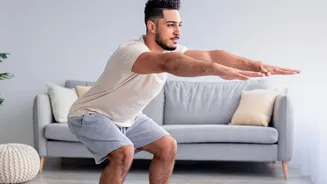
This exercise strengthens your legs and glutes without you needing to leave your workspace. Stand up from your chair and position yourself in front of it. With your feet shoulder-width apart, slowly lower your hips back and down as if you are about to sit, keeping your chest up and back straight. Hover just above the chair for a moment before pushing through your heels to stand back up. For safety, use a stable chair without wheels. Aim for 8-12 repetitions. If needed, you can lightly touch the chair for balance.
6. Seated Leg Lifts
Engage your core and leg muscles right from your seat. Sit tall with your back straight and not leaning against the chair. Extend one leg straight out in front of you until it's parallel with the floor, focusing on squeezing your quadriceps (the muscles at the front of your thigh). Hold for 5-10 seconds before slowly lowering it back down. Repeat 10-15 times on one leg before switching to the other. This simple move helps to maintain muscle tone and promote circulation in your lower body.
7. Standing Calf Raises
Take advantage of a standing break with this simple but effective exercise. Stand with your feet flat on the floor, holding onto your desk or a stable chair for balance. Slowly push through the balls of your feet to raise your heels as high as you can. Hold the position for a moment, feeling the contraction in your calf muscles. Then, slowly lower your heels back to the ground. Perform 15-20 repetitions to help strengthen your lower legs and improve balance.