

The 'Evening Star' That Isn't a Star
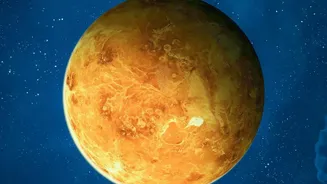
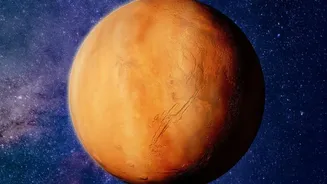
The incredibly bright object making an appearance in the western sky after sunset is Venus, our planetary neighbour. Often called the 'Evening Star' or 'Morning Star' depending on when it's visible, Venus doesn't produce its own light. Instead, its thick,
highly reflective clouds bounce sunlight back at us, making it appear far brighter than any actual star in the night sky. In fact, throughout August 2026, Venus will be the most dominant object in the evening sky, shining with a brilliant, steady light.
When and Where to Look
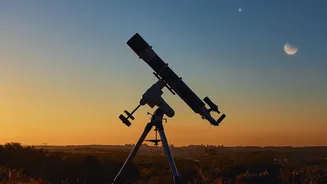
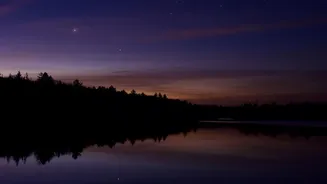
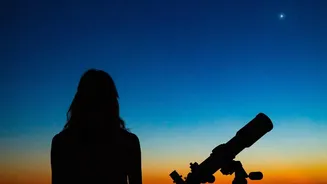
To spot Venus from India in August, you'll need to look to the west in the window of time just after the sun has set. As the sky darkens, Venus will emerge through the twilight glow, impossible to miss due to its brightness. It will be visible for a good period before it, too, sets below the horizon. Mid-August is a particularly good time to look, as the planet reaches its greatest separation from the sun, placing it high and clear in the evening sky.
What Makes Venus Stand Out
There are two key features that will help you confirm your sighting. First is its immense brightness; Venus shines more brilliantly than any other planet or star, with a powerful, silvery-white gleam. The second clue is its steady light. Stars, which are incredibly distant suns, appear to twinkle because their light is distorted by Earth's atmosphere. Planets in our solar system are much closer, so their reflected light is more stable and doesn't twinkle in the same way. Look for a bright, unwavering beacon in the west, and you've almost certainly found Venus.
A Celestial Companion This Month
To make your sky-watching even more rewarding, Venus has a companion for much of August. You may notice a slightly less bright star nearby; this is Spica, the brightest star in the constellation Virgo. Throughout the month, you can watch Venus appear to move closer to Spica, heading for a close conjunction in early September. On some evenings, like August 15, the crescent Moon will also join the pair, creating a beautiful celestial gathering. Watching this slow dance unfold night after night is a simple pleasure of stargazing.
Use Your Phone as a Planetarium
If you want to be absolutely certain, modern technology is your best friend. There are numerous free and easy-to-use stargazing apps available for both Android and iOS that can help you identify celestial objects. Apps like SkyView, Star Walk 2, and Google's Sky Map use your phone's camera and GPS to create an augmented reality view of the sky. Simply point your phone towards the bright object you see, and the app will confirm if it is Venus, show you the name of nearby stars like Spica, and even draw the constellation shapes for you. For those interested in a more India-centric view, the Bhagol app offers names and constellations from Indian astronomy.