




A future without cancer, Alzheimer's, or heart disease in just ten years? That's the stunning prediction from Anthropic's CEO, Dario Amodei. The claim pits tech optimism against medical reality. Is this hope, or is it hype?
The Ten-Year Promise
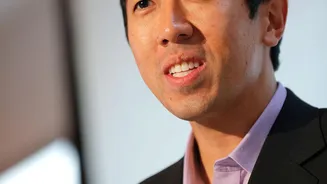
Dario Amodei, the chief executive
of prominent AI firm Anthropic, has made a habit of bold predictions. His most recent and audacious claim is that artificial intelligence could make major diseases like cancer 'relics of the past' in less than a decade. Amodei argues that advanced AI could compress what would have been 50 to 100 years of biological progress into a mere five to ten years. This vision, which he has detailed in essays and public statements, isn't just about faster computers; it's about AI systems that can propose hypotheses, design experiments, and analyse results, effectively becoming a tireless 'co-scientist' for researchers. It's a vision shared by other tech leaders, including Google DeepMind's Demis Hassabis, who see AI as the key to unlocking an 'age of miracles' in medicine.
How AI Is Already Fighting Cancer
While a total cure remains a distant goal, AI is already making a tangible impact on cancer care today. In diagnostics, AI has proven to be a powerful ally for radiologists. A major Swedish trial found that AI-assisted mammogram reading caught more cancers than standard screening without increasing false alarms. Researchers are also using AI to predict future cancer risk by detecting subtle changes in medical images that are invisible to the human eye. Beyond screening, AI is accelerating the discovery part of drug development. Anthropic itself has partnered with pharmaceutical companies like Bristol Myers Squibb to help analyse clinical trial plans and design new therapeutic molecules. In one collaboration, AI helped redesign a component of an immune cell therapy, making it ten times more effective at killing tumour cells in lab tests.
The 'Not One Disease' Problem
A major reality check on the 'AI will cure cancer' narrative comes from oncologists and medical researchers themselves. They stress a fundamental point: cancer is not one disease. It is a catch-all term for over 200 distinct diseases, each with its own genetic drivers and complexities. As oncologist Sherene Loi points out, while AI will bring huge efficiencies, the idea of a single, universal cure in a decade misunderstands the biological complexity of cancer itself. An AI model might be able to generate a million hypotheses for new drugs, but each one must still be rigorously tested through experiments and lengthy human trials. The path from a promising molecule identified by an AI to an approved, safe, and effective drug on the market is incredibly long and expensive, a journey that AI can accelerate but not bypass entirely.
The Long Road of Regulation and Reality
Even if AI could magically design a perfect cancer-killing drug tomorrow, it would still face the formidable hurdles of clinical trials and regulatory approval. Identifying a drug candidate is just the first step. The process involves years of testing in humans to prove both safety and efficacy, a timeline that cannot be compressed by computation alone. Pharmaceutical executives and medical experts are quick to temper the bold predictions of tech CEOs with this dose of reality. Furthermore, for AI models to work, they need vast amounts of high-quality, unbiased data, which is often siloed in proprietary databases within competing companies. Issues like data privacy, model transparency (the 'black box' problem), and ensuring AI systems work for all populations, not just those they were trained on, are massive challenges that must be solved.
Hope, Hype, and the Road Ahead
So,, will cancer be a 'relic of the past' by 2036? The consensus among medical professionals is that this timeline is extremely optimistic. The ten year cure is more of an aspirational goal than a guaranteed outcome.. However,, this doesn''t mean the excitement around AI in medicine is misplaced.. The AI revolution in cancer research is already underway.. AI is poised to make drug discovery faster,, cancer detection earlier,, and treatments more personalised.. While it might not deliver a single 'cure'' in the next decade,, AI is set to become an indispensable partner in the fight against cancer,, ushering in an era of incremental gains that will,, over time,, save countless lives.. The journey is just beginning,, and it promises to be one of the most significant in medical history.