



A Spectacular Show Over Europe
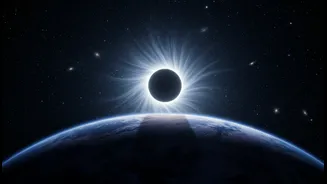
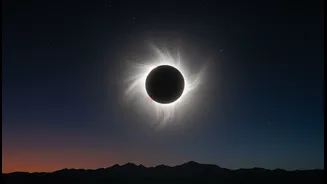
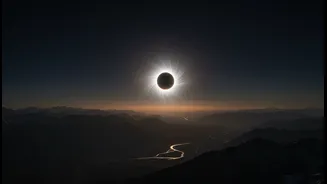
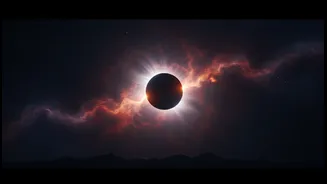
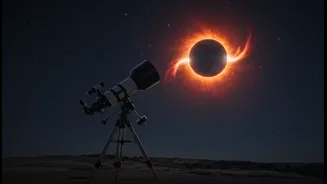
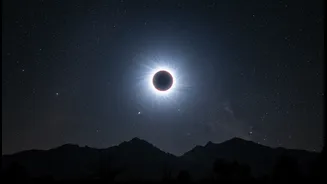
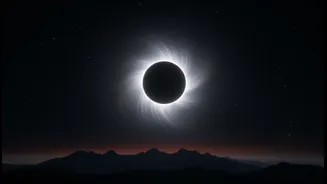
On August 12, 2026, the Moon will pass directly between the Earth and the Sun, casting a deep shadow that creates a total solar eclipse. This dramatic event, where day briefly turns into twilight, will trace a path across the Arctic, Greenland, Iceland,
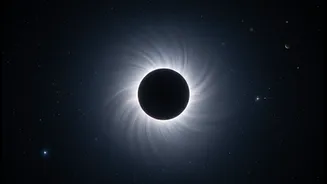
and the Atlantic Ocean. The grand finale of this celestial spectacle will occur over northern Spain, where cities like Valencia and Palma will be plunged into midday darkness. For those in the path of totality, the Sun's brilliant corona—its ethereal outer atmosphere—will become visible to the naked eye. It's a rare and profound astronomical experience, which is why it is generating so much excitement globally.
The View from India: A Clear Answer
So, what will skywatchers, students, and enthusiasts in India be able to see? The short and direct answer is, unfortunately, nothing. The total solar eclipse of August 12, 2026, will not be visible from anywhere in India. The path of the Moon's shadow, known as the path of totality, is very narrow and will pass thousands of kilometres away from the subcontinent. By the time the eclipse reaches its peak over Europe, it will be evening or night in India, with the Sun having already set and well below the horizon.
Why Geography Matters in Eclipses
The reason for this lack of visibility comes down to simple celestial mechanics and geography. A total solar eclipse can only be seen from within the specific, narrow track of the Moon's umbral shadow as it sweeps across the Earth's surface. This path is typically only about 100-200 kilometres wide. If you are not within this path, you will either see a partial eclipse or, if you are on the other side of the world, no eclipse at all. For the 2026 event, India is positioned on the wrong side of the planet to witness any phase of the eclipse, total or partial.
How to Join the Experience from India
Just because we can't see the eclipse directly doesn't mean we have to miss out on the experience. The digital age provides a front-row seat. Major space agencies like NASA and the European Space Agency (ESA) will host high-quality, expert-narrated live streams of the eclipse. This is a fantastic way to see the full event in real-time, complete with close-up views from telescopes. Many astronomy clubs and educational institutions in India, like SPACE India and local city clubs, often organize online viewing parties and discussions, creating a community feel for these global events. Following astronomers and astrophotographers located in Spain or Iceland on social media will also offer a thrilling, on-the-ground perspective.
A Powerful Teachable Moment
For students and educators, the 2026 eclipse is a perfect 'teachable moment'. The event serves as a practical and exciting entry point for discussing a wide range of scientific topics. These include the orbits of the Earth and Moon, the mechanics of shadows, the phases of the Moon, and the composition of the Sun. Schools and parents can use online resources, simulations, and educational kits to explain why eclipses happen. Even simple activities, like creating a model of the Sun-Earth-Moon system or building a pinhole projector to understand how light travels, can bring the science to life.
Mark Your Calendars for August 2, 2027
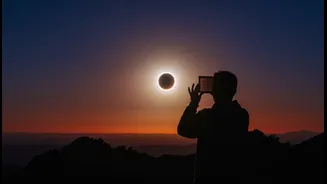
Here's the good news for Indian astronomy enthusiasts. While we miss out in 2026, a major solar eclipse is just around the corner for us. On August 2, 2027, a significant partial solar eclipse will be visible from all over India. From cities like Delhi, the Moon will cover a substantial portion of the Sun in the late afternoon, creating a dramatic crescent Sun that will be a fantastic photographic and viewing opportunity. This gives everyone in India a concrete date to look forward to and plenty of time to prepare, acquire safe solar-viewing glasses, and plan local viewing events.