
The First ODI Double Century
For nearly four decades of One-Day International cricket, scoring a double hundred was a fantasy. The 50-over format seemed too short for such a feat. Pakistan's Saeed Anwar came agonizingly close with 194 in 1997, a record that stood for 13 years and
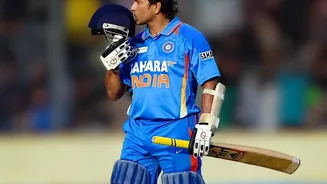
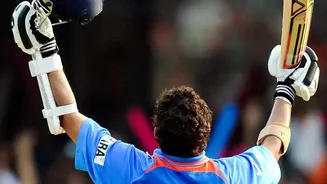
was only equaled once. It became a psychological barrier. Then, on February 24, 2010, in Gwalior, Sachin Tendulkar made the impossible a reality. Facing a formidable South African attack with bowlers like Dale Steyn, the Little Master played an innings of sublime control and aggression. He reached his double century off the 147th ball he faced, remaining unbeaten on 200. It wasn't just a record; it was the shattering of a collective mental block, proving that the 200-run mountain in ODIs was indeed scalable.
The Mount Everest of Test Batting
If one batting record was built to last an eternity, it was the highest individual Test score. In 1994, Brian Lara scored a monumental 375. A decade later, Australia's Matthew Hayden surpassed it with 380. Just six months after losing his record, Lara took it back in spectacular fashion. In April 2004, against England in Antigua, he batted for nearly 13 hours across two days to score an unbeaten 400. It was the first-ever quadruple century in Test history. Facing 582 deliveries, he hit 43 fours and four sixes in an ultimate display of endurance, skill, and concentration. The innings was so immense that it drew criticism from some for being a personal pursuit over a team victory, but it remains a singular achievement. Lara didn't just break the record; he took it to a place no one has reached since.
The Perfect Ten
Taking all ten wickets in a single Test innings is a bowler's ultimate dream, a feat of such rarity it has only been achieved twice in the history of men's Test cricket. England's Jim Laker was the first, taking 10 for 53 in 1956. For 43 years, it seemed like a unique, unrepeatable moment in time. But on February 7, 1999, at Delhi's Feroz Shah Kotla, Anil Kumble joined that exclusive club. In a high-pressure match against arch-rivals Pakistan, Kumble single-handedly dismantled their batting lineup in the fourth innings. Pakistan was chasing 420 to win and had a strong start before Kumble began his magical spell. One by one, he claimed every wicket, finishing with figures of 10 for 74 to lead India to a historic victory. It was a moment of perfect dominance that immortalized him in cricket folklore.
Six Sixes in a T20 Over
The advent of Twenty20 cricket brought a new dimension of power-hitting, but hitting every ball of an over for a six remained an elusive feat in international T20s. On September 19, 2007, during the inaugural T20 World Cup, a young Yuvraj Singh turned a brief on-field argument into a historic onslaught. In a match against England, after a heated exchange with Andrew Flintoff, Yuvraj faced a young Stuart Broad. What followed was pure carnage. He dispatched all six balls of the 19th over into the stands, each with brutal elegance. In the process, he also scored the fastest-ever T20 fifty, off just 12 balls, a record that still stands. It was the first time six sixes had been hit in an over in a T20 international, a perfect exhibition of power that defined the format's explosive potential.
Redefining the ODI High Score
After Tendulkar broke the 200-run barrier, the floodgates opened. But while others crossed the mark, Rohit Sharma turned it into his signature. On November 13, 2014, against Sri Lanka at Eden Gardens, Sharma didn't just score a double century; he redefined what was possible in a 50-over innings. He scored an unbelievable 264 runs off 173 balls. The innings was a masterclass in construction; after a measured start, he exploded, with his final 164 runs coming off just 73 balls. His knock included a record 33 fours and nine sixes. This was his second ODI double hundred, making him the first player to achieve the feat. He would later score a third, but his 264 remains the highest individual score in ODI history, a number that seems almost surreal.