





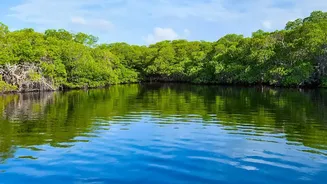
A Living Wall Against the Sea
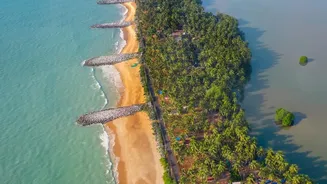
India's east coast has always been particularly vulnerable to cyclones. For coastal communities, this means living with the constant threat of storm surges that can flood homes, destroy agricultural land, and devastate livelihoods. While concrete embankments
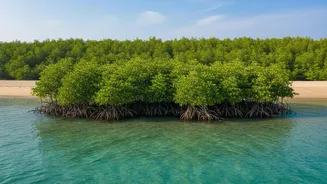
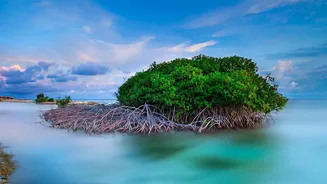
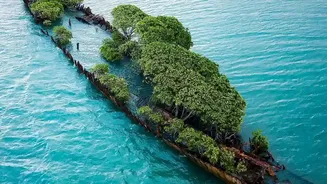
have been a common defence, they are expensive and can have unintended consequences. In this context, mangrove forests have emerged as a critical first line of defence. Their dense, tangled root systems act as a natural barrier, absorbing and dissipating the energy of waves before they can reach the shore. Studies have shown that a healthy mangrove forest can reduce wave energy by up to 66% in the first 100 metres. This natural shield not only saves lives and property but also stabilises the shoreline by trapping sediment and preventing erosion.
Community at the Core
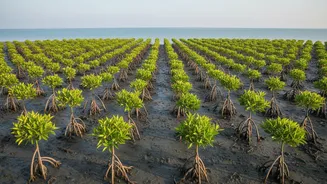
What makes these restoration efforts so powerful is that they are driven by the very people they are meant to protect. Across states like Odisha, Tamil Nadu, and West Bengal, community-led initiatives are at the forefront of mangrove revival. In villages like Bichitrapur in Odisha's Balasore district, locals who once faced flooding now lead the charge in planting and nurturing new mangrove forests. The process is a blend of traditional knowledge and scientific planning. Community members, especially women, are actively involved in every step, from establishing nurseries and collecting saplings to planting them in degraded coastal areas. This hands-on approach ensures not just the survival of the trees, but a deep sense of ownership and stewardship within the community.
From the Ground Up
The restoration process begins with careful planning. Technical assessments, including soil analysis and hydrological studies, are combined with the local knowledge of fishermen and village elders to identify the most suitable sites for plantation. In Tamil Nadu's Muthupet, the Green Tamil Nadu Mission successfully united over 10,000 villagers from 16 fishing villages, forming Village Mangrove Councils (VMCs) to oversee the work. These councils manage everything from planting to desilting canals to ensure vital tidal flow reaches the young trees. Villagers often establish a voluntary watch system, patrolling the restored areas to protect the saplings from grazing and other disturbances, ensuring the new green wall has the best chance to grow strong.
More Than Just Protection
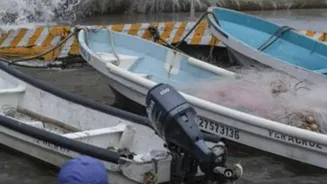
The benefits of mangrove restoration extend far beyond coastal defence. These vibrant ecosystems are crucial nurseries for fish, crabs, and shrimp, leading to a significant recovery in local fish populations. For communities that depend on fishing, this means improved catches and greater food security. The revival of mangroves also creates new livelihood opportunities. In the Sundarbans, the number of crab collectors has increased tenfold in some project areas. Women's groups are being trained to create and market products like mangrove honey and pickles, providing sustainable incomes that are directly linked to the health of the forest. Furthermore, these forests are powerful carbon sinks, playing a vital role in combating climate change.
The Path Forward
The journey to restoring India's mangrove cover is not without its challenges. Sapling survival rates can be affected by pollution and changing tidal patterns, and projects require sustained funding and strong policy support to succeed. However, the success of initiatives like the Enhancing Climate Resilience of India's Coastal Communities (ECRICC) project in Odisha and the TN-SHORE programme in Tamil Nadu provide a scalable model for climate adaptation. These projects demonstrate that when government agencies, NGOs, and local communities work together, it is possible to build a more resilient future. The growing green shields along India's eastern coast are a testament to the power of local action in the face of a global climate crisis.