




A New Strategic Vision
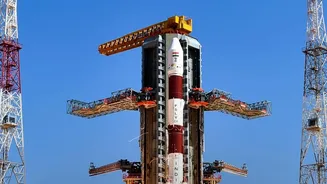
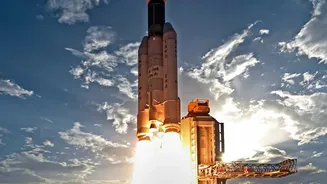
India's space sector is undergoing its most significant transformation since its inception. Historically, the Indian Space Research Organisation (ISRO) was the sole architect of the nation's space ambitions, from building rockets to launching satellites.
While this model brought immense success and national pride, the global space economy evolved, becoming a multi-billion dollar industry driven by private innovation. Recognizing this, the Indian government initiated a series of sweeping reforms starting around 2020, designed to unlock the sector's commercial potential. The goal is no longer just to be a space-faring nation, but to become a global space economy powerhouse. The government has set ambitious targets, aiming to increase India's share of the global space market from its current 2-3% to 8% by 2033, and to grow the domestic space economy from approximately $8.4 billion to over $44 billion in the same period.
The Three Pillars of Reform
The new policy landscape rests on three institutional pillars, each with a distinct role designed to create a cohesive ecosystem. First, ISRO's role is being redefined. It will transition away from routine manufacturing and operational tasks to focus on what it does best: advanced research and development, pioneering new technologies, and undertaking deep space exploration missions. Second, the Indian National Space Promotion and Authorisation Centre (IN-SPACe) has been established as an autonomous single-window agency. Its job is to promote, authorize, and oversee the activities of private companies (Non-Governmental Entities or NGEs), providing a clear and predictable regulatory framework and acting as the crucial interface between the private sector and ISRO's extensive facilities. Third, NewSpace India Limited (NSIL) acts as the primary commercial arm. NSIL is tasked with commercializing mature technologies developed by ISRO, managing satellite manufacturing, and procuring launch services, effectively translating public-funded research into market-ready products.
Opening the Doors to Investment
Perhaps the most critical catalyst for growth is the liberalized Foreign Direct Investment (FDI) policy, amended in February 2024. This reform opens the door for significant global capital and technology to enter the Indian market. The policy allows for up to 100% FDI via the automatic route for manufacturing components and subsystems for satellites, ground segments, and user segments. For activities like satellite manufacturing and operations, the automatic route is open up to 74%, with government approval required beyond that. For launch vehicles and the creation of spaceports, the automatic limit is set at 49%. This tiered structure is designed to attract substantial foreign investment, which is crucial for a capital-intensive industry, while ensuring strategic sectors remain under national oversight. This move is expected to integrate Indian startups and companies into the global supply chain, fostering partnerships and accelerating innovation.
Fueling the Startup Engine
The policy shift has already ignited a startup boom. The number of registered space startups has surged from just one in 2014 to over 400 by 2026. To further nurture this nascent ecosystem, the government has announced several financial support schemes. These include a ₹1,000 crore Venture Capital Fund dedicated to space startups and a ₹500 crore Technology Adoption Fund to help companies turn early-stage ideas into commercially viable products. IN-SPACe also runs a Seed Fund Scheme to support entrepreneurs at the very beginning of their journey. This combination of regulatory clarity and financial backing is empowering a new generation of entrepreneurs to develop everything from small satellite launch vehicles and high-resolution Earth observation satellites to in-orbit servicing technology.
Challenges on the Final Frontier
Despite the positive momentum, the path to becoming a $44 billion space economy is not without its hurdles. One of the primary challenges is the need for a comprehensive Space Activities Bill to provide a solid legislative foundation covering complex issues like liability, insurance, and international obligations, which are still under development. While access to ISRO facilities is improving, private companies still face infrastructure constraints, including a limited number of launch pads and testing facilities. Furthermore, the sector remains dependent on imports for certain critical components like space-grade semiconductors and advanced sensors. Finally, Indian companies face intense global competition from established players like SpaceX and Rocket Lab, requiring continuous innovation and cost competitiveness to secure a significant share of the international market.