



The Astronomical Price Tag
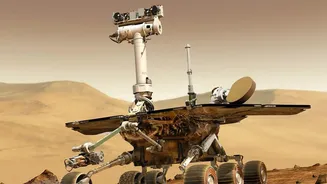
The most striking difference between robotic and human missions is the cost. NASA's Perseverance rover, a highly sophisticated mobile science lab, had a price tag of around $2.7 billion. While a significant investment, it is dwarfed by the estimated cost of a crewed
Mars mission. Projections for sending humans to the Red Planet soar into the hundreds of billions, with some estimates reaching as high as $600 billion or more. The reason for this colossal gap is simple: humans are fragile. A crewed mission requires a spacecraft equipped with life support systems providing breathable air, water, and food for a journey that could last up to three years. It also needs extensive radiation shielding, medical facilities, and, most importantly, a vehicle capable of not only landing on Mars but launching off its surface for the return trip to Earth—a massive engineering and fuel-intensive challenge that robots don't require.
Human Life vs. Hardware Failure
Beyond the financial investment, the risk assessment for each type of mission operates on entirely different planes. For a robotic mission, the primary risks are technical and financial. A rover could fail during its complex landing sequence, get stuck in Martian sand, or suffer a mechanical or software failure, ending the mission. The loss, while a major setback for scientists and a waste of investment, is limited to hardware. For a human mission, the stakes are infinitely higher. The greatest single threat is space radiation. Without the protection of Earth's magnetic field, astronauts are exposed to cosmic rays that can increase cancer risk and damage the central nervous system. Other grave dangers include the physiological effects of long-term exposure to reduced gravity—just 38% of Earth's—which leads to muscle atrophy and bone density loss. Furthermore, the psychological strain of extreme isolation and confinement, with communication delays of up to 22 minutes each way, poses a serious threat to crew mental health and mission safety.
The Quality of Scientific Discovery
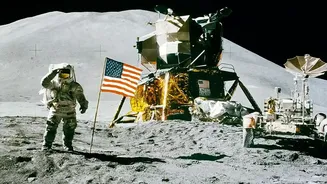
This is where the argument for human exploration gains its strongest footing. While rovers like Perseverance and Curiosity are incredible tools for science, they are slow and limited. The Curiosity rover's maximum speed is a mere 0.14 kilometres per hour. Every action must be meticulously planned and sent from Earth, a process that can take hours or days. In contrast, a human astronaut brings intuition, adaptability, and unparalleled problem-solving skills. A human geologist on Mars could identify promising rock samples, react to unexpected discoveries, and perform complex tasks like drilling or repairs in a fraction of the time it would take a robot. As one comparison noted, Apollo astronauts on the Moon covered more ground in three days than the Opportunity rover did in eight years. Humans can pivot, investigate a hunch, and apply a lifetime of experience in real-time, accelerating the pace of discovery exponentially.
A Partnership, Not a Competition
Ultimately, the 'robots versus humans' framing is becoming outdated. The modern approach, embraced by agencies like NASA, sees the two not as competitors but as partners in a phased exploration strategy. The consensus is that it's not a question of 'robotic or human exploration', but 'robotic and human exploration'. Robots are the perfect trailblazers. They are being sent ahead to act as scouts, mapping terrain, analysing the atmosphere, testing for resources like water ice, and even prototyping technologies like oxygen production from the Martian atmosphere, as seen with Perseverance's MOXIE experiment. These robotic precursors can identify the safest and most scientifically interesting landing sites, and could even begin constructing habitats and infrastructure before the first humans arrive, reducing the risk and workload for astronauts. This synergistic model uses the strengths of each approach: the cost-effectiveness and safety of robots for initial groundwork, followed by the irreplaceable adaptability and ingenuity of human explorers for deep scientific investigation.