
Saturn's Spectacular Preview
The star of the late August sky is undoubtedly Saturn. The ringed planet is heading towards its annual opposition in early October, a point when Earth passes directly between it and the Sun. This means that throughout late August, Saturn is growing exceptionally
bright and large in our sky. Look for a steady, yellowish point of light rising in the east around sunset, traversing the sky all night long. It currently resides in the constellation Cetus, the Whale. Even a basic pair of binoculars will stabilize its light, but a small telescope will begin to reveal its most famous feature: the rings. In 2026, we are treated to a unique perspective, as the rings are tilted at a narrow angle, appearing as a thin, delicate line bisecting the planet. This provides a different, more subtle beauty compared to when they are wide open. The weeks leading up to opposition are an ideal time for observation, making any clear night from now until the end of the month a perfect opportunity to marvel at this gas giant.
Dazzling Venus Dominates the West
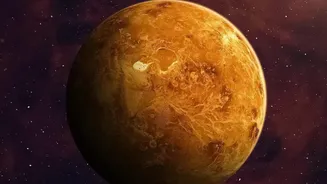
You simply cannot miss Venus this month. Look to the western sky shortly after sunset, and you will see a beacon of light that outshines everything but the Moon. This is the planet Venus, often called the “Evening Star.” Its brilliance is due to its thick, highly reflective cloud cover and its relative proximity to Earth. Throughout the end of August, Venus is putting on a slow-motion show for patient observers. Night after night, you can watch it drift eastward through the constellation Virgo, gradually closing the distance to the bright star Spica. This celestial chase will culminate in a beautiful conjunction on the first day of September, but watching the gap narrow each evening is a rewarding activity in itself. No special equipment is needed; just find a clear view of the western horizon as twilight deepens and enjoy the serene presence of our planetary neighbour.
A Celestial Dance: The Moon Meets Saturn
Conjunctions, where two or more celestial objects appear close together, are among the most photogenic and easily observed events. Late August delivers a beautiful pairing of the Moon and Saturn. From August 28th to the 30th, the waxing gibbous Moon will pass by the ringed planet. On these nights, Saturn will serve as a brilliant guidepost next to the lunar glow. The Moon will be approaching its full phase (which occurs on the 28th), so its light will be intense, washing out fainter stars. However, Saturn is bright enough to hold its own. This event offers a wonderful opportunity for naked-eye observers and photographers alike. To watch the pairing, simply look towards the eastern and southeastern sky in the evening. You will see the bright Moon and, nearby, the distinct, steady light of Saturn. Observing on consecutive nights will reveal the Moon's orbital motion as it changes position relative to the planet.
Catch a Final Falling Star
The Perseid meteor shower, one of the year's best, peaked back on August 12-13 under ideal moonless conditions. However, the shower remains active from mid-July until the beginning of September. This means that while the main spectacle is over, you can still catch a few 'straggler' meteors in the last week of August. The odds are much lower than during the peak, but the reward is a final, fleeting glimpse of this beloved annual event. For the best chance, find a location far from city lights after midnight. The Moon will be quite bright as it heads towards its full phase, which will make spotting fainter meteors challenging. However, Perseids are known for producing bright fireballs, and you might get lucky. Lie back, let your eyes adjust to the darkness for at least 20 minutes, and look broadly towards the northeastern part of the sky.
An Early Riser's Guide to the Planets
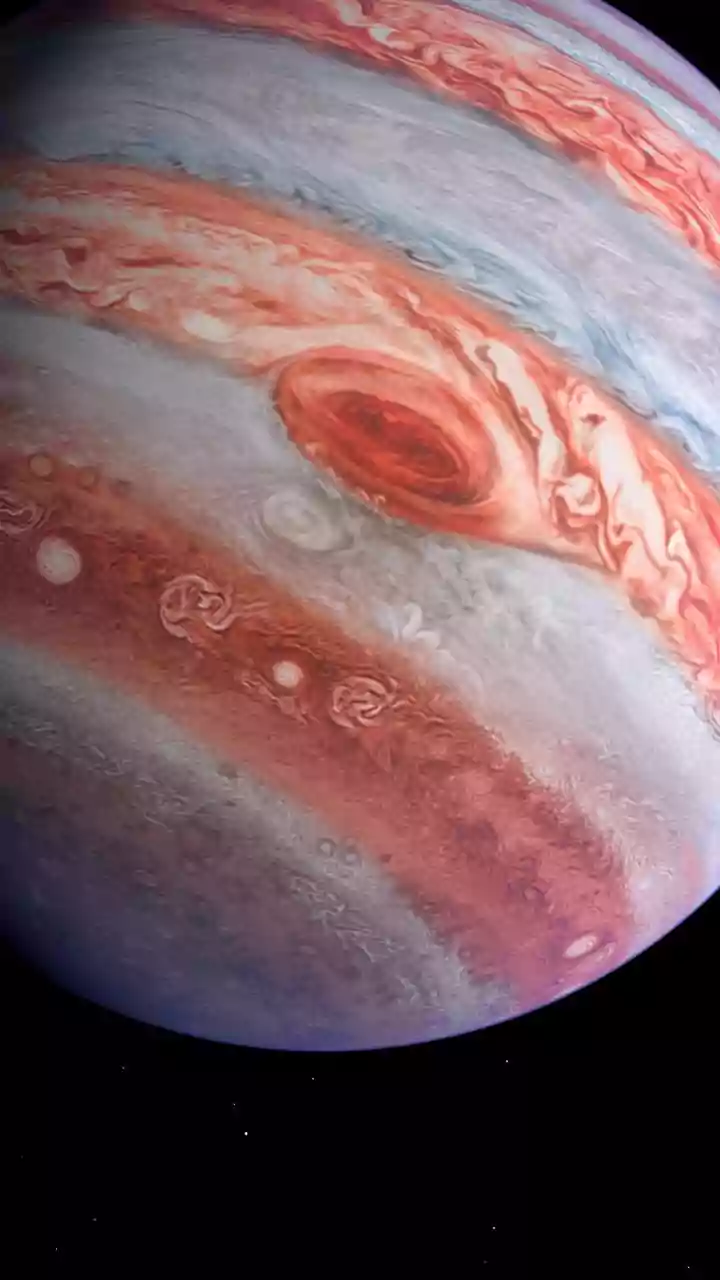
For those willing to wake up before the Sun, the pre-dawn sky holds its own set of planetary gems. The red planet, Mars, is a prominent fixture in the eastern sky before sunrise throughout the entire month. Its distinct reddish-orange hue makes it easy to identify. Joining the morning lineup late in the month is the king of planets, Jupiter. Look for it rising low in the east shortly before dawn. While many notable events like the six-planet parade occurred earlier in August, Mars and Saturn (which is visible all night) remain easily visible to the naked eye. Spotting these worlds as the sky begins to lighten is a tranquil and inspiring way to start the day, connecting you with the grand, silent movements of our solar system.