




More Than a Snack, It's an Experience
Let’s be honest: buying momos is easy. They’re on every street corner, a reliable, delicious fix for any craving. The thought of making them at home can seem daunting. The mixing, the kneading, the intricate folding — it feels like a project reserved
for grandmothers and professional chefs. But to view homemade momos through the lens of convenience is to miss the point entirely. The true magic of the momo isn't just its taste; it’s the slow, deliberate process of creation. It's a ritual that transforms a handful of simple ingredients into something special, not just for the palate, but for the soul. It's an opportunity to slow down in a fast-paced world, to create with your hands, and to connect with food in a way that ordering from an app never can.
The Dough: Your Pliable Canvas
The foundation of any great momo is the wrapper, and this is often the first point of intimidation. But here’s the secret: it’s surprisingly simple. At its core, momo dough is just all-purpose flour (maida), water, and a pinch of salt. That’s it. There's no yeast to activate, no complex proofing required. The key is in the kneading and the resting. Working the dough until it’s smooth and elastic develops the gluten, giving the wrapper the strength to hold the filling without tearing. Then, letting it rest, covered, for at least 30 minutes allows the gluten to relax, making it incredibly pliable and easy to roll out. Think of it not as a technical challenge, but as a simple, tactile starting point — a blank canvas waiting for its masterpiece.
The Filling: A World of Flavour
This is where your creativity truly comes alive. While classic fillings like spiced chicken mince or a fragrant mix of cabbage, carrots, and onions are timeless for a reason, your kitchen has no rules. Love paneer? Crumble it with some ginger, garlic, and coriander. Have mushrooms in the fridge? Finely chop them with spring onions and a dash of soy sauce. You can experiment with minced mutton, finely shredded vegetables, or even a sweet filling for a dessert momo. The homemade route gives you complete control over the quality of ingredients and the balance of flavours. You can make it spicier, more garlicky, or packed with more vegetables than any store-bought version. This is your momo, tailored perfectly to your taste.
The Fold: A Signature of Love
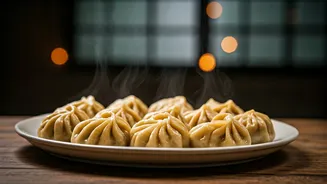
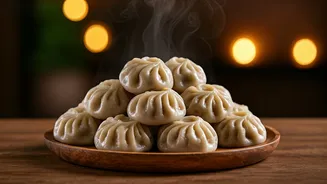
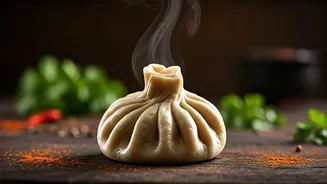
Ah, the fold. This is the step that separates the novices from the masters in our minds, but it shouldn't. Yes, a perfectly pleated half-moon or a neat round pouch is a thing of beauty. But perfection is not the goal here; participation is. Folding momos is a meditative, almost rhythmic, activity. Don’t worry about creating a flawless replica of what you see online. Your first few might be a bit clumsy, a little misshapen. That’s okay. They are your momos, and their unique shape tells a story. In many families, the folding is a communal activity, with everyone gathering around the table, hands dusted with flour, chatting as they pleat. Every imperfect fold is a mark of effort and love. And here's a foolproof truth: even the ugliest momo, when steamed and dunked in chutney, tastes absolutely divine.
The Final Reveal: Steam and Savour
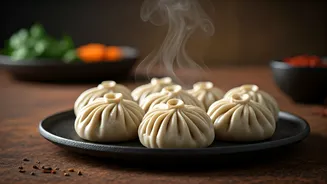
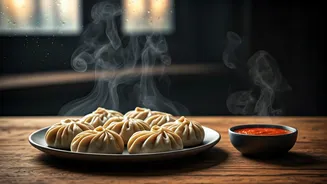
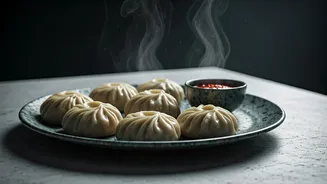
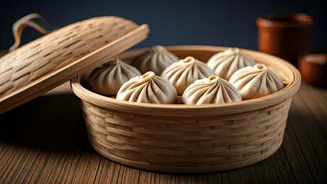
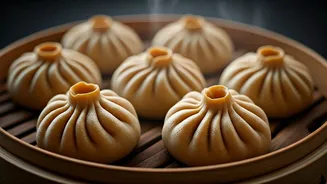
After the patient work of filling and folding, the final step is the most rewarding. As the steam fills your kitchen, the anticipation builds. Watching the raw, pale dumplings transform into translucent, plump parcels of joy is pure culinary magic. In just 10-12 minutes, you lift the lid to a sight you created from scratch. The first bite — a burst of savoury filling encased in a soft, chewy wrapper, dipped in fiery chutney — is a moment of triumph. It doesn't just taste good. It tastes of effort, of patience, and of the quiet pride that comes from creating something wonderful with your own hands.