



An Astronaut for a New Era
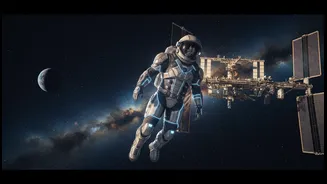
Dr. Anil Menon, a NASA astronaut of Indian and Ukrainian heritage, is at the forefront of tackling these challenges. A physician, engineer, and colonel in the U.S. Space Force, Menon brings a unique blend of skills to the International Space Station (ISS).
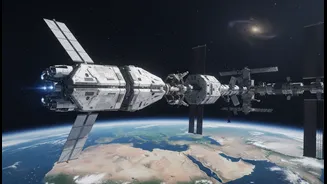
Before being selected as an astronaut in 2021, he was SpaceX's first flight surgeon, helping to launch the first private astronauts into orbit and developing medical systems for future missions, including Starship. Having launched to the ISS in July 2026 for an eight-month mission, his work aboard the orbiting laboratory is critical for NASA's Artemis program, which aims to establish a sustainable presence on the Moon and prepare for missions to Mars.
The Zero-Gravity Problem
On Earth, gravity is a predictable force. It makes water flow downwards and keeps fuel settled at the bottom of a tank. In the microgravity of space, this fundamental rule disappears. Fluids behave in strange and often counterintuitive ways. Instead of flowing, they can form floating spheres. Surface tension and capillary action—the forces that let water climb up a narrow straw—become dominant. This poses immense challenges for spacecraft systems. How do you ensure cryogenic propellants like liquid oxygen and hydrogen are reliably fed into an engine if they are sloshing unpredictably or clinging to the walls of a tank? How do you manage water for life support, coolants for electronics, or even make a simple cup of coffee without liquids going everywhere?
Experiments in Orbit
The ISS serves as a unique laboratory to study these phenomena. Experiments conducted by Menon and his crewmates help scientists understand and eventually master fluid behavior in space. These aren't just abstract physics problems; they have direct applications. One area of study is 'sloshing dynamics,' which examines how propellants move inside tanks during maneuvers. By understanding this, engineers can design more efficient fuel tanks that use every last drop and prevent the shifting liquid from destabilizing the spacecraft. Other experiments explore how multiphase fluids—mixtures of liquid and gas—flow through pipes and reactors. This is vital for designing reliable life support systems that can recycle water and air on multi-year missions to Mars, where resupply is not an option.
From Station to Deep Space
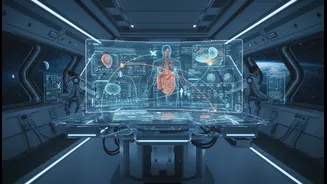
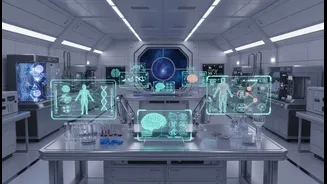
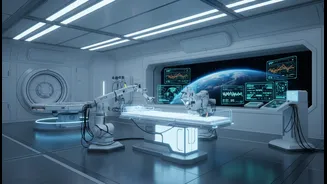
The knowledge gained from these orbital experiments is directly shaping the technology for deep-space exploration. For a long-duration mission, such as a trip to Mars, every system must be robust and self-sufficient. Menon's work includes testing technologies to produce intravenous (IV) fluids from the station’s own potable water supply. This capability could be a lifesaver in a medical emergency far from Earth. Similarly, understanding how fluids transfer heat in microgravity is crucial for designing thermal management systems that can withstand the extreme temperature swings on the Moon or during a long interplanetary journey. Solving these fluid physics challenges on the ISS today is the only way to ensure that the hardware for tomorrow's lunar landers and Martian habitats will function correctly.
India's Stake in the Stars
While Menon's work is part of a global NASA-led effort, it holds special significance for India. With the nation's own ambitious space program, including the Gaganyaan human spaceflight mission, the fundamental research being conducted on the ISS is invaluable. Understanding the intricacies of fluid management, life support, and medical care in space are challenges every spacefaring nation must solve. The research performed by astronauts like Anil Menon contributes to a shared pool of knowledge that will ultimately make space safer for everyone, including future Indian astronauts. His mission is a powerful example of how international collaboration and fundamental science pave the way for humanity's collective future in space.