


The Silent Damage of the Desk Job
Sitting for extended periods is more than just inactive; it actively works against your body’s natural design. When you're seated for hours, several negative changes occur. Your hip flexors, the muscles at the front of your hips, remain in a shortened,
tightened position. Simultaneously, your glute muscles, which are meant to be powerful movers, become inactive and weak. This combination leads to a cascade of issues, including poor posture, reduced flexibility, and often, chronic lower back pain. Beyond muscle imbalances, prolonged sitting slows your circulation, particularly in your legs, and can negatively impact your metabolism, increasing risks for conditions like obesity, high blood pressure, and unhealthy cholesterol levels. Research has even linked sitting more than eight hours daily with no physical activity to a risk of dying similar to that posed by smoking.
Your Counter-Movement Solution: Active Recovery
The answer isn't necessarily another punishing, high-intensity workout. Instead, the solution lies in active recovery. This involves performing low-intensity exercises designed to increase blood flow, reduce muscle soreness and stiffness, and improve mobility. Unlike a passive rest day spent on the couch, active recovery keeps you moving gently. For desk workers, it's the perfect tool to specifically target and reverse the patterns of stiffness and weakness caused by sitting. The goal is not to exhaust your muscles but to wake them up, promote healing, and restore their natural function.
Step 1: Unlock Your Hips
Since your hip flexors become short and tight from sitting, the first step is to open them up. A tight front automatically means a weak back. Releasing this tension can provide immediate relief to your lower back and improve your overall posture. Kneeling Hip Flexor Stretch: Kneel on your right knee, placing your left foot flat on the floor in front of you with your knee bent. Keeping your back straight, gently push your hips forward until you feel a stretch in the front of your right hip. For a deeper stretch, you can raise your right arm overhead. Hold for 30 seconds and then switch sides.
Step 2: Wake Up Your Glutes
After hours of inactivity, your glutes essentially go to sleep. Waking them up is crucial for supporting your lower back and improving hip function. Strong glutes help counteract the forward pull of tight hip flexors. Glute Bridge: Lie on your back with your knees bent and feet flat on the floor, about hip-width apart. Rest your arms by your sides. Press through your heels and lift your hips off the floor until your body forms a straight line from your shoulders to your knees. Squeeze your glutes at the top, hold for a few seconds, and then slowly lower your hips back down. Aim for 12 to 15 repetitions.
Step 3: Correct the 'Desk Hunch'
Staring at a screen often causes us to hunch forward, rounding the upper back and shoulders. This can lead to neck pain and stiffness. Specific movements can help reverse this posture. Wall Angels: Stand with your back against a wall, with your feet a few inches away from it. Try to keep your head, shoulders, and tailbone touching the wall. Bend your arms to 90 degrees, like a goalpost, with the backs of your hands and arms against the wall. Slowly slide your arms up the wall, going as high as you can while maintaining contact, then slide them back down. This movement helps improve mobility in your thoracic spine (upper back) and opens up your chest.
Making It a Daily Habit
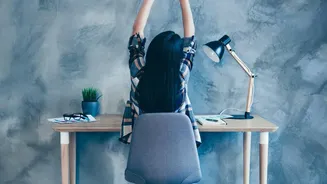
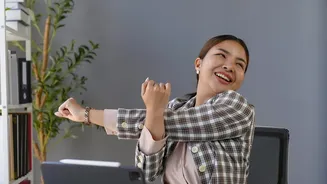
The key to counteracting a full day of sitting is consistency. You don’t need to block out an hour; instead, sprinkle these movements throughout your day. These short “movement snacks” can be more effective than one single session. Set a timer to stand up and stretch every 30-60 minutes. Perform a few glute bridges after work to reset your hips. Do a set of wall angels during a coffee break. Integrating these simple, targeted active recovery exercises into your daily routine is a powerful way to mitigate the damage of a sedentary job and keep your body feeling mobile and pain-free.