







The Protein Power-Up
The old wisdom of a carb-heavy breakfast is being challenged. Today, the focus is squarely on protein. Why the shift? A protein-rich breakfast helps with satiety, meaning you feel fuller for longer, which can prevent mid-morning snacking on unhealthy
options. It also aids in muscle repair and maintenance, and it provides a more stable energy release compared to the quick spike and crash from sugary cereals or refined-flour parathas. This trend goes far beyond just eggs. Think Greek yogurt bowls topped with seeds, smoothies blended with whey or plant-based protein powder, or even a savoury start with paneer bhurji or besan chilla. The goal is to front-load your protein intake, setting a strong metabolic tone for the day. For those on the go, protein bars have also become a popular, albeit often processed, choice. The key is to choose whole food sources of protein whenever possible.
Gut-Friendly Mornings
The gut is the new star of the wellness world, and for good reason. A healthy gut microbiome is linked to everything from better digestion and immunity to improved mood. This has translated into breakfasts designed to nourish our internal ecosystem. The focus is on two key components: probiotics (good bacteria) and prebiotics (fibre that feeds the good bacteria).
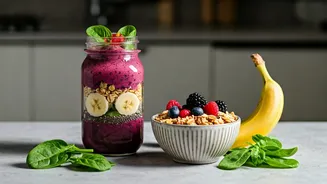
Probiotic-rich foods like homemade dahi (yogurt), kefir (a fermented milk drink), and kombucha are making their way to the breakfast table. Prebiotics are found in fibre-rich ingredients like oats, chia seeds, flaxseeds, and bananas—the building blocks of the ever-popular overnight oats and smoothie bowls. A simple bowl of dahi with sliced banana and a sprinkle of flaxseeds is an easy way to embrace this trend and support your digestive health from the first meal of the day.
Liquid Breakfasts & Superfood Smoothies
For the time-crunched, the liquid breakfast has become a saviour. But these aren't your grandfather's milkshakes. Modern breakfast smoothies and shakes are nutrient-dense powerhouses, designed for maximum nutrition with minimum fuss. They offer a convenient way to pack in a variety of food groups—fruits, vegetables, protein, and healthy fats—into a single, portable meal.
The trend is to “boost” these smoothies with superfoods. A scoop of moringa powder for vitamins, a dash of turmeric for its anti-inflammatory properties, or a spoonful of ashwagandha for stress support are common additions. Spinach, avocado, nut butters, and seeds like chia and hemp are also blended in to increase the nutritional payload. While convenient, it’s important to be mindful of sugar content, which can creep up quickly with too much fruit or added sweeteners.
The Rise of Ancient Grains
There's a growing recognition that the wisdom of our ancestors held powerful nutritional secrets. This has sparked a major comeback for ancient Indian grains, particularly millets. Once seen as humble, rural fare, millets like ragi (finger millet), jowar (sorghum), and bajra (pearl millet) are now celebrated for being gluten-free, high in fibre, and packed with micronutrients.
Chefs and home cooks are reinventing these grains in modern, delicious formats. Think ragi pancakes, jowar upma, or millet porridge topped with fresh fruit and nuts. Even traditional dishes like dosa and idli are being made with millet batters. This trend marries health with heritage, offering a sustainable and deeply nourishing way to start the day that connects us back to our roots while fitting perfectly into a contemporary wellness lifestyle.
Mindful Mornings & Delayed Eating
Perhaps the most disruptive trend is the one that questions breakfast itself. Popularised by intermittent fasting (IF) protocols, many people are now choosing to delay their first meal until late morning or even lunchtime. The idea is to extend the body’s overnight fasting window, which proponents claim can improve insulin sensitivity, promote cellular repair, and aid in weight management.
This doesn't necessarily mean skipping breakfast altogether, but rather shifting the eating window. Instead of a meal, the morning might start with hydration—water, black coffee, or green tea. This approach encourages a more mindful connection with your body's true hunger signals, rather than eating out of habit. However, IF is not for everyone; it’s not recommended for pregnant women, individuals with a history of eating disorders, or those with certain medical conditions.