


The Unspoken Ritual
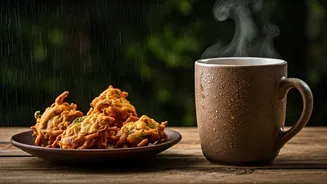
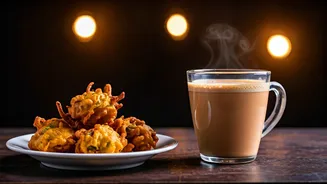
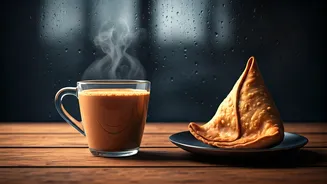
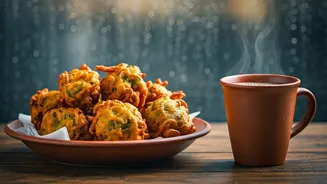
It’s a scene that plays out millions of times a day, in countless homes, offices, and roadside stalls across India. The gentle clink of a spoon against a ceramic cup, the fragrant steam rising from a freshly poured brew, and the rustle of a plastic wrapper.
We’re talking, of course, about the sacred pairing of chai and ‘biskoot’. This isn't a snack; it's a punctuation mark in the day. It’s the pause that recharges a sluggish afternoon, the warm welcome for an unexpected guest, and the quiet comfort on a rainy evening. No elaborate preparation is needed. There are no rules of etiquette. It is an act of pure, unadulterated comfort, an unspoken agreement that for the next ten minutes, the world and its worries can wait.
A Symphony of Simplicity
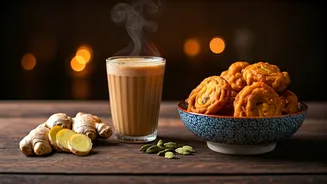
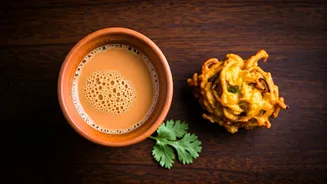
What makes this combination so enduring? It’s the magic of opposites attracting. You have the hot, sweet, and often spicy liquid of the masala chai, full of complex notes of ginger, cardamom, and clove. Then, you have the humble biscuit—be it a simple glucose biscuit like Parle-G, a crumbly atta biscuit, or a coarse, absorbent rusk. On its own, the biscuit is plain, perhaps even boring. But when introduced to the chai, it transforms. It soaks up the warmth and flavour, its simple sweetness balancing the robustness of the tea. The texture softens, the flavour deepens, and for a fleeting moment, two simple items create a perfect culinary harmony. It’s a testament to the idea that the most profound pleasures are often the simplest.
The Art of the Perfect Dip
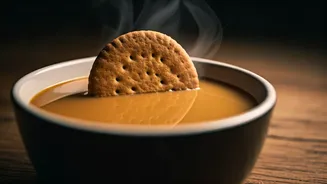
Every chai-biscuit enthusiast knows this is a game of skill, timing, and courage. Dip it for too short a time, and you get a dry, unsatisfying crunch. Dip it for a second too long, and you face the ultimate tragedy: the biscuit disintegrates, sacrificing itself to the murky depths of your cup, lost forever. This delicate dance is a low-stakes thrill we’ve all mastered. We know the exact structural integrity of our chosen biscuit. We instinctively calculate the optimal submersion time based on the tea’s temperature. The goal is to retrieve a perfectly sodden, yet intact, biscuit that melts in your mouth, releasing a flood of tea-infused goodness. That triumphant moment when you successfully transport the heavy, dripping biscuit to your mouth without mishap is a small, daily victory that never loses its charm.
More Than Just a Snack
For so many of us, this combination is a time machine. The taste of a tea-soaked biscuit instantly transports us back to our childhood—to visits with grandparents, to study sessions before exams, to lazy Sunday mornings with family. It’s the flavour of comfort, of being cared for. Each brand and type of biscuit carries its own set of memories. For some, it’s the iconic yellow-and-red wrapper of Parle-G; for others, it's the hearty crunch of a local bakery’s rusk. This combo is woven into the very fabric of our personal histories. It's not just about satisfying hunger; it's about feeding the soul and reconnecting with a simpler, warmer version of ourselves.
Why It Endures
In an era of gourmet coffees, artisanal pastries, and extravagant high teas, the resilience of chai-biskoot is remarkable. Its power lies in its accessibility and its democratic nature. It costs next to nothing and is available everywhere, from the poshest drawing rooms to the most remote village dhabas. It bridges gaps of class, age, and language. A corporate CEO and a daily wage labourer can find common ground over this shared pleasure. It asks for nothing and gives everything—a moment of warmth, a touch of sweetness, and a feeling of connection to a culture and a community. It doesn't need to be Instagrammable or trendy. It just needs to be itself, and that has always been more than enough.