






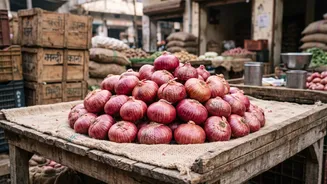

The Journey Starts at the Farm
The price story begins at the farm gate, where farmers sell their produce. This initial price is influenced by factors like weather conditions, production costs (seeds, fertilisers), and the overall yield of the season. A good monsoon and a bumper crop
can lead to lower farm-gate prices, while adverse weather like droughts or unseasonal rain can damage crops, reduce supply, and push initial prices up. However, farmers often have little control over this price, especially those with small landholdings who lack the capacity to store their produce and must sell immediately after harvest. They often sell to local aggregators or traders who then transport the onions to the nearest major market.
Navigating the Wholesale Mandi
The next stop is the Agricultural Produce Market Committee (APMC) mandi, the primary wholesale market. Here, prices are determined through an open auction system. Commission agents, or 'arthiyas', facilitate the sale between farmers or local traders and the wholesale buyers. The wholesale price is set during this bidding process. However, this stage adds several costs. Commission agents charge a fee, and there are additional charges for labour, weighing, and loading. Sometimes, a few large traders can influence prices in these markets, a practice known as cartelization, which can keep the purchase price from farmers low.
The Multiple Middlemen Effect
The journey from the wholesale mandi to the retail shop involves several intermediaries. A wholesaler who buys in bulk at the APMC may sell to smaller, secondary wholesalers, who in turn sell to local vendors and street hawkers. Each person in this chain adds their own margin to cover costs and make a profit. These costs include transportation from the mandi to their locality, storage, and the risk of spoilage. Onions are a perishable commodity, and a significant portion can be lost to rot, sprouting, or moisture loss, especially without proper storage facilities like cold storage. These losses are factored into the final price.
The Retailer’s Final Markup
The last and often largest price jump happens at the retail level. Your local vegetable vendor or 'sabziwala' is the final link in the chain. They add a markup to the price they paid to the wholesaler. This markup covers their operational costs — rent for their shop or cart space, transportation, and their own wages. More significantly, it accounts for spoilage, as they might not sell their entire stock before it goes bad. This is why the retail price can sometimes be double the wholesale price or even more. While a markup of ₹10-15 per kg over wholesale might be considered standard to cover costs, during times of shortage, this gap can widen significantly as retailers anticipate higher prices.
Why the System Creates Such a Big Gap
The significant difference between what the farmer earns and what the consumer pays is due to this multi-layered supply chain. Studies have shown that a farmer's share in the final retail price can be as low as 30-50%. The major reasons for this gap are the number of intermediaries involved, inadequate storage infrastructure leading to high wastage, high transportation costs, and various fees and commissions charged at mandis. When supplies are tight due to a poor harvest or transport disruptions, hoarding by some traders can also artificially inflate prices. This complex system ensures that even when farmers are getting low prices due to a bumper crop, consumers may not see a proportionate benefit.