








More Than Just Running
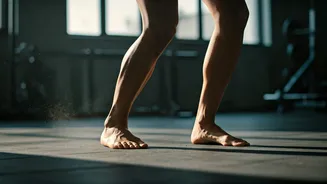
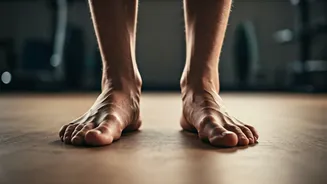
First, let's clarify what we mean by 'barefoot footwork.' While the barefoot running craze of the late 2000s put the idea on the map, this modern trend is broader and more integrated. It’s about performing exercises—from squats and deadlifts to yoga and mobility
drills—without the barrier of a shoe. The core idea is that our feet are an intricate system of bones, muscles, and nerves designed to interact directly with the ground. Modern, heavily cushioned shoes, proponents argue, have effectively put our feet in a cast, weakening them and dulling their sensory capabilities over time.
The Science of Sensation
The secret sauce of barefoot training lies in a concept called proprioception. Think of it as your body's innate GPS. Your soles are packed with thousands of nerve endings that constantly send information to your brain about the surface you're on, your position in space, and the adjustments you need to make to maintain balance. Thick rubber soles dampen this crucial feedback loop. By training barefoot, you re-awaken these nerves. The result? Your brain gets a clearer, higher-definition picture of what your body is doing, allowing for quicker, more precise adjustments. This enhanced feedback can improve balance, coordination, and overall movement quality.
Building a Stronger Foundation
Your feet are your body’s foundation. If the foundation is weak, the entire structure above it is compromised. Barefoot training forces the small, intrinsic muscles within your feet and ankles to work harder. Spreading your toes and gripping the floor during a squat or lunge activates these muscles, helping to strengthen your arches and improve overall foot stability. For lifters, this creates a more solid and stable base from which to generate force. A stable foot allows you to push through the ground more effectively during a heavy lift, potentially leading to better form and increased strength, while reducing the 'wobble' that can lead to inefficient movement or injury.
Benefits Up the Kinetic Chain
The benefits don't stop at the ankle. The body works as a connected system, often called the kinetic chain. A weak or unstable foot can lead to compensation patterns further up the body. For example, collapsing foot arches can cause the knees to cave inward (knee valgus), which can place undue stress on the knee joint and even affect hip and lower back alignment. By strengthening the feet and improving their function, barefoot training can help correct these imbalances from the ground up. Over time, this can lead to better posture, more efficient movement patterns, and a potential reduction in chronic pain in the knees, hips, and back.
How to Start Safely
Before you toss your trainers in the bin, a word of caution is essential. Your feet have likely been supported by shoes for years, so the muscles and connective tissues are de-conditioned. Jumping into intense barefoot workouts too quickly is a recipe for injury, such as plantar fasciitis or stress fractures. The key is a gradual transition. Start small. Simply walk around your house barefoot to get your feet used to it. Then, try incorporating barefoot work into your warm-ups and cool-downs. Simple exercises like toe spreads, calf raises, and single-leg balances are great starting points. When you do start training barefoot, begin with lighter weights and lower intensity, paying close attention to how your feet and ankles feel.