
The Sun’s Violent Temper
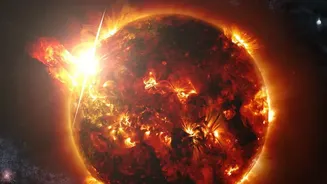
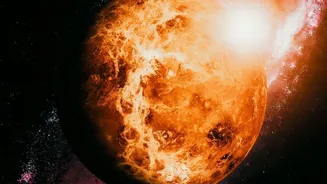
Our sun, the life-giving star at the centre of our solar system, has a volatile side. It occasionally erupts, blasting enormous clouds of superheated gas, or plasma, and magnetic fields into space. These events are called Coronal Mass Ejections (CMEs).
Travelling at millions of kilometres per hour, these solar storms carry immense energy. While most CMEs are directed away from our planet, the ones that happen to be aimed at Earth pose a significant threat to our technologically advanced civilisation. When these storms collide with Earth's magnetic field, they can trigger geomagnetic storms, beautiful auroras, and widespread technological disruption.
Our Deep Reliance on GPS
It’s easy to underestimate how deeply integrated GPS technology is into the fabric of modern India. It’s not just about the map on your phone. Ride-hailing and food delivery apps depend on it for logistics. The entire supply chain, from trucks carrying goods across the country to ships entering ports, uses GPS for navigation and tracking. In agriculture, precision farming relies on GPS-guided tractors for efficient planting and harvesting. Even financial markets and telecommunication networks use the hyper-accurate timing signals from GPS satellites to synchronise operations. A significant disruption to this network wouldn't just be an inconvenience; it would have severe economic consequences.
Why Solar Storms Disrupt Your Signal
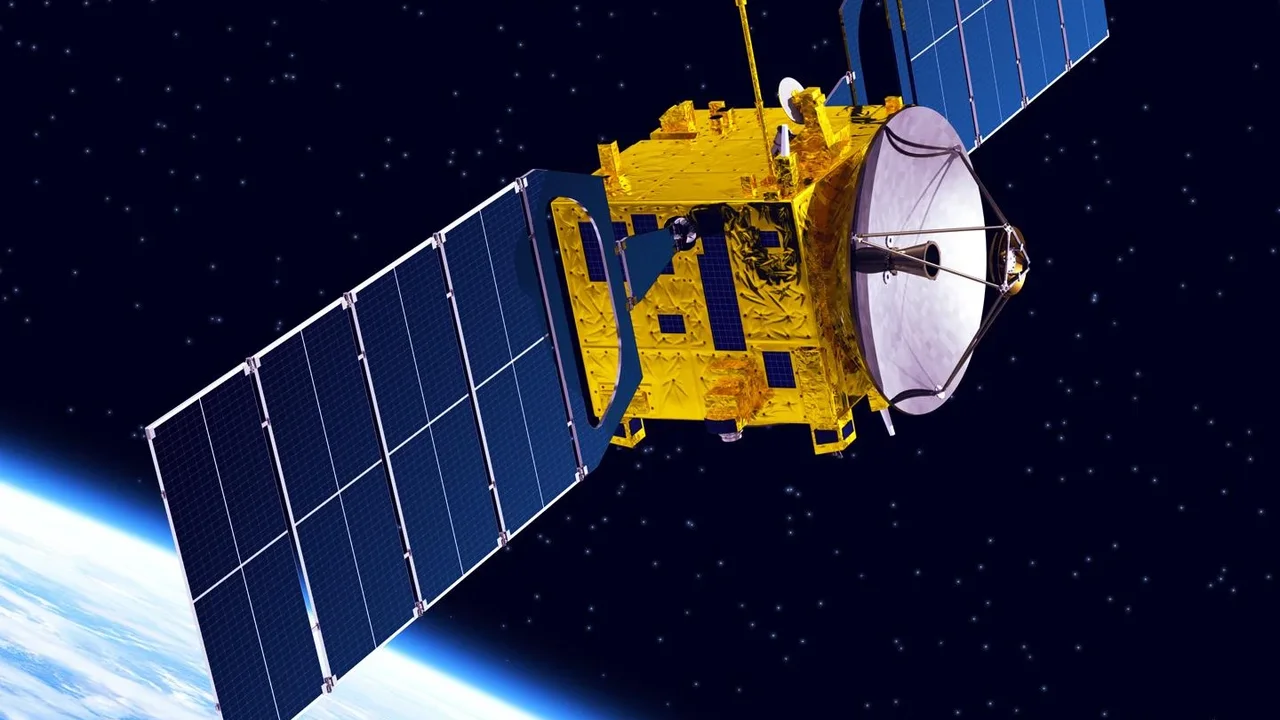
GPS works by receiving faint radio signals from a constellation of satellites orbiting Earth. For your phone to calculate its position accurately, it needs clear, timed signals from multiple satellites. The problem starts when a solar storm hits Earth and supercharges the ionosphere—a layer of our upper atmosphere filled with charged particles. This energised, turbulent layer can delay, distort, and scatter the weak GPS signals passing through it. In calm conditions, your GPS is accurate to within a metre. During a severe storm, that error can jump to tens of metres or more, rendering the system useless for precision tasks. In extreme cases, the receiver can't lock onto the signal at all.
The Artificial Eclipse: Meet the Coronagraph
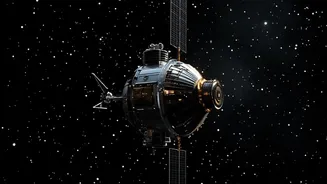
This is where the satellite coronagraph comes in. It's a clever telescopic instrument designed to do one thing: block the blinding light of the Sun's main disk to reveal the much fainter atmosphere around it, called the corona. You can think of it as creating a permanent, artificial solar eclipse inside a satellite. By obscuring the Sun's bright face, scientists can see what's happening in the corona. This allows them to spot a Coronal Mass Ejection as it erupts from the Sun's surface, long before it begins its journey toward Earth. Without a coronagraph, these massive explosions would be invisible until they were much further out in space.
The Power of an Early Warning
Coronagraphs, like the one on the SOHO satellite, provide the first crucial glimpse of an Earth-directed CME. This can give us an early warning of one to three days before the storm arrives. While we can't stop a solar storm, this advance notice is invaluable. It gives satellite operators, power grid managers, airlines, and other critical infrastructure operators time to prepare. They can put satellites into a protective 'safe mode', reroute power to avoid overloads, and divert flights from polar routes where the effects are strongest. For GPS users, it allows system operators to issue warnings about potential inaccuracies. Another set of satellites closer to Earth, like DSCOVR, can provide a final, more immediate warning of about 15 to 60 minutes before impact.
India's Eye on the Sun: Aditya-L1
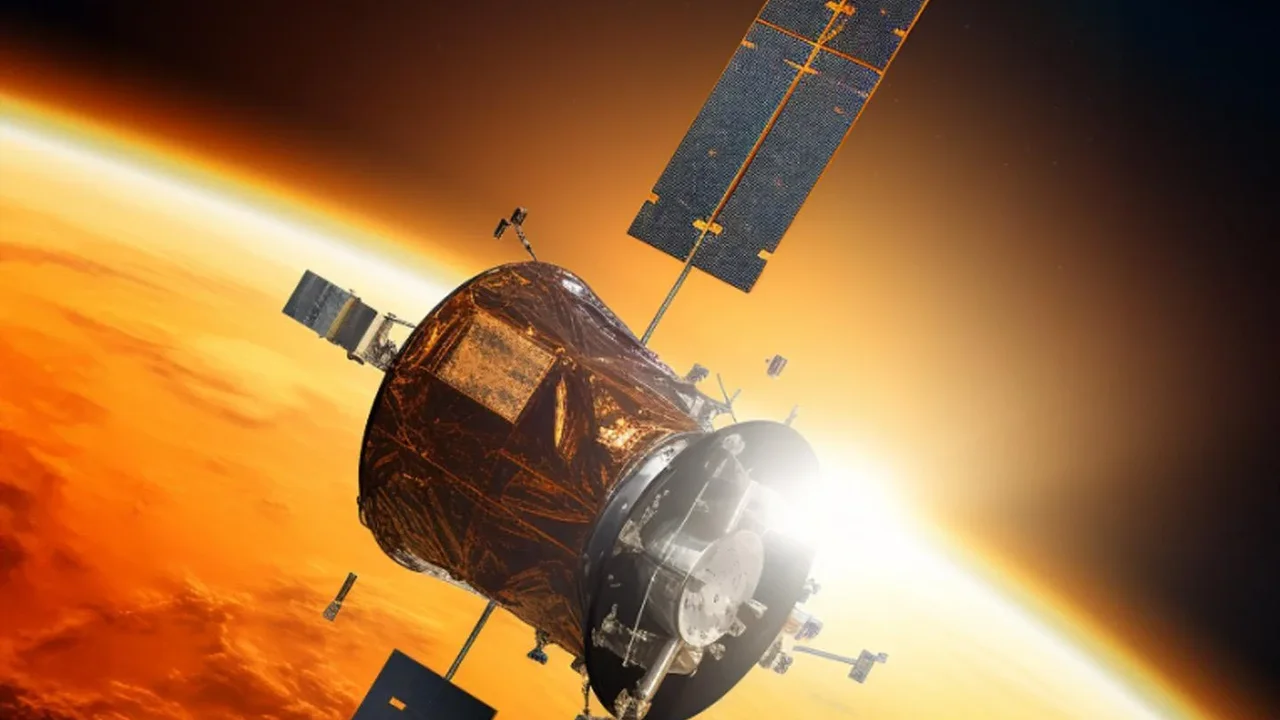
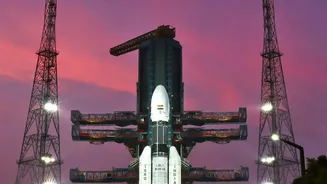
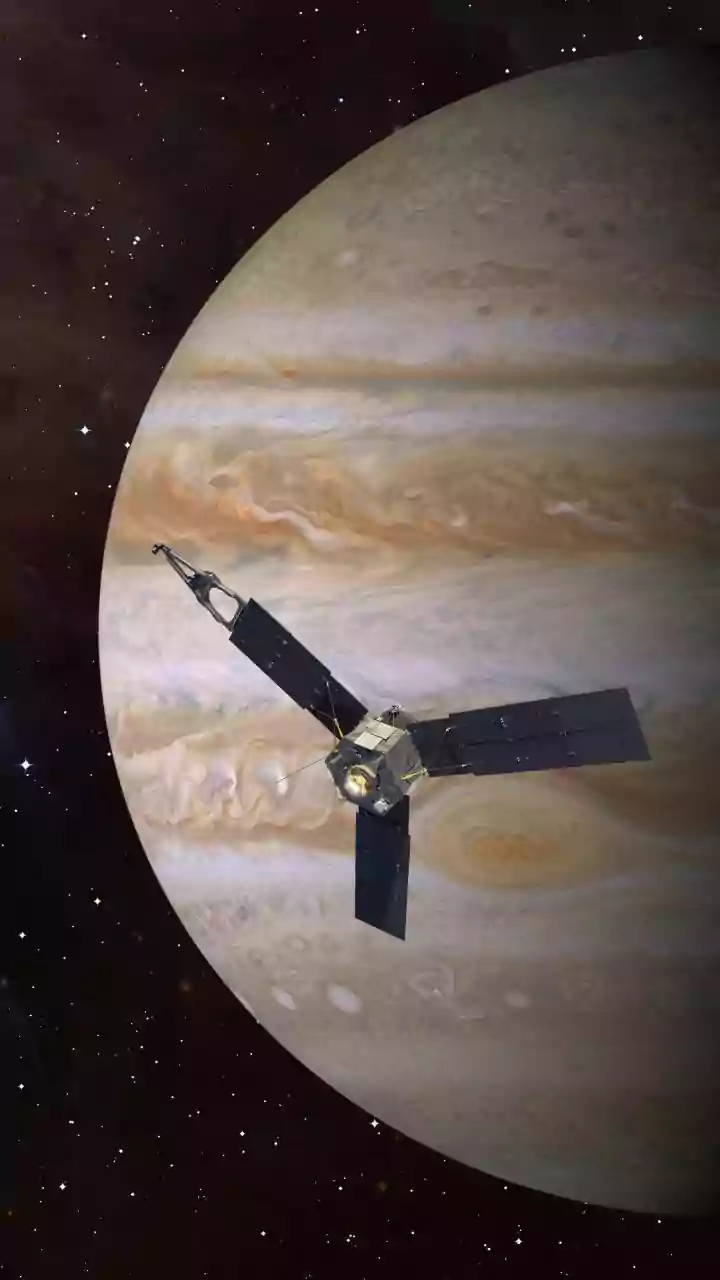
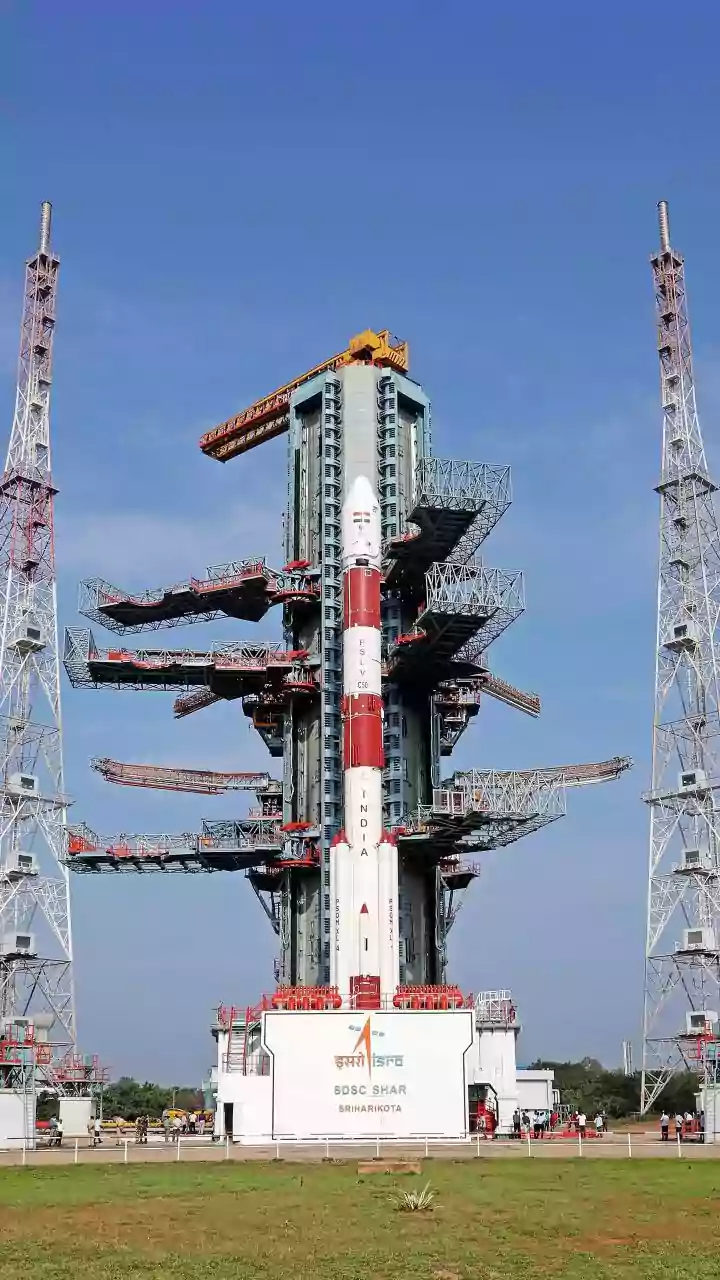
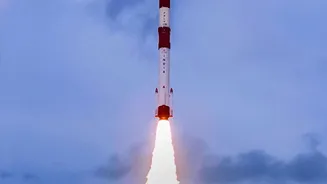
India has proudly joined the global effort to monitor space weather with its own solar observatory, Aditya-L1. Launched by the Indian Space Research Organisation (ISRO), the spacecraft is positioned 1.5 million kilometres from Earth at the L1 Lagrange point, a stable location with an uninterrupted view of the Sun. A primary instrument onboard is the Visible Emission Line Coronagraph (VELC), designed to study the solar corona and the dynamics of CMEs. Having its own coronagraph in space gives India domestic capability to monitor solar activity, contributing to a global network of observatories and enhancing our nation's resilience against the threats posed by space weather.