



An Eye in a Fixed Orbit
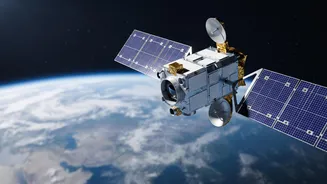
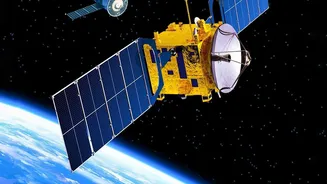
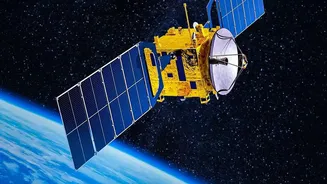
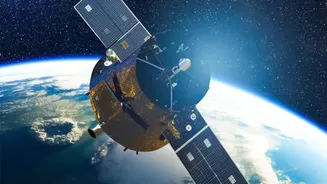
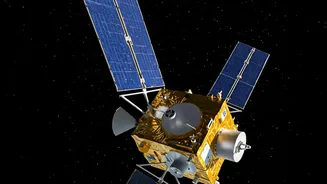
EOS-05, also known as Geo Imaging Satellite or GISAT-1A, is not just another satellite; it's a strategic asset. Unlike most Earth observation satellites that circle the globe in low-Earth orbits and pass over a specific area periodically, EOS-05 will
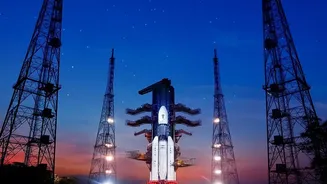
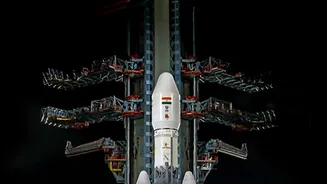
be placed in a geostationary orbit approximately 36,000 kilometres above the equator. At this altitude, its orbital period matches Earth's rotation, allowing it to remain in a fixed position relative to the surface. This gives it the unique ability to continuously monitor the Indian subcontinent and the vast Indian Ocean region, acting as a persistent 'eye in the sky'. The launch, scheduled for September 4, 2026, aboard a GSLV-F17 rocket, is highly anticipated, especially as it is a successor to the GISAT-1 mission which was lost during a launch failure in 2021.
Near Real-Time Monitoring
The primary advantage of EOS-05 lies in its speed and frequency of observation. The satellite is designed to provide near real-time imagery of large areas of the country. Under normal conditions, it can image the entire Indian landmass every 30 minutes. For specific areas of interest, such as a developing cyclone, a flood-affected region, or a border area, it can provide updated images as frequently as every five minutes. This rapid revisit capability is a game-changer. It allows for the constant monitoring of fast-unfolding events, providing crucial data for disaster management agencies and security forces when every second counts. The satellite is equipped with imaging payloads in multiple spectral bands, including visible, near-infrared, and thermal infrared, allowing it to see through various conditions and gather diverse data.
A Tool for Development and Security
The applications for EOS-05 are vast and vital for a growing nation. On the civilian front, it will be an invaluable tool for monitoring natural disasters like cyclones, floods, and forest fires, enabling quicker and more effective response efforts. It will also aid in resource management by providing data for agriculture, forestry, water bodies, and environmental monitoring. However, its strategic importance cannot be overstated. The satellite will significantly enhance India's security apparatus by enabling constant surveillance of its borders and maritime interests, particularly in the Indian Ocean Region. Some reports indicate that the satellite, also referred to as GISAT-2, will be a dedicated asset for the Indian Navy, boosting its network-centric warfare capabilities.
Redemption and a Step Forward
The EOS-05 mission carries significant weight for ISRO. It comes after a number of launch setbacks, including the high-profile failure of its predecessor, GISAT-1 (also known as EOS-03), in August 2021 due to an anomaly in the cryogenic upper stage of the rocket. A successful launch and deployment of EOS-05 would not only be a technological triumph but also a moment of redemption, demonstrating ISRO's resilience and mastery over complex launch vehicle technologies like the GSLV. By successfully operating India's first imaging satellite from a geosynchronous orbit, ISRO will solidify the country's position in a select group of nations with this advanced capability, ensuring self-reliance in a critical area of space technology.