


Setting the Scene: Gear and Location
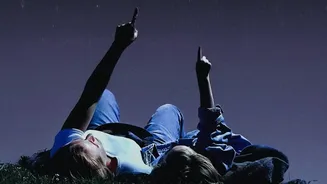
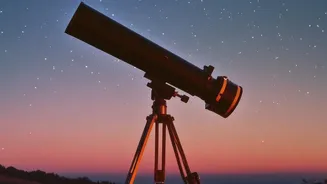
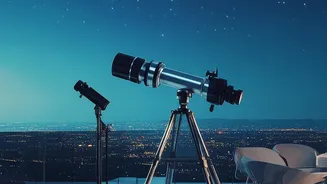
The best part about stargazing is its simplicity. You don't need an expensive telescope. Your own eyes are the best tool to start with, as they allow you to take in wide swathes of the sky. To get a closer look at planets or the Moon, a simple pair of binoculars
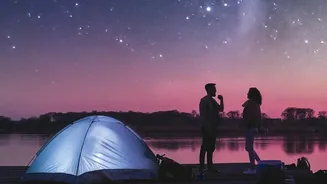
will work wonders. For identifying constellations and planets, consider downloading a free stargazing app on your smartphone, which can act as a real-time map of the sky. The biggest challenge in late August is often cloud cover from the monsoon. However, the post-rain clarity can offer exceptionally clear skies. To maximise your chances, try to get away from city lights which cause light pollution. Even a park, a rooftop, or the outskirts of your town can make a significant difference. For those seeking truly dark skies, regions that are less affected by the monsoon, like Ladakh, Spiti Valley, and parts of Rajasthan, offer world-class viewing.
The Moon: A Changing Presence
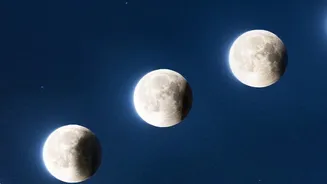
The Moon's phase is crucial for stargazing. While a full moon is beautiful, its brightness can wash out fainter stars and meteors. Luckily, late August 2026 offers favourable conditions. The month starts with a New Moon on August 12th, ensuring the darkest possible skies for the Perseid meteor shower's peak. As we move into late August, the Moon will be in its waxing phase. A First Quarter Moon occurs on August 20th, appearing as a half-moon in the evening sky. Towards the end of the month, on August 28th, a partial lunar eclipse will occur, though its visibility might be better in other parts of the world. The growing moonlight will make it harder to see faint stars, so plan your deep-sky viewing for earlier in the period.
The Main Attraction: Planets on Parade
Late August is an excellent time for planet-spotting. Saturn will be a prominent feature, reappearing in the evening sky and rising in the east after midnight with its distinct, steady yellowish-white glow. Mars will also be visible to the naked eye, appearing relatively bright high in the pre-dawn sky. Jupiter and Mercury will be present in the morning sky but will be very low on the eastern horizon, making them challenging to spot amidst the dawn light without a clear view. For those with binoculars, Uranus and Neptune are also technically in the sky, though they require optical aid and a good star chart to locate.
Navigating the Constellations
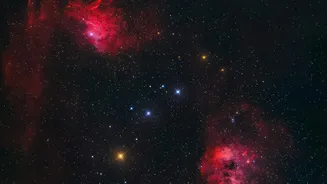
The late-August sky is dominated by the Summer Triangle, a large and bright asterism formed by three stars: Vega, Deneb, and Altair. These are among the brightest stars in the sky and are visible even from light-polluted areas. This triangle is your gateway to finding other patterns. Look towards the south to find the distinctive J-shape of Scorpius, the scorpion, with its bright, reddish heart-star, Antares. Just east of Scorpius is Sagittarius, whose brightest stars form an asterism that looks like a teapot. On a dark, clear night, the breathtaking band of the Milky Way appears to rise like steam from this teapot's spout, stretching across the sky.
Lingering Shooting Stars
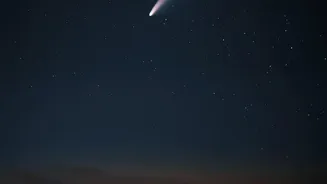
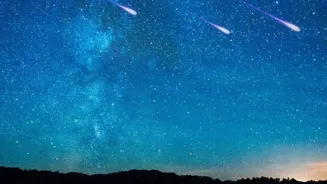
While the famous Perseid meteor shower has its peak around August 12-13, it remains active until late August. This means you still have a chance to catch a few 'shooting stars' in the evenings leading up to the end of the month. After midnight, find a comfortable spot, let your eyes adjust to the darkness for about 20 minutes, and look towards the northeastern sky. Patience is key, but the reward of seeing a bright meteor streak across the star-filled canvas is well worth the wait.