





The Official Process vs. The Real Game
On paper, the process for selecting the UN Secretary-General is simple. Article 97 of the UN Charter states that the General Assembly appoints the leader based on a recommendation from the Security Council. This makes it sound like a democratic confirmation.
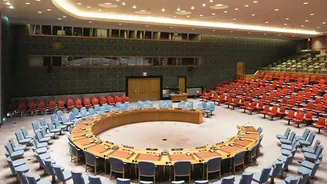
However, the reality is a high-stakes political game played almost entirely within the Security Council, the UN's most powerful body. The 193 members of the General Assembly have never once rejected the single candidate presented to them. The true contest is won or lost long before the official vote, in a series of informal, secret ballots called straw polls.
What Are These Secret Straw Polls?
A straw poll is an unofficial vote to gauge support. In the context of the UN, the 15 members of the Security Council cast secret ballots for each official candidate. Members can vote to 'encourage', 'discourage', or offer 'no opinion' on a candidacy. The results, which are not officially published but almost always leak, show candidates where they stand. This informal process allows the Council to whittle down the list of contenders without anyone having to cast a formal, public veto. It lets the world's most powerful countries test the waters and signal their intentions without triggering a diplomatic crisis, and allows candidates to withdraw gracefully if support is lacking.
The Power of the Coloured Ballot
Not all votes are equal. In the initial straw polls, all ballots are identical. But as the process continues, the Council introduces colour-coded ballots. The ten elected, non-permanent members vote on white paper, while the five permanent members (P5)—China, France, Russia, the United Kingdom, and the United States—vote on red paper. This is where the real power lies. A 'discourage' vote on a red ballot acts as a potential veto, effectively killing a candidate's chances. A candidate must secure at least nine 'encourage' votes and, crucially, no red-ballot 'discourage' votes from any of the P5 to have a viable path forward. This gives the P5 an absolute stranglehold on the selection.
Why All the Secrecy?
The justification for this opaque system is that it allows for frank and delicate negotiations. Proponents argue that privacy enables the P5 to exercise their veto power without the public fallout of a formal rejection, making it easier to eventually find a consensus candidate. However, critics argue this secrecy is undemocratic and outdated. It often leads to the selection of a 'lowest common denominator' candidate—someone who is unlikely to challenge the interests of the P5 nations, rather than the most qualified person for the job. This can weaken the Secretary-General's independence before they even take office.
Calls for Transparency and Reform
In recent years, there has been a significant push for a more open and inclusive process. Since the 2016 selection, candidates now submit vision statements and participate in public dialogues with the General Assembly, allowing all member states to engage. However, these reforms have not changed the fundamental power structure. The decisive moments still happen in the Security Council's private meetings and secret straw polls. Civil society groups and many member states continue to advocate for an end to secret polls and a more formal role for the General Assembly, arguing that the world's top diplomat should not be chosen in the shadows by a handful of powerful countries.