






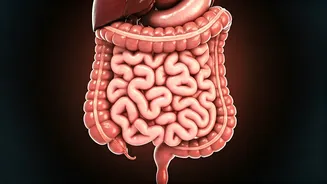


You'll Improve Your Digestion
The digestive process begins in your mouth, not your stomach. Eating slowly encourages you to chew your food more thoroughly. [16] This physical breakdown of food, mixed with enzymes in your saliva, eases the workload on your stomach and intestines. [11]
When food is better broken down before it reaches the stomach, your body can process it more smoothly, reducing the risk of common issues like indigestion, bloating, and heartburn. [3, 15] Rushed eating, on the other hand, can overwhelm your digestive system and lead to discomfort. [6]
It Helps with Weight Management
It takes approximately 20 minutes for your brain to receive and process satiety signals from your gut. [7, 13] These signals are sent by hormones like cholecystokinin (CCK) and leptin, which tell your brain you're full. [12, 17] When you eat quickly, you can easily consume more calories than you need before your brain gets the message to stop. [10, 19] Eating slowly allows this crucial communication to happen, helping you recognise feelings of fullness more accurately and potentially reducing overall calorie intake. [13, 17] Studies show that fast eaters are more likely to overeat and have a higher body weight. [21]
You Will Absorb More Nutrients
Better digestion leads to better nutrient absorption. [11] When you chew your food properly and give your digestive system the time it needs, your body becomes more efficient at extracting essential vitamins, minerals, and other nutrients from your meal. [4, 15] Mindful eating practices, which include slowing down, have been linked to an increased absorption of key nutrients. [4, 9] By rushing, you may not be getting the full nutritional benefit from the healthy food you're consuming.
It Reduces Stress and Increases Calm
Slowing down at mealtimes is a form of mindfulness that can have a calming effect on your entire nervous system. [3] Rushed eating often happens in a state of stress, which activates the body's 'fight-or-flight' response, diverting resources away from digestion. [18] In contrast, eating slowly and mindfully activates the 'rest-and-digest' system (the parasympathetic nervous system). [6, 18] This creates a more relaxed state, which not only aids digestion but can lower levels of the stress hormone cortisol, reducing the likelihood of stress-related or emotional eating. [3, 15]
You'll Enjoy Your Food More
How often have you finished a meal without truly tasting it? Eating slowly allows you to engage all your senses and fully appreciate the flavours, textures, and aromas of your food. [16, 17] This heightened sensory experience leads to greater satisfaction from your meals. [11, 14] When you feel more satisfied, you're often content with smaller portions and less likely to experience cravings later. [8, 11] It transforms eating from a rushed task into a genuinely pleasurable and nourishing experience. [17]
Simple Tips to Start Eating Slower
Making the change doesn't have to be complicated. Start by setting aside at least 20-30 minutes for each meal without distractions like your phone or the TV. [2] Try putting your fork or spoon down between bites to give yourself a natural pause. [1, 5] Chewing each mouthful a specific number of times, like 15 to 30, can also help set a new pace. [2] Sipping water during your meal not only keeps you hydrated but also encourages you to slow down. [7] By consciously implementing one or two of these habits, you can begin to build a healthier, more mindful relationship with food.