
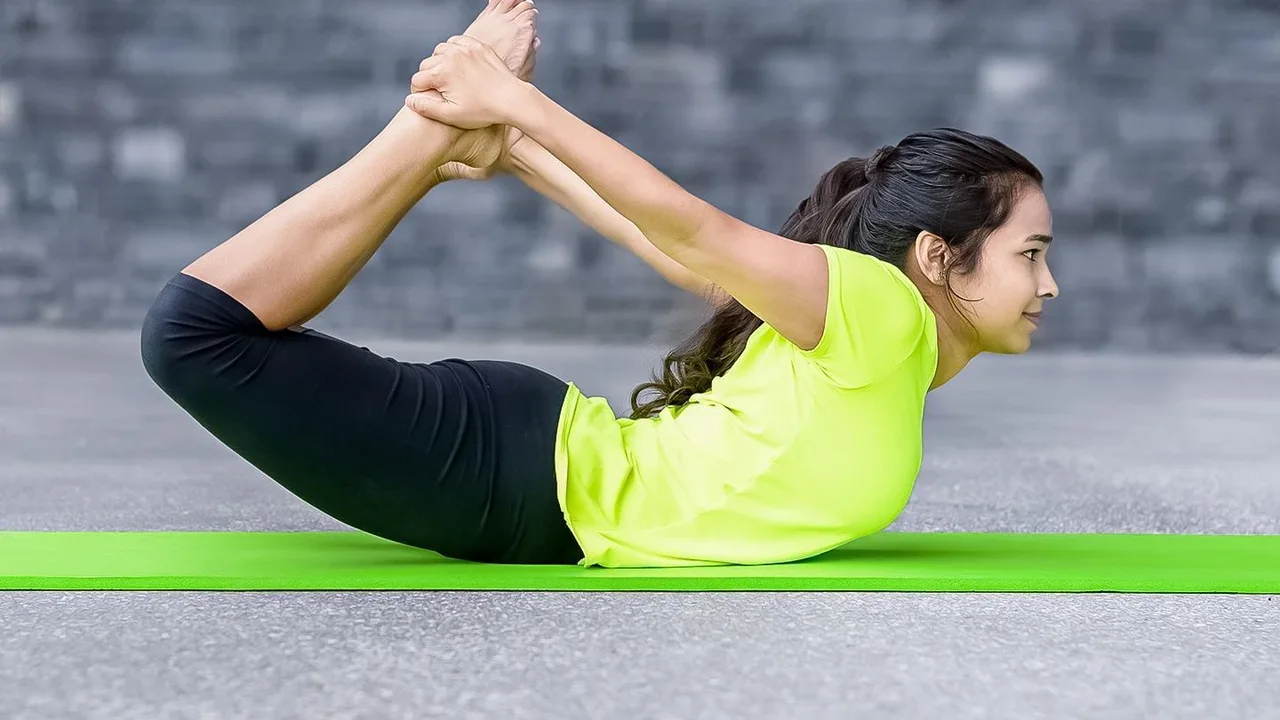
Why Yoga Helps Calm an Anxious Mind
Exam stress isn't just in your head; it's in your body. When you feel anxious, your body releases stress hormones like cortisol. This can lead to a faster heart rate, tense muscles, and a scattered mind that struggles to concentrate. Yoga works by directly
countering this stress response. Through a combination of physical postures, controlled breathing, and mindfulness, it activates your body's relaxation system. Studies have shown that even short, consistent yoga practices can lower cortisol levels, reduce anxiety, and improve cognitive functions like memory and focus by increasing blood flow to the brain. It’s a way to hit the reset button, releasing tension so you can return to your books feeling refreshed and clear-headed.
Child’s Pose (Balasana) for Instant Calm
This gentle resting pose is one of the most effective for quickly soothing an overactive mind. It provides a gentle stretch for the hips, thighs, and lower back, areas where students often hold tension from sitting for long periods. It also encourages deep, restorative breathing, which helps to calm the entire nervous system. To practice, kneel on the floor, then sit back on your heels. Fold forward, lowering your chest toward your thighs and resting your forehead on the floor. You can keep your arms stretched out in front of you or rest them alongside your body. Hold for at least 30 seconds, focusing on taking slow, deep breaths.
Cat-Cow Stretch (Marjaryasana-Bitilasana) to Release Spinal Tension
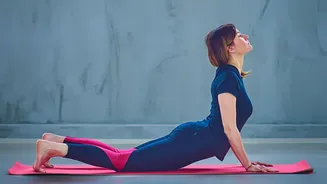
Hunching over textbooks for hours can lead to a stiff neck and back. The Cat-Cow stretch is a simple, flowing movement that wakes up the spine and releases accumulated tension. Start on your hands and knees in a tabletop position, with your wrists under your shoulders and knees under your hips. As you inhale, drop your belly, lift your chest and tailbone, and look forward (Cow Pose). As you exhale, round your spine toward the ceiling, tucking your chin to your chest (Cat Pose). Continue flowing between these two poses for 5-10 breaths. This movement not only relieves physical stiffness but also syncs your breath with your body, helping to focus your mind.
Tree Pose (Vrikshasana) to Build Focus
Balancing poses are excellent for improving concentration because they demand your full attention. Tree Pose challenges you to stay present and quiet the mental chatter. Start by standing tall, then shift your weight onto your right foot. Place the sole of your left foot on your right ankle, calf, or inner thigh—avoiding the knee joint directly. Bring your hands together in front of your chest. Find a fixed point to gaze at to help you balance. Hold for 30 seconds, breathe steadily, and then switch sides. Remember that wobbling is a natural part of finding your balance.
Seated Forward Bend (Paschimottanasana) to Soothe the Brain
This pose provides a deep stretch for the entire back of the body, from your hamstrings to your spine. A gentle forward bend like this is known to be calming for the brain and can help relieve stress and mild anxiety. Sit on the floor with your legs extended straight out in front of you. As you inhale, sit up tall. As you exhale, hinge from your hips and begin to fold forward over your legs. You don't need to touch your toes; just go as far as is comfortable while keeping your back relatively straight. Rest your hands on your shins or feet. Hold for 30-60 seconds, allowing each exhale to deepen the stretch and release tension.
Legs-Up-the-Wall Pose (Viparita Karani) for Total Relaxation
This is a wonderfully restorative pose that requires minimal effort. It helps to calm the nervous system, drain tension from tired legs and feet, and promote a state of deep relaxation, making it perfect after a long day of studying. To get into the pose, sit on the floor with one side of your body against a wall. Gently swing your legs up the wall as you lie back on the floor. Your sitting bones should be as close to the wall as is comfortable. Let your arms rest by your sides with palms facing up. Close your eyes and breathe deeply for 5 to 10 minutes to feel the full restorative effects.