





Meghalaya’s Living Architecture
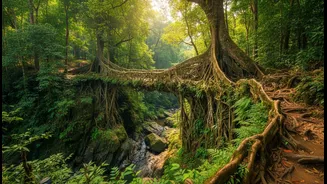
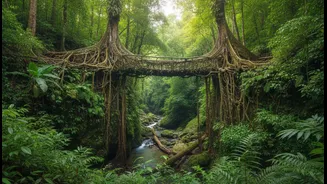
Deep in the verdant hills of Meghalaya, the Khasi and Jaintia communities have long practiced a unique form of bio-engineering: living root bridges, or 'Jingkieng Jri'. These are not structures made of steel or concrete, but of the living, aerial roots
of the Ficus elastica (rubber fig) tree. For centuries, villagers have guided these roots across rivers and ravines, weaving them around bamboo scaffolding until they take hold on the opposite bank. Over decades, these roots thicken and self-graft, creating a strong, living structure that gets stronger with time and can last for over 500 years, connecting remote villages and withstanding the region's fierce monsoons. More than just a pathway, each bridge is a testament to intergenerational knowledge and a profound harmony between humans and nature.
The Pressures of Popularity
The secret of these natural wonders is out, and a surge in tourism has brought both opportunities and challenges. While the influx of visitors provides a vital new source of income, it also puts immense strain on these delicate ecosystems. Unmanaged foot traffic can erode pathways and damage the very roots that form the bridges. In some cases, concerns about the load from high tourist numbers led to reinforcements with concrete, a move that compromised the natural integrity of the structures and served as a wake-up call for the communities. It became clear that without a plan, the very thing that made the bridges special could be threatened by their newfound fame.
A Network for Preservation
In response, a powerful model of community-led conservation has emerged. Organizations like the Living Bridge Foundation, founded by local conservationist Morningstar Khongthaw, work to educate communities on preserving this heritage. Furthermore, a large-scale federation has taken shape, with dozens of community cooperatives across more than 70 villages organizing to collectively manage the landscape. This network is supported by partnerships with government bodies like the Meghalaya Basin Development Authority (MBDA) and global organizations like the UNDP. Rather than imposing outside rules, these collaborations aim to strengthen the traditional village governance systems, empowering the people who have been the bridges' caretakers for generations.
From Safety Metrics to Sustainable Action
A key part of this new approach involves a more formal system of care. This includes surveying and evaluating the bridges based on specific parameters. Communities, sometimes with the help of researchers, assess the overall health, structural robustness, and growth stage of each bridge—from young and developing to fully mature. They also monitor the surrounding ecosystem, including the plant and animal diversity that the bridges support. This systematic approach helps prioritize maintenance, which can involve carefully weaving in new roots, replacing temporary bamboo scaffolding, and ensuring the health of the host Ficus trees. This work is often funded directly by the income generated from responsible tourism, creating a self-sustaining cycle of preservation.
The Community Dividend
The benefits, or 'perks', for the villages are tangible and transformative. Tourism revenue is channeled back into the community in numerous ways. It funds not only bridge maintenance but also provides diverse livelihood opportunities that encourage young people to stay in their villages. Locals are trained as nature guides, homestay owners, artisans, and cooks. This new economy also creates a demand for local produce and traditional crafts. Moreover, communities are working to define their own 'carrying capacity'—limiting visitor numbers to sustainable levels and developing new experiences like cultural events to ensure that economic benefits don't come at an ecological cost. The result is a stronger, more resilient local economy built around the preservation of cultural heritage.