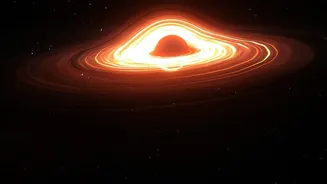


Black holes are the universe’s ultimate ghosts. They’re invisible, mysterious, and notoriously hard to find. But a new generation of cosmic detectives is changing the game, using an unexpected tool to hunt for these elusive giants.
An Unexpected Cosmic Detective
The secret weapon in
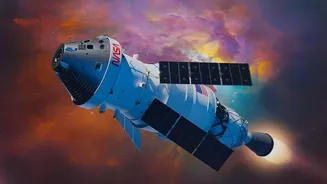
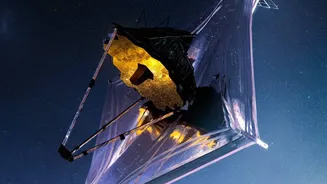
this new search is NASA's Transiting Exoplanet Survey Satellite, or TESS. Launched in 2018, TESS was designed for a completely different job: finding planets outside our solar system. It does this by staring intently at hundreds of thousands of stars, watching for the tiniest, periodic dips in their brightness. These dips, called transits, often signal a planet passing in front of its star. TESS has been incredibly successful, identifying thousands of potential new worlds. But astronomers soon realised that this constant, high-precision monitoring of starlight could be used for much more than just planet-hunting. The same data that reveals a distant world can also betray the presence of something far more massive and mysterious.
The Challenge of Finding Nothing
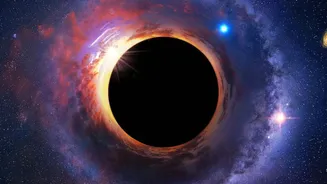
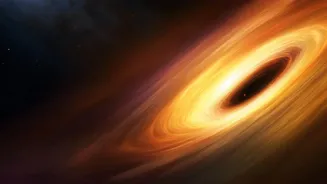
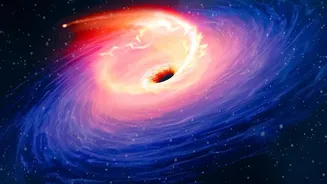
The fundamental problem with finding black holes is that they are, by definition, black. They are regions of spacetime where gravity is so intense that nothing, not even light, can escape. This makes direct observation impossible. For decades, astronomers have relied on indirect methods. The most common way is to spot the brilliant flash of light and radiation from an 'active' black hole as it violently rips apart and consumes a nearby star or gas cloud. These cataclysmic events, known as tidal disruptions, are spectacular but also incredibly rare, happening perhaps once every 10,000 years in a galaxy like ours. This means the vast majority of black holes, which are dormant and not actively feeding, remain completely invisible to us. They are the silent majority of the black hole population, and finding them requires a new kind of clue.
The Telltale Wobble of a Star
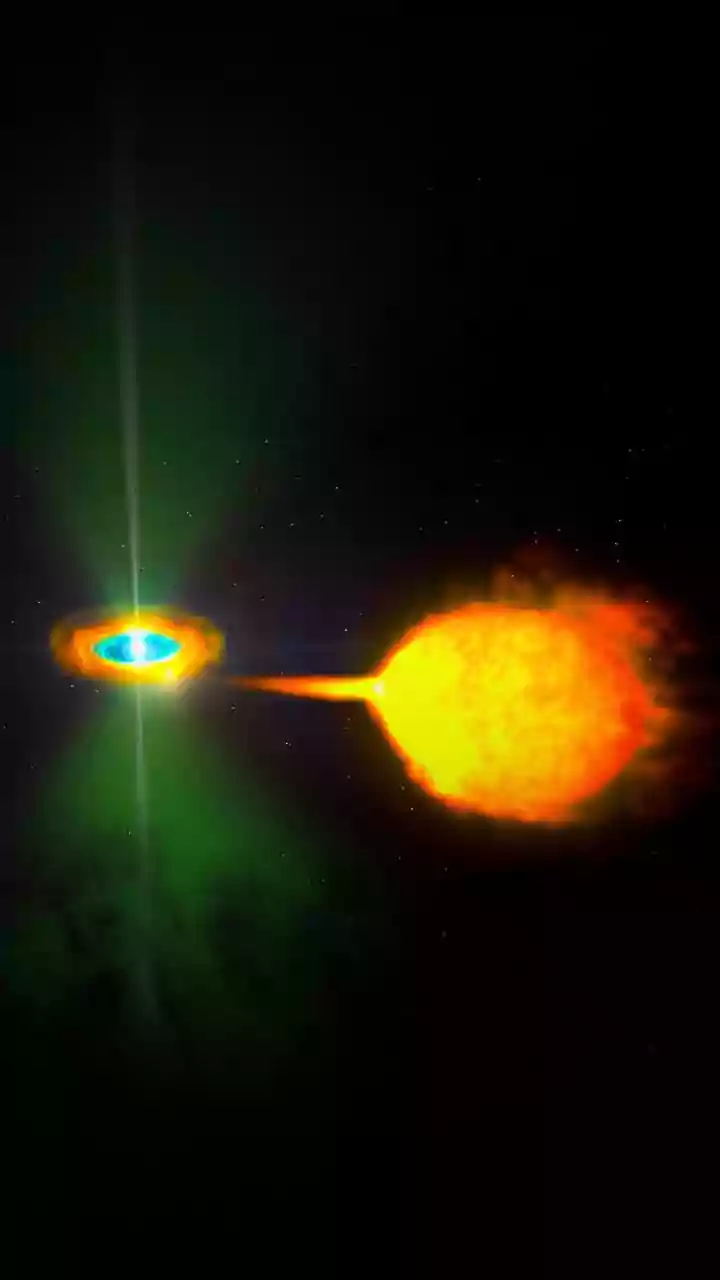
The new method leverages the one thing a black hole can't hide: its immense gravity. Imagine a star in a binary system with a dormant black hole. While the black hole itself is invisible, its gravitational pull affects its stellar companion. As the two objects orbit their common centre of mass, the star is pulled back and forth. From our perspective, this causes the star's light to exhibit subtle changes. This can manifest in several ways that TESS is sensitive enough to pick up. One effect is called an ellipsoidal variation, where the black hole's gravity tidally distorts the star, stretching it into a slight teardrop or football shape. As this distorted star rotates, the amount of light we see from it varies. Another clue is a phenomenon called relativistic beaming, where the star's orbital motion causes its light to appear slightly brighter as it moves towards us and fainter as it moves away. These periodic variations in brightness are the subtle 'clues' that point to a massive, unseen companion.
A New Chapter in Black Hole Astronomy
This technique of using starlight variations is revolutionary because it allows astronomers to hunt for the population of dormant, stellar-mass black holes that were previously undetectable. While active black holes and supermassive black holes at the centres of galaxies are well-studied, these quieter, more common black holes hold crucial information about the life and death of massive stars. By systematically searching through the vast archives of TESS data, researchers can flag stars that exhibit these telltale gravitational wobbles. Each candidate can then be followed up with ground-based telescopes to confirm the mass of the unseen object and rule out other possibilities. Projects like 'Black Hole Hunters' even invite citizen scientists to help sift through TESS light curves, looking for these specific patterns. This opens a new frontier, allowing for a more complete census of the black holes in our own galactic neighbourhood.