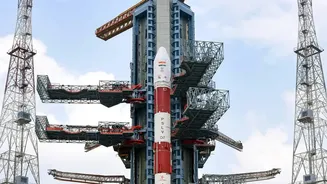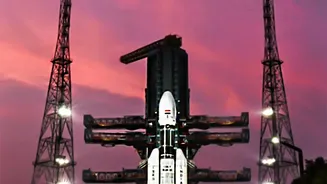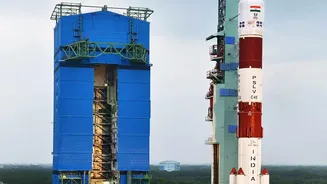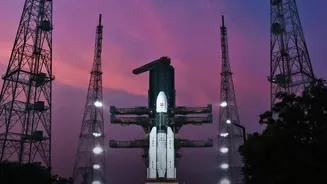





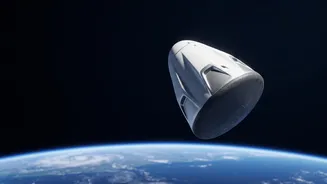
The Ultimate Ejection Seat
Before Indian astronauts can launch into space, the Indian Space Research Organisation (ISRO) must prove it can bring them back safely, especially if something goes wrong during the fiery ascent. This is the job of the Crew Escape System (CES). Think
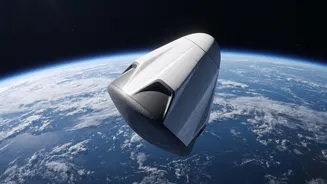
of it as the most sophisticated ejection seat ever built, not for a single pilot, but for the entire Crew Module carrying the astronauts. In an emergency, a series of powerful, quick-acting solid motors would fire, pulling the capsule away from the failing launch vehicle at incredible speed. The goal is to get the crew to a safe distance in seconds, allowing them to parachute back to Earth. This system is the ultimate safety net, and every part of it must be tested relentlessly.
Why High Altitude is the Real Test
ISRO has already proven the system works on the launchpad. In a 2018 Pad Abort Test, a test capsule was successfully thrown clear from a stationary position. However, an emergency during ascent is a far more complex challenge. High-altitude tests, like the successful Test Vehicle Abort Mission-1 (TV-D1) in October 2023, simulate an abort during the most stressful part of the launch. This occurs during the transonic phase, around an altitude of 17 kilometres, where the rocket is travelling at Mach 1.2 (1.2 times the speed of sound). Here, the vehicle experiences maximum aerodynamic pressure. Proving the CES can separate cleanly and perform flawlessly under these extreme forces is crucial for a full safety certification.
A Symphony of Split-Second Events
A high-altitude abort test is a violent, high-stakes demonstration. A specially designed Test Vehicle, essentially a single-stage liquid-fuelled rocket, carries a fully instrumented but uncrewed Gaganyaan Crew Module to a specific altitude and speed. At the critical moment, an abort is deliberately triggered. The escape motors ignite, pulling the module away from the test rocket. Once at a safe distance, the escape system jettisons, and a precise sequence of parachutes—starting with smaller drogue chutes to stabilize the capsule, followed by the main parachutes—are deployed. This entire sequence happens autonomously, guided by onboard computers. The final step is a gentle splashdown in the sea, where recovery teams from the Indian Navy retrieve the module, validating the end-to-end procedure.
The Path to Human-Rating
These tests are not simply pass-or-fail exercises; they are about gathering data. Hundreds of sensors on board the test module record every parameter, from motor performance to the g-forces experienced inside the capsule. This data is vital for validating computer models and confirming that the systems perform as designed. Every successful test, from the TV-D1 mission to the planned follow-up tests (TV-D2, D3, and D4), builds confidence in the system's reliability. This process is a core part of what is known as "human-rating" a launch vehicle. A rocket like the LVM3 can launch satellites with a high success rate, but to carry humans, it must meet far stricter safety and reliability standards. Proving the escape system works in all flight regimes is perhaps the single most important requirement for achieving that human-rating certification.