





What The New Rule Says
On November 16, 2026, the U.S. Commerce Department's Bureau of Industry and Security (BIS) issued an interim final rule that significantly tightens export controls on advanced artificial intelligence semiconductors. The core of the new regulation is designed
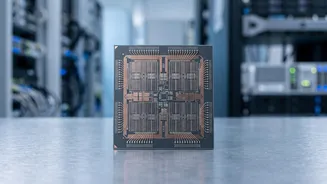
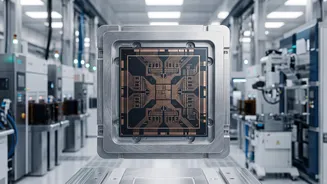
to prevent companies in restricted nations, most notably China, from circumventing existing bans on physical chip imports. It does this by targeting a major loophole: renting computing power from data centers located in third-party countries. Under the new rule, a license is now required to export or transfer advanced AI chips to any data center in the world if there is knowledge that it will provide significant computing services to companies headquartered in China or other restricted nations like Russia and Iran. This effectively makes data center operators and cloud providers responsible for vetting their customers.
Understanding Remote AI Computing
Remote AI computing, often delivered as 'Infrastructure-as-a-Service' (IaaS), is a model where companies rent access to powerful computing resources over the cloud instead of buying and housing the physical hardware themselves. For AI development, this means accessing clusters of high-end graphics processing units (GPUs), like those from Nvidia, which are essential for training and running complex AI models. Instead of buying millions of dollars worth of restricted chips, a company in China could simply pay a data center in another country to use its advanced hardware. This provided a legal and effective way to access the very technology the U.S. export controls were designed to block, a workaround the new rule is intended to shut down.
Closing a Critical Loophole
The previous U.S. restrictions, in place since 2022, focused on stopping the direct sale of advanced semiconductors to China. However, this created a booming business for data centers in nearby regions. Evidence suggested that Chinese AI firms were increasingly outsourcing their computing needs to data centers in Southeast Asia and elsewhere. The new rule is a direct response to this trend. U.S. officials stated the goal is to ensure that restrictions on sensitive American technology cannot be bypassed through such remote computing arrangements. By extending controls from the physical shipment of chips to the access of their computing power, the U.S. is treating computational power as a strategic asset equivalent to the hardware itself.
The Global Ripple Effect
While the primary target is China, the rule's impact is global. The Commerce Department has also mandated new licensing requirements for advanced AI chip exports to Brazil, Indonesia, Malaysia, Singapore, and Thailand. These nations were identified as presenting a 'higher-than-normal risk of diversion', meaning they could potentially be used as hubs to redirect technology or computing access to restricted entities. For data center operators in these countries, it means increased compliance costs and a need for robust 'know-your-customer' protocols to verify who is ultimately using their services. Companies with existing operations have been given a 90-day window to secure the necessary licenses. Analysts predict this could have a significant impact on revenue for chipmakers like Nvidia and affect up to 2 gigawatts of new data center demand.
The Geopolitical Chessboard
This regulation is the latest move in the escalating tech rivalry between the U.S. and China. The U.S. government has cited national security concerns, arguing that advanced AI could be used to develop sophisticated weaponry or for malicious cyber activities. By limiting access to the high-performance computing necessary to train 'Super Intelligence' models, the U.S. aims to slow down China's progress in cutting-edge AI. The rule formally rescinds a previous framework from the prior administration, signaling a more aggressive and targeted strategy. The policy underscores a fundamental shift in tech governance, moving beyond controlling physical goods to regulating access to digital capabilities in the global cloud.