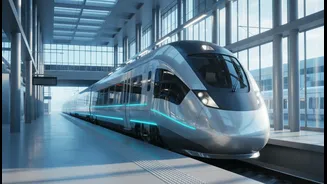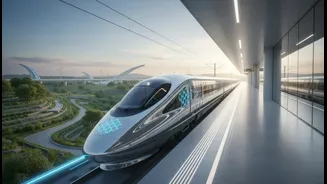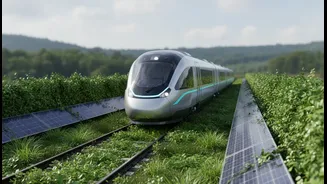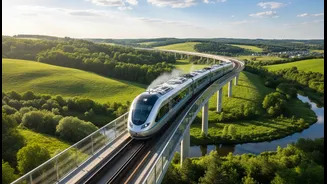







How Do Hydrogen Trains Work?
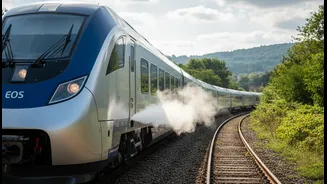
Imagine a train that runs on hydrogen and emits only water. That's the basic principle behind this new technology. These trains use hydrogen fuel cells, which act like mini power plants. Inside the cell, hydrogen gas reacts with oxygen from the air to
produce electricity. This electricity then powers the train's motors. The only byproduct of this chemical reaction is water vapour, making it a completely clean and emission-free mode of transport. This process stands in stark contrast to traditional diesel locomotives that burn fossil fuels and release harmful pollutants into the atmosphere. The system also includes batteries to store energy, particularly from regenerative braking, which improves overall efficiency.
India's First Green Train Takes to the Tracks
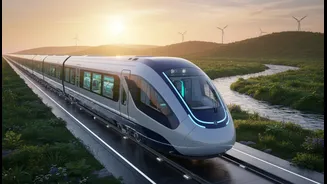
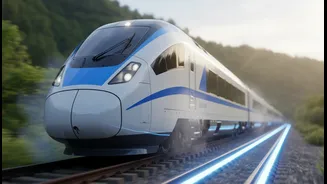
The landmark launch is scheduled for July 17, with Prime Minister Narendra Modi expected to inaugurate the service from Jind, Haryana. Following extensive trials, the train is set to begin commercial operations on the 90-kilometre Jind-Sonipat route. This ten-coach train, developed in India, has successfully completed tests at speeds up to 120 km/h, though it will operate at a more conservative 75 km/h for passenger service. With a capacity for around 2,600 passengers, it promises not only a cleaner journey but also a faster one, cutting the travel time on the route by about half. Remarkably affordable fares, reportedly between ₹5 and ₹25, have also been announced.
The Promise of a Pollution-Free Future
The introduction of hydrogen trains is a significant step towards achieving Indian Railways' goal of becoming a net-zero carbon emitter by 2030. By replacing diesel-powered trains, especially on non-electrified routes, this technology can drastically reduce air pollution and the nation's carbon footprint. The pilot on the Jind-Sonipat route was specifically chosen because the line is not electrified, making it an ideal test case for hydrogen's potential. Success here could pave the way for wider adoption, particularly under the 'Hydrogen for Heritage' initiative, which aims to run 35 such trains on scenic and hilly routes, preserving their natural beauty from diesel fumes.
Challenges on the Journey Ahead
Despite the excitement, the path to a hydrogen-powered rail network is not without its obstacles. The primary challenge is cost. Each trainset is estimated to cost around ₹80 crore, with significant additional investment needed for ground infrastructure. A dedicated hydrogen production, storage, and refuelling station has been built in Jind to support this first train, but scaling this infrastructure nationwide will be a massive undertaking. While the train's construction and system integration were handled by Indian firms like Medha Servo Drives, the core fuel cell technology is currently imported from Canadian company Ballard Power Systems, highlighting a reliance on external suppliers for key components. The long-term economic viability also depends heavily on reducing the cost of producing 'green' hydrogen.
A Bold Step for a New Era
The launch of India's first hydrogen train is more than just a technological demonstration; it's a statement of intent. It positions India among a select group of countries like Germany, Japan, and China that are pioneering this clean energy solution for rail transport. This initial project, built at an estimated cost of around ₹89 crore, will serve as a crucial pilot. Its performance, reliability, and operational economics will be closely watched to determine the feasibility of expansion. If successful, it could provide a scalable model for decarbonising parts of the world's fourth-largest railway network, heralding a new, cleaner, and quieter era for train travel in the country.