






Why Traditional Forecasts Fall Short
Indian agriculture, which employs nearly 60% of the population, has long been at the mercy of the weather. Traditional forecasting methods, often providing broad, regional predictions like "scattered showers," lack the precision needed for modern farming.
A farmer in rural Maharashtra doesn’t need to know it might rain in the state; they need to know if it will rain on their specific five-acre plot, and when. This gap between information and action leads to costly mistakes: wasted water from unnecessary irrigation, pesticides washed away by unexpected downpours, or entire harvests lost to a poorly timed dry spell. As climate change amplifies this unpredictability, the old ways of reading the clouds are no longer enough to secure livelihoods and food supply.
How AI Changes the Forecasting Game
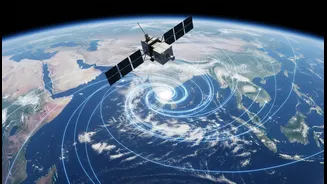
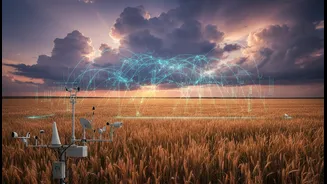
AI models are revolutionizing weather prediction. Instead of just solving physics equations, systems like Google’s GraphCast and others are trained on decades of historical weather data, allowing them to recognize complex patterns that traditional models miss. The result is a dramatic leap in speed and accuracy. These AI systems can generate forecasts thousands of times faster than conventional methods, running on a fraction of the computational power. They deliver what is known as hyper-local forecasts—predictions tailored to a specific farm, not just a district—and can now project weather patterns weeks in advance, a feat previously considered impossible.
From Forecast to Farm: Practical Action
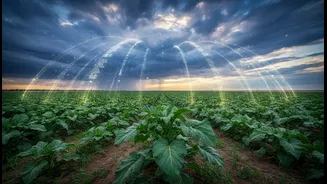
This new level of precision turns a weather forecast into a practical decision-making tool. A farmer can receive an SMS alert with a 15-day forecast predicting a dry spell, prompting them to conserve water. Another can get a six-hour warning about a localized hailstorm, giving them time to protect vulnerable crops. The benefits are tangible. Farmers can optimize irrigation, saving water and the cost of diesel for pumps. They can identify the perfect window to apply fertilizers or pesticides, ensuring they are effective and not wasted. Crucially, AI-powered long-range forecasts, particularly for the monsoon onset, allow for strategic decisions on when to sow, what crops to plant, and how much land to cultivate, directly impacting a season's potential yield.
A Real-World Success Story
This isn't science fiction. In 2025, in partnership with the Indian Ministry of Agriculture and Farmers' Welfare, AI-powered monsoon forecasts were delivered to 38 million farmers across India. The models accurately predicted a nearly three-week stall in the monsoon's arrival, providing farmers up to four weeks' advance notice. This information, delivered via simple SMS and voice messages, empowered millions to adjust their planting schedules, switch to different crops, or simply wait, mitigating potentially huge losses. It was a massive, real-world demonstration of AI helping farmers adapt to climate volatility at scale.
The Challenges Ahead
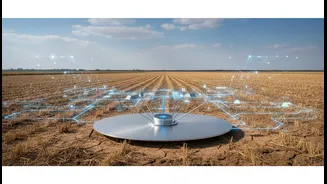
Despite its immense potential, rolling out AI technology across India's vast and diverse agricultural landscape is not without challenges. High upfront costs for sensors and drones, poor internet connectivity in some rural areas, and low digital literacy among farmers are significant hurdles. There are also concerns about data privacy and ensuring that these powerful tools don't widen the gap between large agribusinesses and the 85% of Indian farmers who are smallholders. For these systems to be truly effective, they must be affordable, accessible, and designed for the people they aim to serve, often requiring translation into local languages and integration with trusted community networks.