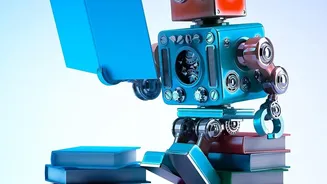







From Building AI to Working With AI
The initial wave of AI adoption focused on creating complex models, which required deep expertise in programming, machine learning, and data science. While these technical roles remain important, the widespread availability of generative AI tools is shifting
the focus from building AI systems from scratch to effectively using them to solve business problems. Today, more than 90% of Indian employees are already using generative AI tools. This has created a new demand for professionals who can act as the bridge between technological capability and business outcomes. The emphasis is no longer just on writing code, but on using AI to enhance productivity, creativity, and strategic decision-making across all departments.
Critical Thinking and Prompt Engineering
One of the most crucial emerging skills is the ability to interact with AI models effectively. This goes beyond simple queries and involves 'prompt engineering'—the art of crafting precise instructions to get the desired output from an AI. However, the real value lies in critical thinking. Professionals need to analyse the AI's output, identify potential inaccuracies or 'hallucinations', and apply their domain knowledge to refine the results. As AI handles first drafts and data summaries, human value shifts to judgment, interpretation, and quality control. According to the World Economic Forum, analytical thinking is now considered a top skill for all roles, not just technical ones.
Domain Expertise and AI Strategy
AI tools are powerful, but they lack real-world context. This is why domain-specific knowledge has become more valuable than ever. A marketing professional who understands their audience can use AI to generate campaign ideas far more effectively than a programmer with no marketing experience. Likewise, finance experts can leverage AI for analysis, and HR leaders can use it for talent management. Companies are increasingly seeking 'hybrid' professionals who combine their existing expertise with AI literacy. These individuals can identify opportunities for AI within their departments, guide the implementation of AI workflows, and ensure the technology is applied responsibly and ethically.
Communication and Ethical Governance
As AI becomes embedded in business processes, clear communication is essential. Professionals need to be able to explain AI-driven insights to colleagues, clients, and stakeholders who may not be technically savvy. This includes articulating the benefits, limitations, and potential risks of using AI. Furthermore, ethical judgment is a critical non-technical skill. With AI making decisions that can impact customers and employees, there is a growing need for people who can ensure fairness, transparency, and accountability. These 'human guardrails' are vital for building trust and navigating the complex ethical landscape of AI adoption.
The Indian Workforce Advantage
India is uniquely positioned to thrive in this new environment. The country already possesses a massive demographic dividend and holds about 16% of the world's AI talent pool. The shift towards AI-human collaboration plays to the strengths of a workforce known for its adaptability and service-oriented skills. As companies across India integrate AI, career growth is expanding beyond traditional software development into roles in consulting, leadership, marketing, and operations. Reports suggest that while entry-level hiring in IT has slowed, the demand for mid-level roles with hybrid skills is rising, indicating AI is augmenting jobs rather than simply replacing them.