





That stiff feeling you get after hours at your desk is more than just a minor ache. Prolonged sitting puts quiet, accumulating stress on your joints and muscles. Here are the facts on what’s happening and how to protect your body.
The Hidden Cost of Sitting Still
Modern work often requires
us to remain in one position for hours, and our bodies pay a price. When you sit for extended periods, your joints miss out on the regular movement they need to stay lubricated. This lack of motion reduces the circulation of synovial fluid, a natural lubricant that keeps joint cartilage healthy. The result is stiffness, especially in the hips and knees. This sedentary position also creates predictable muscle imbalances. Hip flexors shorten and tighten, while glute muscles, which support the spine, can weaken from inactivity. Meanwhile, shoulders tend to round forward to face a screen, straining the muscles in your neck and upper back. Over time, these patterns can contribute to poor posture, chronic pain, and a reduced range of motion.
Frequency Over Intensity: The Power of Breaks
The most effective way to combat the effects of sitting isn't a single intense workout but rather small, consistent interruptions to your sedentary time. Research suggests that the frequency of movement matters more than the duration. Standing up to move for even one to two minutes every hour can have a significant cumulative effect on reducing stiffness and discomfort. Studies have shown that these 'movement snacks' improve blood flow, reduce fatigue, and can even boost your mood and focus without harming productivity. The goal is to break up long periods of stillness before discomfort sets in. Setting a simple timer to remind yourself to stand, stretch, or take a short walk every 30 to 60 minutes is a powerful and achievable habit.
Ergonomics for Joint Health
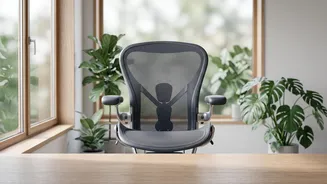
A well-adjusted workstation can dramatically reduce the daily strain on your joints. Start with your chair. Adjust its height so your feet rest flat on the floor with your knees at or slightly below hip level. Your chair should have good lumbar support to maintain the natural curve of your lower back; if it doesn't, a small pillow or rolled towel can work wonders. Position your monitor an arm's length away, with the top of the screen at or just below eye level to keep your neck in a neutral position. Your keyboard and mouse should be placed so your elbows form a 90-degree angle, with your wrists straight and relaxed. Keeping frequently used items within easy reach prevents awkward twisting and reaching that can strain your shoulders and spine.
Essential Desk-Side Stretches
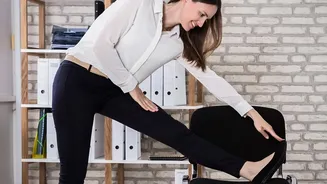
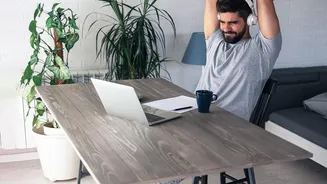
You don't need to leave your desk to give your joints relief. Incorporating a few simple stretches can counteract hours of static posture. For your spine and shoulders, try seated spinal rotations by gently twisting your torso to look over each shoulder. To open up your chest after hunching, clasp your hands behind your back or hold the sides of your chair and squeeze your shoulder blades together. Counteract 'tech neck' with chin tucks: gently draw your chin straight back as if making a double chin, holding for a few seconds. For your hips, the standing hip flexor stretch is key. Place your hands on your desk for support, step one foot back into a lunge, and gently push your hips forward until you feel a stretch in the front of your hip. Finally, give your wrists a break by extending your arm and gently pulling your fingers toward you, then pointing them down.