



The Sun’s Invisible Threat
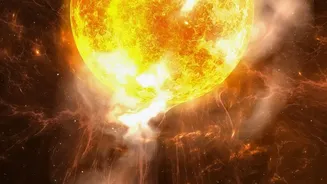
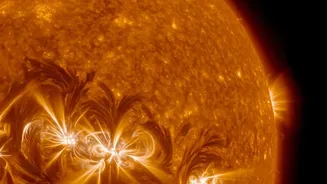
The sun, our source of light and life, has a turbulent side. It frequently unleashes solar flares and, more impactfully, Coronal Mass Ejections (CMEs). These are colossal eruptions of plasma and magnetic fields from the sun's outer atmosphere, the corona.
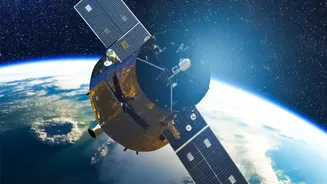
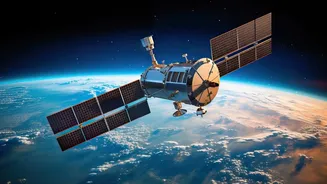
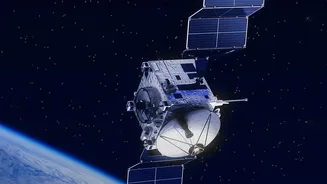
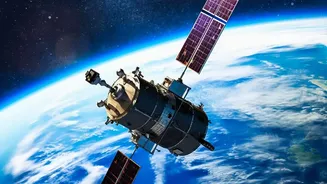
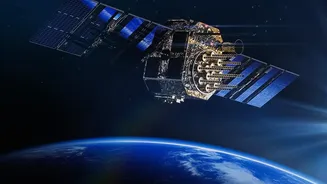
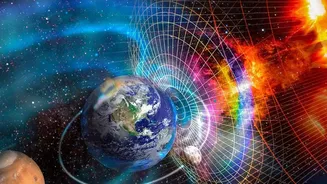
A single CME can blast billions of tonnes of charged particles into space, traveling at millions of kilometers per hour. While Earth's magnetic field protects us on the ground, satellites in orbit are highly exposed. When these solar storms reach Earth, they can wreak havoc on our space-based assets, creating what is known as hazardous space weather.
How Solar Storms Harm Satellites
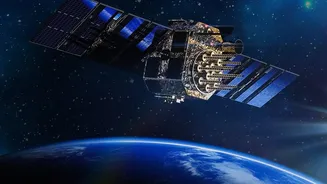
Solar eruptions pose several distinct dangers to satellites. Firstly, the influx of high-energy particles can damage or destroy sensitive electronics, causing malfunctions or permanent failure. Secondly, these particles can cause spacecraft surfaces to build up an electrical charge, leading to electrostatic discharges that can disrupt internal systems. Thirdly, for satellites in Low Earth Orbit (LEO), solar storms heat and expand Earth's upper atmosphere. This increases atmospheric drag, causing satellites to lose altitude faster and potentially re-enter the atmosphere prematurely if they can't boost their orbit. A 2022 incident where a geomagnetic storm caused the loss of up to 40 new Starlink satellites serves as a stark reminder of this risk. Finally, the storms interfere with communication and GPS signals, leading to service disruptions.
The Coronagraph: Creating an Artificial Eclipse
Detecting these eruptions is difficult because the sun's own brightness is overwhelming—about a million times brighter than its surrounding corona. This is where the coronagraph comes in. Invented by French astronomer Bernard Lyot in 1931, a coronagraph is a special telescopic instrument designed to create an artificial eclipse. It uses an occulting disk to block the blinding light from the sun's main body, allowing the much fainter corona to be seen clearly. While ground-based coronagraphs exist, they are hampered by light scattering in Earth's atmosphere. Space-based coronagraphs, operating in the vacuum of space, are far more effective at providing the clear, real-time imagery needed for space weather forecasting.
From Detection to Actionable Warning
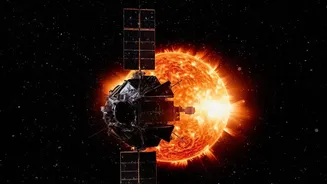
Satellites equipped with coronagraphs, like the joint NASA/ESA SOHO (Solar and Heliospheric Observatory) and India's own Aditya-L1, act as our frontline sentinels. They are often positioned at a stable gravitational point between the Earth and the sun, called Lagrange Point 1 (L1), about 1.5 million kilometers from Earth. This vantage point gives them an uninterrupted view of the sun. When a CME erupts and hurtles towards Earth, these coronagraphs capture images of the event. The data is beamed back to space weather prediction centers, like NOAA's SWPC in the United States. Forecasters can then analyze the CME's size, speed, and direction to predict its arrival time and potential impact, issuing warnings to satellite operators, airlines, and power grid managers.
Keeping Satellites Safe
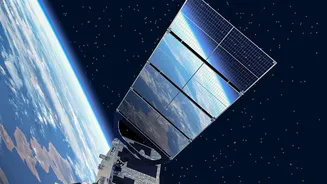
With an early warning in hand, typically one to three days before impact, satellite operators can take protective measures. For many critical and expensive satellites, this involves putting them into a 'safe mode'. In this state, the satellite shuts down non-essential and sensitive systems, orients its solar panels to minimize the area exposed to atmospheric drag, and hunkers down to ride out the storm. For satellites in LEO, operators might use onboard thrusters to boost their orbit, counteracting the increased drag and preventing orbital decay. These actions significantly reduce the risk of damage and service disruption, ensuring the continuity of the vital services we rely on every day.
India’s Eye on the Sun: Aditya-L1
India has made significant strides in this field with its first dedicated solar observatory, Aditya-L1, launched by ISRO in 2023. The mission's primary instrument is the Visible Emission Line Coronagraph (VELC), developed by the Indian Institute of Astrophysics. From its position at L1, Aditya-L1 provides continuous observations of the sun's corona, studying the origins of CMEs and contributing crucial data to global space weather models. With its suite of seven instruments, the mission not only enhances our scientific understanding of the sun but also strengthens India's and the world's ability to forecast and mitigate the impacts of solar eruptions.