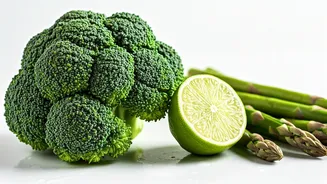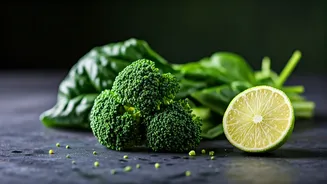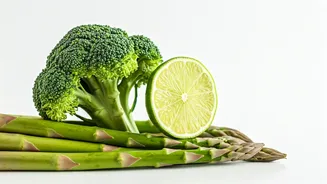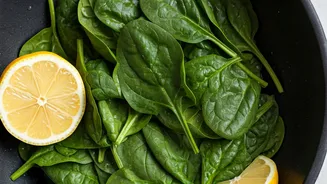






The Incredible, Disappearing Green
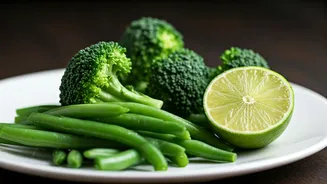
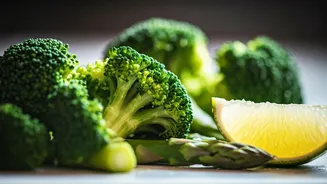
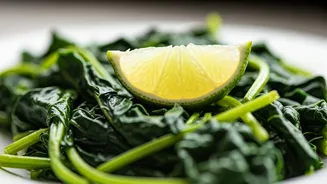
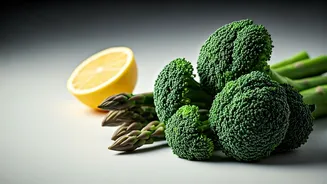
It’s one of the most common kitchen frustrations. You start with a head of brilliant green broccoli or a bundle of crisp asparagus, destined for a healthy and colourful meal. You drop them into boiling water, and for a moment, they turn an even more intense,
jewel-like green. [9] But then, just minutes later, the magic fades. The vibrant colour gives way to a dull, swampy, olive-green hue. [3] This colour change doesn't just affect the visual appeal; it often signals a change in texture and flavour, turning what should be a delightful dish into a mushy disappointment.
Meet Chlorophyll, The Green Pigment
The vibrant colour in green vegetables comes from a pigment called chlorophyll. [3] This is the same molecule that plants use to convert sunlight into energy through photosynthesis. When you cook green vegetables, the heat initially causes trapped gases between the plant's cells to expand and escape. This allows you to see the chlorophyll more clearly, resulting in that brief, super-bright green phase. [9] However, the chlorophyll molecule is quite sensitive. At its centre is a magnesium atom, which is crucial for its bright green colour. [3] Unfortunately, both heat and acid can disrupt this structure.
The Myth of the Lemon Trick
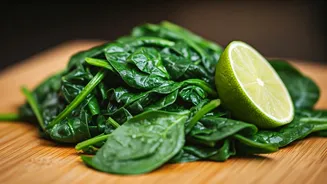
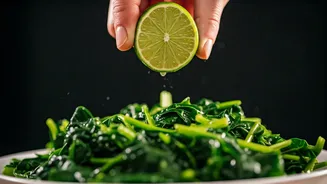
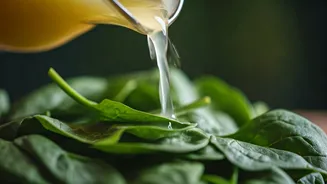
This brings us to the popular 'lemon trick'. The advice suggests that adding an acid, like lemon juice or vinegar, to the cooking water will preserve that beautiful green colour. Unfortunately, science tells us the exact opposite is true. [6] When chlorophyll is exposed to acid, the delicate magnesium atom at its core is dislodged and replaced by hydrogen atoms. [9, 16] This chemical reaction transforms the bright green chlorophyll into a new compound called pheophytin, which is responsible for that dull, olive-green colour. [1, 2] So, adding lemon juice to your boiling water actually accelerates the very process you're trying to prevent, leading to faster discolouration and a mushier texture. [1, 6]
The Real Secret: Blanch and Shock
So if lemon is out, what actually works? The most effective and widely used technique by professional chefs is called blanching and shocking. This two-step process is the true secret to keeping your greens green. Blanching involves cooking the vegetables for a very short time—typically just a few minutes—in a large pot of rapidly boiling, heavily salted water. [2, 19] Immediately after, the vegetables are 'shocked' by being plunged into a bowl of ice water. [13] This sudden cold blast stops the cooking process instantly, 'locking in' the vibrant colour and preserving a crisp, tender texture. [2] The large volume of water also helps by diluting the natural acids that vegetables release during cooking. [14]
More Tips for Greener Results
Beyond blanching and shocking, a few other best practices can make a significant difference: * **Use a Big Pot:** Don't crowd your vegetables. Cooking them in a large volume of water ensures the temperature doesn't drop too much when you add the greens, which helps them cook faster and more evenly. [5] * **Don't Cover the Pot:** Cooking green vegetables with the lid off allows volatile acids, which are released from the veggies as they cook, to escape with the steam instead of condensing and dripping back into the water. [2, 14] * **Cook Quickly:** Overcooking is the primary enemy of green vegetables. Aim to cook them for the shortest time possible, usually between 5-7 minutes, until they are tender-crisp. [3, 4] * **Add Acid Last:** If a recipe calls for an acidic ingredient like lemon juice or vinegar for flavour, add it at the very end of cooking or just before serving to minimize its contact time with the chlorophyll. [16]