



Ancient Star Cities in the Cosmos
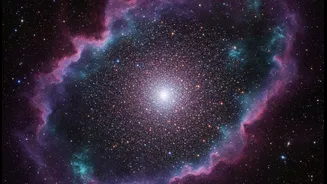
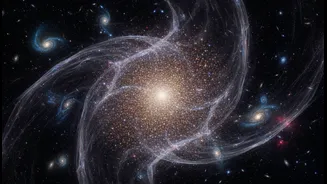
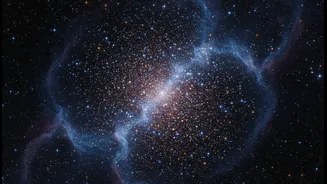
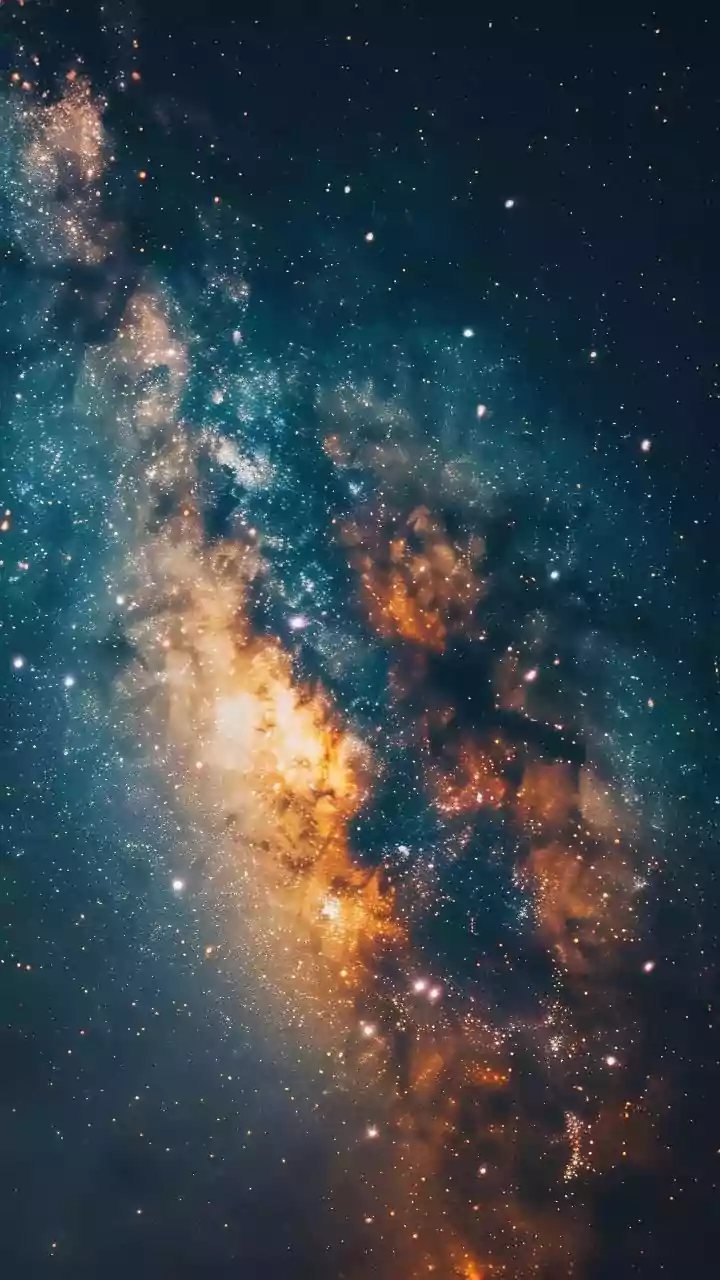
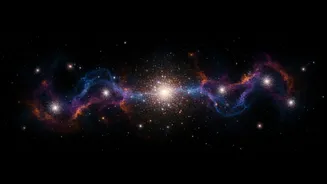
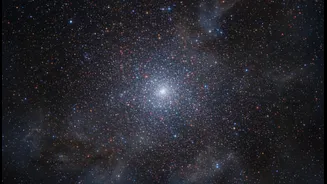
The subject of this cosmic investigation is a 'globular grouping,' or what astronomers call a globular cluster. Imagine a vast, spherical city, not of people, but of hundreds of thousands, sometimes millions, of stars, all tightly bound together by gravity.
There are about 150 of these stellar cities known to orbit our own Milky Way galaxy, mostly in its sparse outer regions, or halo. What makes them so scientifically precious is that they are like ancient fossils. The stars within a single cluster are believed to have all formed at roughly the same time from the same giant cloud of gas. Many of these clusters are incredibly old, containing some of the very first stars to form in the universe. By studying them, we are looking back in time, observing a snapshot of the cosmos as it was billions of years ago.
The Universe's Ultimate Clock
This brings us to 'cosmic longevity metrics'—the methods scientists use to tell time on a universal scale. Globular clusters are one of the most important tools in this endeavor because they provide a firm lower limit for the age of the universe. After all, the universe cannot be younger than the oldest things within it. Astronomers can calculate a cluster's age with remarkable ingenuity. As stars age, the most massive and brilliant ones burn through their fuel the fastest. By plotting the color and brightness of a cluster's stars, scientists can identify the 'main sequence turnoff' point—the precise point where the most massive stars have finished their main life phase and started to evolve into red giants. The location of this turnoff acts like a ticking clock, directly indicating the age of the entire cluster, often with a precision that gets us very close to the dawn of time.
Hubble's Dazzling New Evidence
The 'Hubble Stellar Sparkler' in the headline refers to a recent, stunning image of a globular cluster named NGC 6426. Located about 67,000 light-years away, this cluster is a ball of ancient stars estimated to be about 13 billion years old. Having formed only a few hundred million years after the Big Bang, it is a true relic of the early universe. NASA and the European Space Agency released the image, which showcases stars in brilliant hues of red, white, and blue, around the time of the United States' 250th anniversary, giving rise to its celebratory nickname. But beyond the beautiful aesthetics, the image is part of an ongoing scientific survey to study these clusters, analyze their stellar populations, and confirm their ages, ensuring our cosmic timelines are accurate.
Why This Confirmation Matters
Each time a study of an object like NGC 6426 'reaffirms' our cosmic measurements, it is a significant event. The goal isn't necessarily to discover something brand new, but to add another layer of certainty to what we think we know. For decades, scientists have used different methods to arrive at an age for the universe—currently estimated at about 13.8 billion years. One method involves measuring the rate of the universe's expansion and running the clock backward. Another involves dating the oldest objects we can find, like globular clusters. When the ages of these ancient clusters align perfectly with the age derived from cosmic expansion, it provides powerful, independent confirmation. It tells scientists that their standard model of cosmology, the grand theory that explains everything from the Big Bang to the structure of galaxies, is on the right track.